Quick Summary
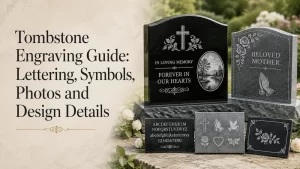
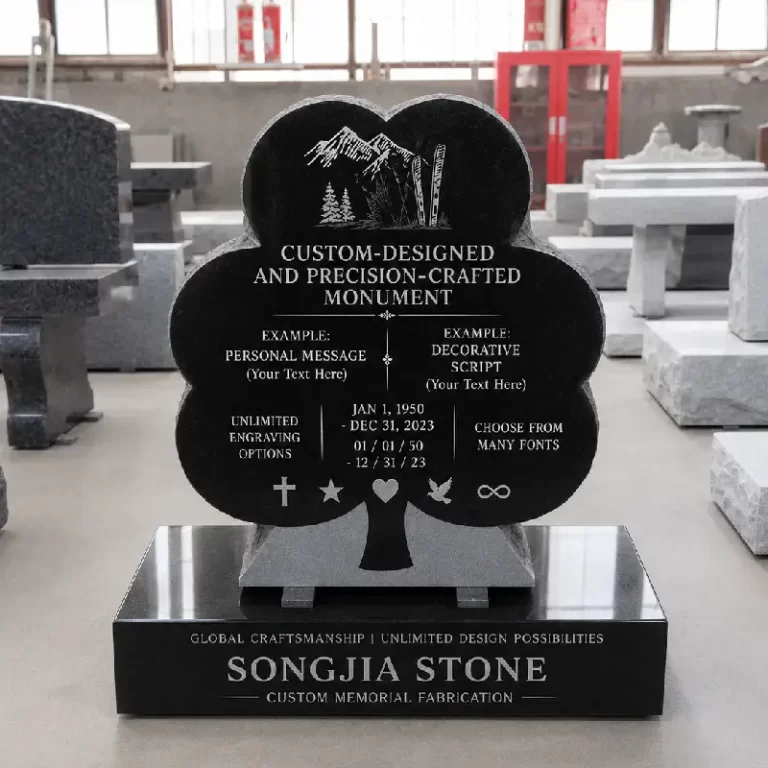
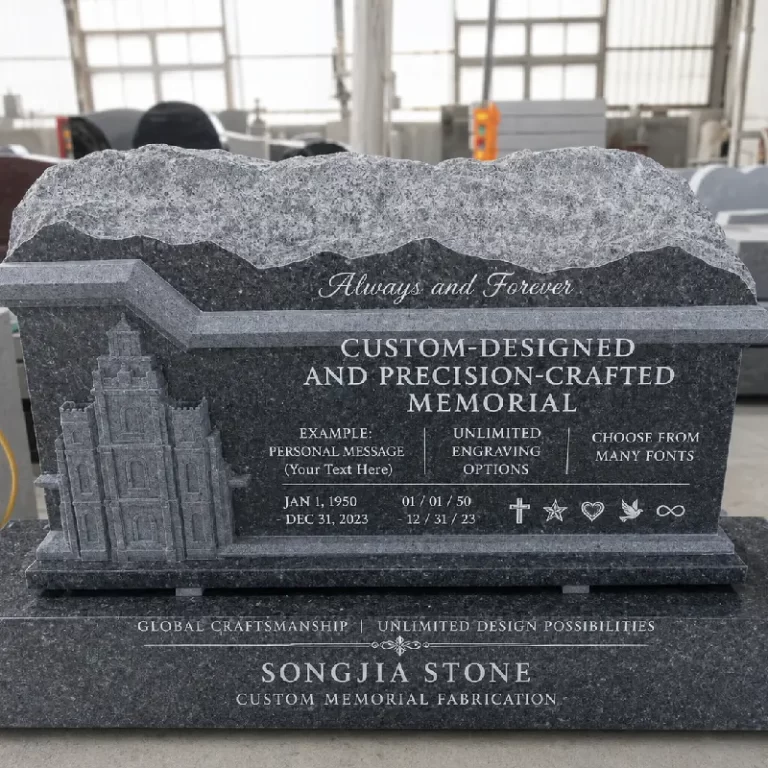
Tombstone engraving refers to the process of carving or marking names, dates, epitaphs, symbols, portraits and decorative details onto a memorial stone.
The final engraving result depends on granite color, surface finish, font style, letter size, engraving depth, layout balance, symbol detail and proof confirmation before production. Before engraving starts, buyers should confirm the text, spelling, dates, language, font, layout, symbol position, photo quality, letter color and final engraving proof.
What Is Tombstone Engraving?
Tombstone engraving is the process of adding permanent text and design details to a tombstone, headstone, grave marker or memorial monument. It can include simple names and dates, long epitaphs, religious symbols, floral patterns, borders, portraits and other personalized details.
| Engraving Element | Common Use |
|---|---|
| Name engraving | Full names or family names |
| Date engraving | Birth date, death date or memorial year |
| Epitaph | Short message, quote or memorial text |
| Religious symbol | Cross, angel, praying hands, book, candle or other symbols |
| Decorative carving | Roses, flowers, borders, leaves or custom patterns |
| Portrait engraving | Face image, ceramic photo or laser-style portrait |
| Family emblem | Crest, logo, cultural symbol or special design |
A tombstone engraving should not only look beautiful but also remain readable after outdoor exposure. That is why material, finish, depth and layout must be carefully confirmed.
Why Engraving Quality Matters
Engraving is often the most visible part of a tombstone. Buyers and families usually look at the inscription first, so mistakes in this area can be difficult to accept.
| Engraving Issue | Possible Result |
|---|---|
| Wrong spelling | The memorial may need correction or replacement |
| Incorrect dates | Serious customer complaint |
| Poor spacing | Unbalanced and unprofessional appearance |
| Shallow letters | Reduced visibility after outdoor use |
| Wrong font | Does not match the memorial style |
| Low contrast | Text is hard to read |
| Unclear symbol | Religious or decorative meaning may be weakened |
| No proof approval | Higher risk of production disputes |
For B2B orders, engraving mistakes can affect delivery schedules, customer trust and repeat orders. A clear proof confirmation process is essential before carving begins.
Common Tombstone Engraving Methods
Different engraving methods can be used depending on the granite material, design requirement, text detail and production quantity.
| Engraving Method | Description | Common Use |
|---|---|---|
| Sandblast engraving | Uses controlled blasting to create recessed letters or designs | Names, dates, epitaphs, symbols |
| Hand carving | Skilled manual carving for detailed patterns | Flowers, borders, angels, relief details |
| CNC carving | Machine-controlled carving for consistent shapes | Repeated designs, symbols, borders |
| Laser engraving | Creates fine image or text detail on suitable surfaces | Portraits, photos, fine line work |
| V-cut lettering | Creates sharp and classic letter profiles | Traditional memorial lettering |
| Painted lettering | Adds color into engraved letters | Better visibility and decorative effect |
| Gold or silver lettering | Adds metallic color finish | Premium memorials and special designs |
Not every method is suitable for every stone or design. Buyers should choose the engraving method according to the material, finish, expected appearance and cemetery market.
Lettering on Granite Tombstones
Lettering is the most common part of tombstone engraving. It usually includes names, dates, short messages and memorial phrases. Good lettering should be readable, evenly spaced and visually balanced with the tombstone shape.
| Lettering Detail | What to Confirm |
|---|---|
| Text content | Names, dates, epitaphs and language |
| Font style | Traditional, serif, sans serif, script or custom font |
| Letter size | Must match the inscription area |
| Letter depth | Should be clear and durable |
| Letter spacing | Affects readability and visual balance |
| Line spacing | Important for long epitaphs |
| Alignment | Centered, left aligned, arched or custom layout |
| Letter color | Natural stone, black, white, gold, silver or painted |
Before production, buyers should check every letter carefully. Names, punctuation, accents, dates and language details must be confirmed before engraving starts.
Choosing the Right Font for Tombstone Engraving
Font selection affects the style and readability of a memorial. A traditional granite tombstone may use classic serif lettering, while a modern memorial may use simpler and cleaner fonts.
| Font Type | Style Effect | Suitable For |
|---|---|---|
| Serif font | Formal and traditional | Classic headstones and family memorials |
| Sans serif font | Clean and modern | Modern tombstones and simple designs |
| Script font | Soft and personal | Short names, quotes or decorative text |
| Roman style font | Traditional and dignified | European and Christian memorials |
| Bold font | Strong visibility | Dark or textured stone surfaces |
| Custom font | Personalized effect | Special memorial designs |
When choosing a font, readability should come before decoration. Very thin or overly complex fonts may not work well on some granite surfaces.
Engraving Depth and Readability
Engraving depth affects how clear the text looks and how well it performs over time. If letters are too shallow, they may appear weak or become harder to read. If they are too deep or too narrow, the lettering may lose detail.
| Factor | Why It Matters |
|---|---|
| Letter depth | Affects visibility and long-term readability |
| Letter width | Helps maintain clean shape and spacing |
| Granite color | Dark stone and light stone create different contrast |
| Surface finish | Polished, honed and sandblasted surfaces affect text appearance |
| Paint filling | Can improve contrast and readability |
| Letter size | Small text needs careful depth and spacing control |
A clear engraving result depends on the balance of depth, font, surface finish and color contrast.
Religious Symbols and Decorative Engraving
Many tombstones include religious or cultural symbols. These details should be placed carefully so they match the memorial style and do not interfere with the text layout.
| Symbol / Decoration | Common Meaning or Use |
|---|---|
| Cross | Christian, Catholic and European memorials |
| Angel | Protection, peace and remembrance |
| Rose | Love, beauty and memory |
| Candle | Prayer, faith and eternal light |
| Open book | Life story, faith or scripture |
| Praying hands | Prayer and devotion |
| Tree | Life, family and continuity |
| Floral border | Soft decoration and traditional memorial style |
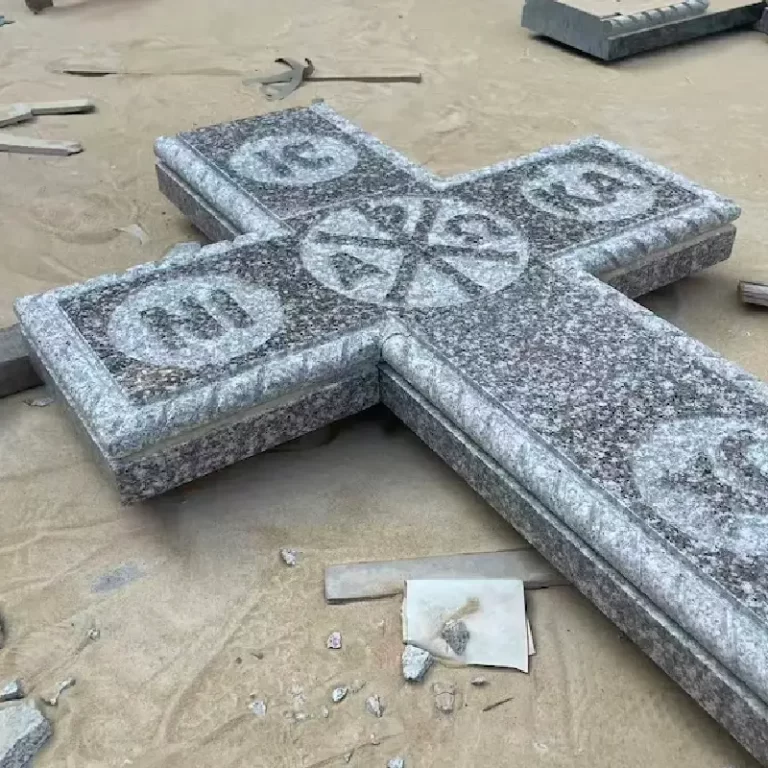
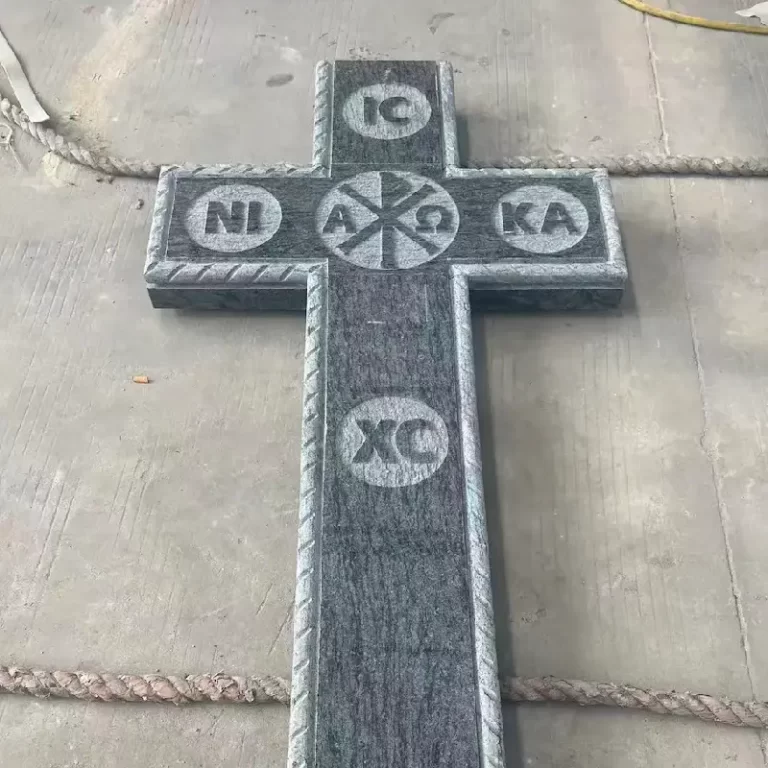
| Orthodox cross | Eastern European and Orthodox cemetery designs |
| Celtic cross | Irish and Christian memorial styles |
For country-specific tombstones, buyers should confirm whether symbols, shapes and inscription styles meet local cemetery or cultural expectations.
Photo Engraving and Portrait Options
Some memorials include portraits or photo details. This can be done through laser engraving, ceramic photo, carved portrait or other methods depending on the design and buyer requirement.
| Portrait Option | Features | Buyer Notes |
|---|---|---|
| Laser photo engraving | Fine image detail on suitable surfaces | Works best with clear, high-resolution images |
| Ceramic photo | Color or black-and-white photo fixed to the stone | Common for many cemetery markets |
| Carved portrait | Artistic stone carving effect | Requires skilled work and proof confirmation |
| Etched portrait | Creates a subtle image effect | Often used on polished black granite |
| Photo frame design | Combines image with engraved border | Needs accurate position and size confirmation |
Photo quality is very important. Blurry, low-resolution or dark images may not produce a clear final result. Buyers should provide the best available image before proof creation.
Engraving on Different Granite Colors
Granite color affects engraving visibility. Some stones create strong contrast naturally, while others may need painted letters or special finish treatment.
| Granite Color | Engraving Effect | Buyer Notes |
|---|---|---|
| Black granite | Strong contrast, suitable for fine lettering and portraits | Good for polished memorials and premium designs |
| Dark grey granite | Clear and stable engraving effect | Suitable for many traditional tombstones |
| Light grey granite | Softer contrast | Painted or dark-filled letters may improve readability |
| Pink granite | Warm and traditional appearance | Font and color should be chosen carefully |
| Red granite | Decorative and strong visual tone | Check engraving contrast before production |
| Blue granite | Premium appearance | Engraving should match the stone pattern and finish |
For batch orders, buyers should also consider material tone consistency, especially when the same engraving style is repeated across multiple tombstones.
Engraving Layout and Proof Confirmation
Engraving layout confirmation is one of the most important steps before production. A proof shows how the text, symbols and decorative elements will appear on the tombstone.
| Proof Item | What to Check |
|---|---|
| Name spelling | Full name, initials and family name |
| Dates | Birth date, death date and number format |
| Language | Accents, special characters and translation accuracy |
| Font | Style, size, thickness and readability |
| Text position | Center, top, bottom, left or custom placement |
| Symbol position | Cross, rose, angel, photo or other details |
| Line spacing | Balance between text lines |
| Overall layout | Visual proportion with the tombstone shape |
A final engraving proof should be approved before carving begins. This helps avoid costly mistakes and production delays.
Common Engraving Mistakes to Avoid
Many engraving problems can be avoided through careful checking before production. For custom tombstone orders, the following mistakes are especially common.
| Common Mistake | How to Avoid It |
|---|---|
| Sending text without final confirmation | Confirm the final inscription before production |
| Ignoring spelling and date format | Check names, dates, punctuation and accents carefully |
| Choosing a font only by appearance | Make sure the font is readable after engraving |
| Making letters too small | Match letter size with stone size and viewing distance |
| No layout proof | Approve a visual proof before carving |
| Low-quality photo | Provide a clear, high-resolution image |
| Wrong symbol placement | Confirm position and size in the layout |
| No color confirmation | Confirm painted, gold, silver or natural lettering |
| Overcrowded design | Keep enough space between text, symbols and borders |
For B2B buyers, these checks protect both the supplier and the customer. A clear approval process reduces disputes and improves order consistency.
Quality Inspection for Tombstone Engraving
After engraving is finished, inspection should be completed before packing. This step helps confirm that the final product matches the approved design.
| Inspection Item | What to Check |
|---|---|
| Text accuracy | Names, dates, words and punctuation |
| Font consistency | Same style and size as approved proof |
| Letter depth | Clear and even engraving |
| Letter spacing | Balanced and readable layout |
| Painted letters | Clean filling without overflow |
| Gold or silver letters | Neat finish and consistent color |
| Symbol clarity | Clear shape and correct position |
| Photo effect | Matches approved image proof |
| Surface condition | No scratches, chips or damage around engraving |
Inspection photos are helpful for international orders, especially before packing and shipment.
How Engraving Affects Tombstone Cost
Engraving cost depends on the amount of text, complexity, method, depth, color filling and design details. A simple name and date usually costs less than a full custom design with symbols, long epitaph, portrait and carved decoration.
| Engraving Requirement | Cost Impact |
|---|---|
| Basic names and dates | Standard cost level |
| Long epitaph | More layout and engraving time |
| Special font | Requires more proof checking |
| Deep lettering | More processing time |
| Painted letters | Additional color filling work |
| Gold or silver lettering | Higher material and labor requirement |
| Religious symbols | Depends on size and detail |
| Floral or angel carving | Higher labor and skill requirement |
| Portrait engraving | Requires image processing and proof confirmation |
Buyers should provide complete engraving information during quotation to avoid price changes after production details are confirmed.
What Buyers Should Prepare Before Engraving
To make the engraving process smoother, buyers should prepare complete and accurate details before production.
| Information Needed | Example |
|---|---|
| Inscription text | Names, dates, epitaphs and family messages |
| Language | English, French, German, Polish, Romanian, Hebrew, Arabic or other language |
| Font preference | Roman, serif, script, modern or custom font |
| Letter color | Natural, white, black, gold, silver or painted |
| Symbol requirement | Cross, rose, angel, book, candle or other design |
| Photo file | High-resolution portrait or ceramic photo reference |
| Layout style | Centered, arched, divided panel or custom layout |
| Tombstone drawing | Helps position engraving correctly |
| Cemetery requirement | Any rules for symbols, text size or design style |
The more complete the engraving details are, the easier it is to create an accurate proof and avoid misunderstandings.
How Songjia Supports Tombstone Engraving Projects
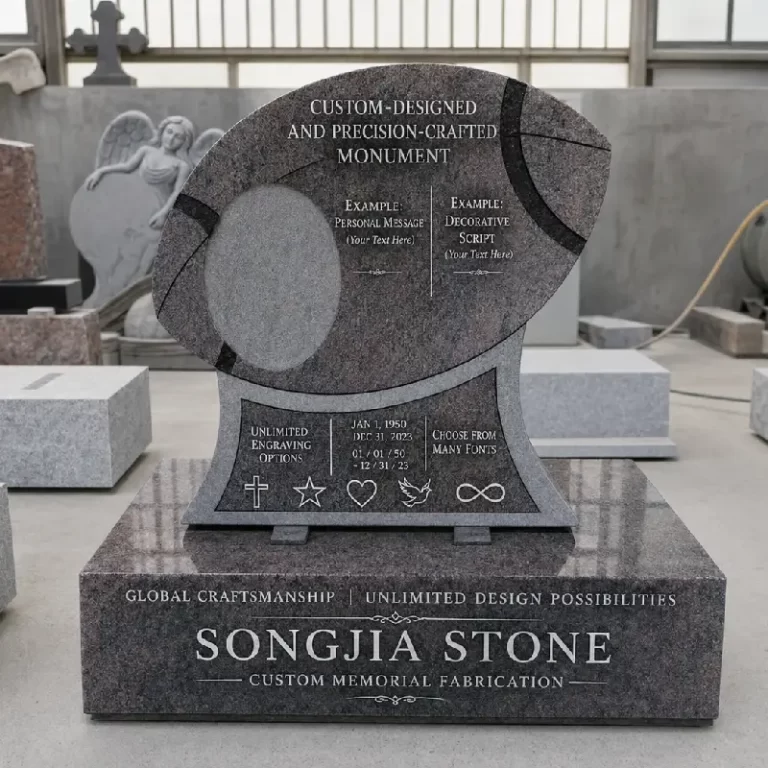
Songjia supports custom tombstone engraving for cemetery dealers, monument wholesalers, funeral product importers and memorial project buyers. Our process focuses on clear communication, proof confirmation, accurate carving and quality inspection before shipment.
| Songjia Support | Buyer Benefit |
|---|---|
| Engraving layout support | Helps arrange text, symbols and photos clearly |
| Font and spacing review | Improves readability and visual balance |
| Religious symbol customization | Supports cross, angel, rose, candle, book and other memorial designs |
| Photo engraving support | Helps prepare portrait or image layout according to requirements |
| Multi-language engraving | Supports careful checking for international memorial orders |
| QC before packing | Confirms engraving accuracy and surface condition |
| Repeat order records | Helps maintain consistency for dealers and project buyers |
| Export packing protection | Protects engraved and polished surfaces during shipment |
For custom memorial projects, engraving should always be discussed together with the tombstone material, finish, size and structure. Buyers can also review more custom memorial styles from Songjia’s tombstones and monuments category or tombstones collection.
FAQ About Tombstone Engraving
What is tombstone engraving?
Tombstone engraving is the process of carving or marking names, dates, epitaphs, religious symbols, portraits and decorative details onto a memorial stone.
What is the best engraving method for granite tombstones?
The best method depends on the design. Sandblast engraving is commonly used for names and dates, while hand carving, CNC carving or laser engraving may be used for symbols, portraits and decorative details.
Can photos be engraved on a tombstone?
Yes. Photos can be added through laser engraving, ceramic photo, etched portrait or carved portrait, depending on the stone material and design requirement.
What should buyers check before engraving starts?
Buyers should check names, dates, spelling, language, font, layout, symbol position, photo quality and final engraving proof before production.
Which granite color is best for engraving?
Black granite often provides strong contrast and is suitable for fine lettering and portraits. Grey, pink, red and blue granite can also be engraved, but the final effect depends on finish and letter color.
Can tombstone lettering be painted or gilded?
Yes. Engraved letters can be filled with paint, gold, silver or other colors according to the design and buyer requirement.
Why is engraving proof important?
An engraving proof helps confirm text, font, spacing, symbol position and overall layout before carving begins. It reduces mistakes and avoids costly corrections.
Does engraving affect tombstone cost?
Yes. Engraving cost depends on text length, font, depth, painting, gilding, symbols, portraits and carving complexity.
Final Thoughts
A successful tombstone engraving project requires more than adding names and dates to a stone surface. Buyers should confirm the text, font, layout, symbols, photo quality, letter depth, color filling and final proof before production.
For cemetery dealers, monument wholesalers and memorial project buyers, clear engraving communication helps reduce mistakes, improve product quality and protect customer satisfaction. Songjia can support custom tombstone engraving with layout confirmation, font review, religious symbols, portrait options, carving details, quality inspection and reinforced export packing.