Quick Summary
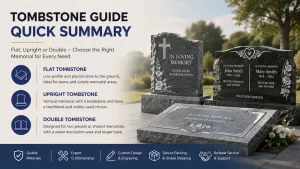
A flat tombstone is a low-profile memorial placed close to the ground and is often used in lawn cemeteries or simple memorial areas.
An upright tombstone is a vertical memorial with a headstone and base. It is one of the most common granite tombstone structures for traditional cemetery use.
A double tombstone is designed for two people, couples or family memorials. It usually has a wider inscription area and a larger base structure.
Before choosing a tombstone type, buyers should confirm cemetery regulations, plot size, memorial style, material, engraving space, base stability, installation method and export packing requirements.
Why Tombstone Type Matters
The tombstone type affects almost every part of the order, including design, material usage, engraving layout, installation and cost. A flat marker may be simple and cost-controlled, while a full upright or double memorial may require more stone, stronger base support and more careful packing.
| Selection Factor | Why It Matters |
|---|---|
| Cemetery rules | Some cemeteries only allow certain memorial heights or structures. |
| Plot size | Determines whether a flat, upright or double tombstone is suitable. |
| Engraving space | Affects how much text, symbols or photos can be added. |
| Material usage | Larger or thicker structures increase stone consumption. |
| Installation | Different memorial types need different base and fixing methods. |
| Visual style | The structure changes the final cemetery appearance. |
| Packing and shipping | Larger and heavier tombstones need stronger export packing. |
| Budget | Structure, size and carving details all affect final cost. |
For B2B buyers, choosing the correct memorial type at the beginning helps avoid quotation changes, production delays and installation problems.
What Is a Flat Tombstone?
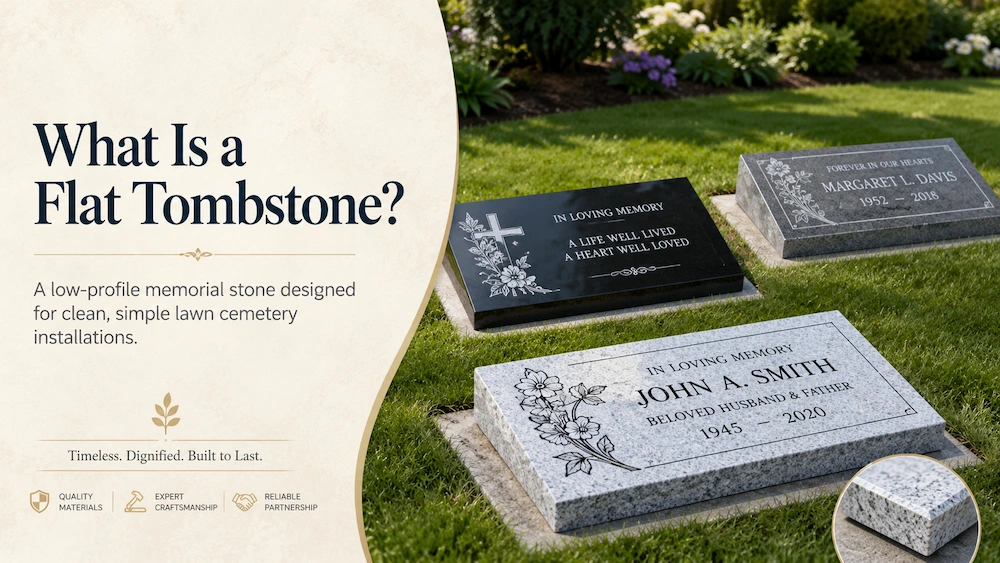
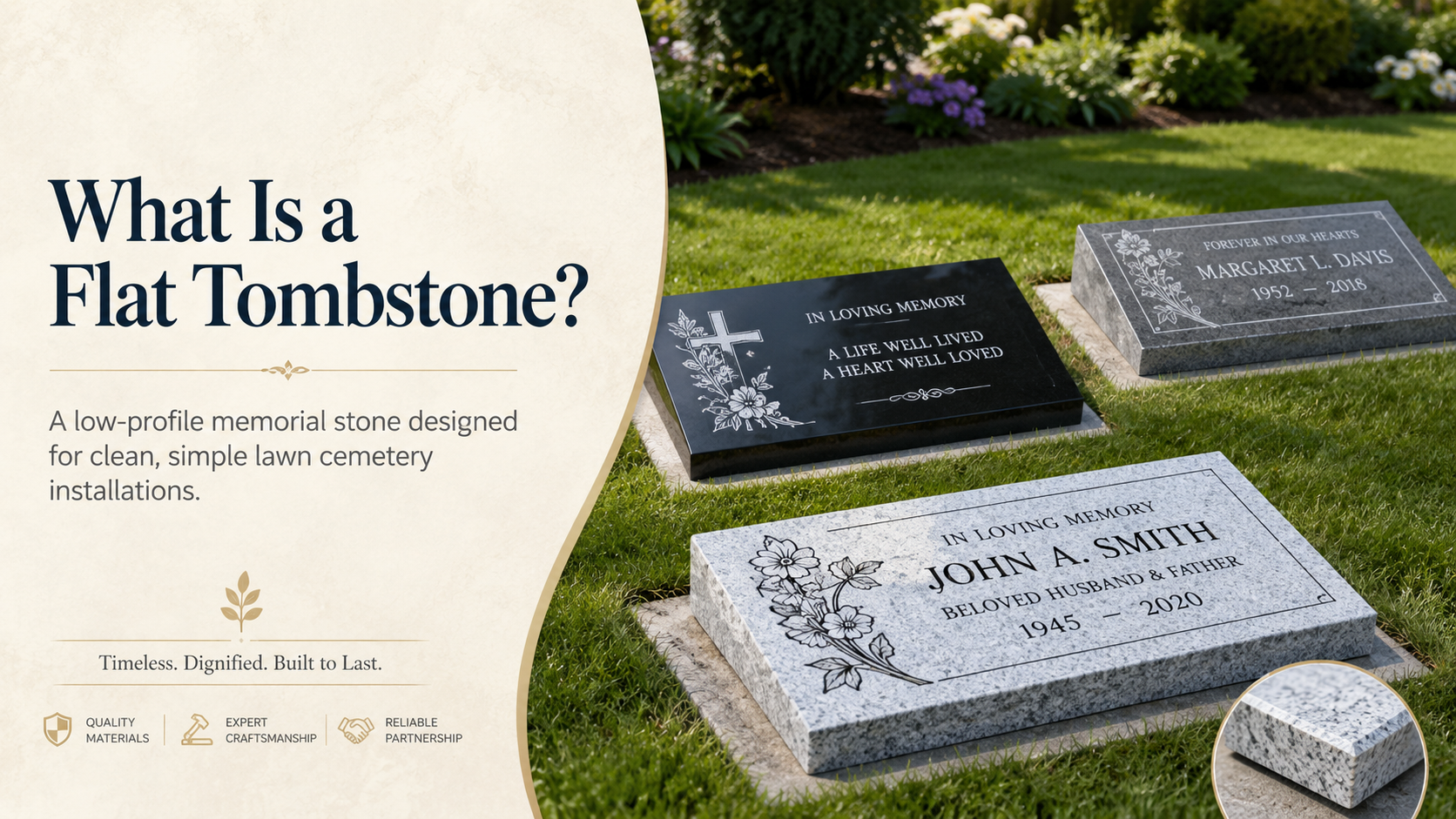
A flat tombstone, also called a flat grave marker or flat memorial, is a low-profile stone memorial usually installed horizontally or slightly raised above the ground. It is often selected for lawn cemeteries, simple grave plots and memorial areas that require a clean and uniform appearance.
| Feature | Description |
|---|---|
| Structure | Low and horizontal memorial stone. |
| Common material | Granite, sometimes marble or other stone. |
| Surface | Usually polished, honed or sandblasted. |
| Engraving | Names, dates, short epitaphs, symbols or simple designs. |
| Installation | Usually placed close to the ground or on a small foundation. |
| Best for | Lawn cemeteries, simple memorials and cost-controlled projects. |
Flat tombstones are suitable when the cemetery requires a lower memorial profile or when buyers need a simple, clean and practical option.
Advantages of Flat Tombstones
Flat tombstones are often chosen for their simple structure and easy maintenance. They are also suitable for cemeteries that want a neat and consistent landscape.
| Advantage | Buyer Benefit |
|---|---|
| Simple structure | Easier to design, process and install. |
| Lower profile | Suitable for lawn cemeteries and regulated cemetery areas. |
| Cost-controlled option | Usually uses less material than large upright structures. |
| Easy maintenance | Simple surface and fewer components. |
| Clear engraving area | Suitable for names, dates and short messages. |
| Flexible size | Can be customized according to cemetery plot rules. |
However, flat tombstones usually have less vertical visual impact than upright memorials and may offer limited space for large carvings or complex decorations.
What Is an Upright Tombstone?
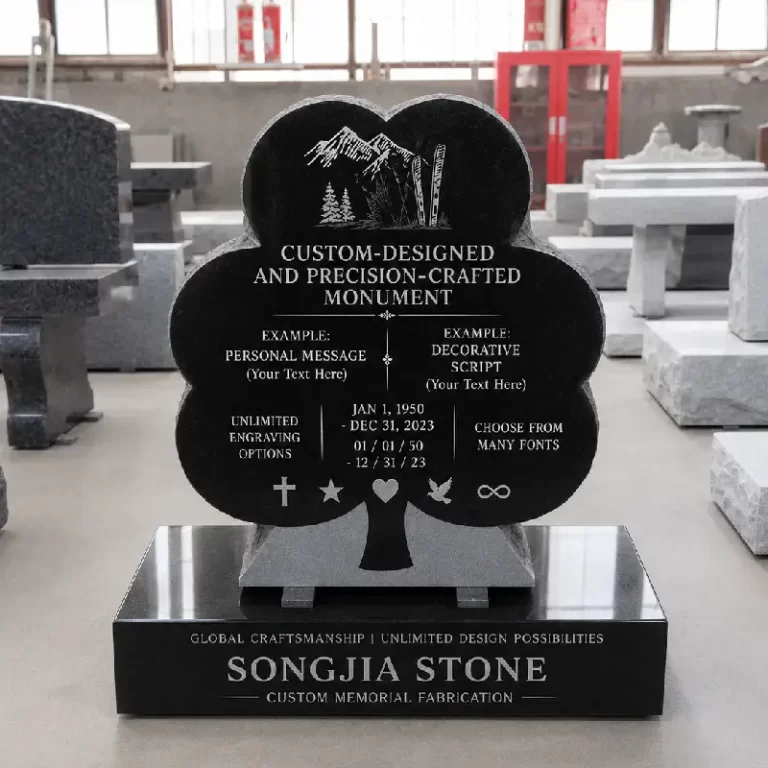
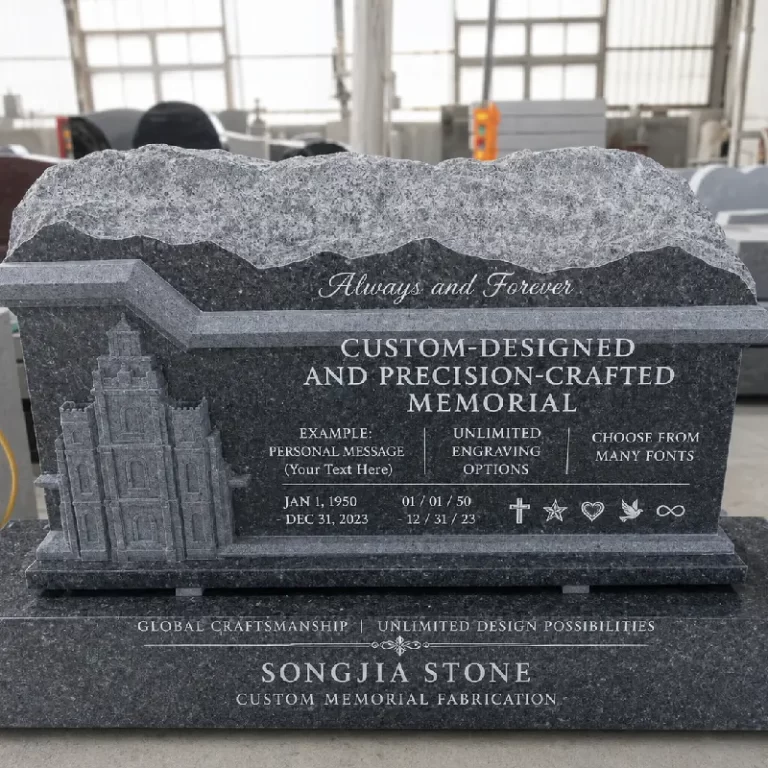
An upright tombstone is a vertical memorial structure that usually includes a headstone and a base. It is one of the most traditional and widely used granite tombstone types in many cemetery markets.
| Feature | Description |
|---|---|
| Structure | Vertical headstone with supporting base. |
| Common material | Granite in black, grey, red, pink, blue or other colors. |
| Engraving area | Front face of the headstone. |
| Design options | Arched top, flat top, heart shape, cross shape, book shape or custom shape. |
| Installation | Requires stable base and correct fixing method. |
| Best for | Traditional cemetery memorials, custom headstones and dealer orders. |
An upright tombstone provides strong visual presence and more design flexibility. It can include carved borders, religious symbols, portraits, flowers, family names and longer inscriptions.
Advantages of Upright Tombstones
Upright tombstones are popular because they provide a clear memorial display and strong design flexibility. They are suitable for both traditional and modern cemetery styles.
| Advantage | Buyer Benefit |
|---|---|
| Strong visual presence | Easy to identify in cemetery settings. |
| Large inscription area | Suitable for names, dates, epitaphs and symbols. |
| Flexible design | Can be made in many shapes and styles. |
| Suitable for carving | Supports flowers, crosses, angels, borders and portraits. |
| Base support | Provides structural stability when properly designed. |
| Wide market acceptance | Common in many international cemetery markets. |
For wholesale and project buyers, upright tombstones are practical because they can be customized by material, size, top shape, base style, engraving and finish.
What Is a Double Tombstone?
A double tombstone is a memorial designed for two people, often used for couples, family members or shared grave plots. It is usually wider than a single upright memorial and may include one large headstone, two inscription panels, a shared base or a combined memorial structure.
| Feature | Description |
|---|---|
| Structure | Wider memorial for two people or shared use. |
| Common layout | One wide headstone, two panels or shared inscription area. |
| Material | Granite is commonly used for stability and durability. |
| Engraving | Two names, dates, epitaphs, family text, symbols or photos. |
| Base | Larger base for weight support and balance. |
| Best for | Couple memorials, family plots and shared cemetery designs. |
Double tombstones require careful layout planning because the inscription space must remain balanced. Both sides should look connected but not overcrowded.
Advantages of Double Tombstones
Double tombstones are suitable when buyers need a shared memorial with more inscription space and a wider design.
| Advantage | Buyer Benefit |
|---|---|
| Shared memorial design | Suitable for couples or family members. |
| Larger inscription area | Allows two names, dates and personal messages. |
| Balanced appearance | Creates a unified memorial design. |
| Custom layout | Supports two panels, shared symbols or family name area. |
| Stronger base structure | Provides better support for wider headstones. |
| Higher memorial value | Often selected for long-term family memorial use. |
For B2B buyers, double tombstones usually need clearer drawings, because size, thickness, base support and engraving layout are more important than with simple single memorials.
Flat vs Upright vs Double Tombstones
The easiest way to choose between these tombstone types is to compare their structure, application and design flexibility.
| Tombstone Type | Structure | Best For | Main Advantage |
|---|---|---|---|
| Flat Tombstone | Low-profile horizontal marker. | Lawn cemeteries and simple memorials. | Clean, simple and cost-controlled. |
| Upright Tombstone | Vertical headstone with base. | Traditional cemetery memorials. | Strong visual presence and flexible design. |
| Double Tombstone | Wider memorial for two people. | Couples and family plots. | Larger inscription area and shared design. |
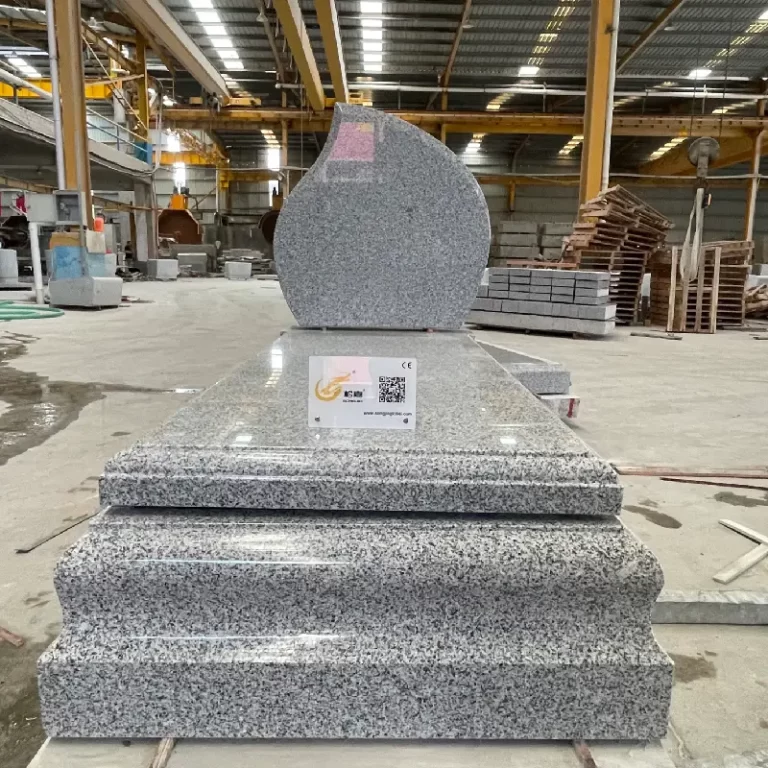
| Full Kerb Tombstone | Headstone with kerbs and cover slabs. | European cemetery plots. | Complete grave structure and strong presence. |
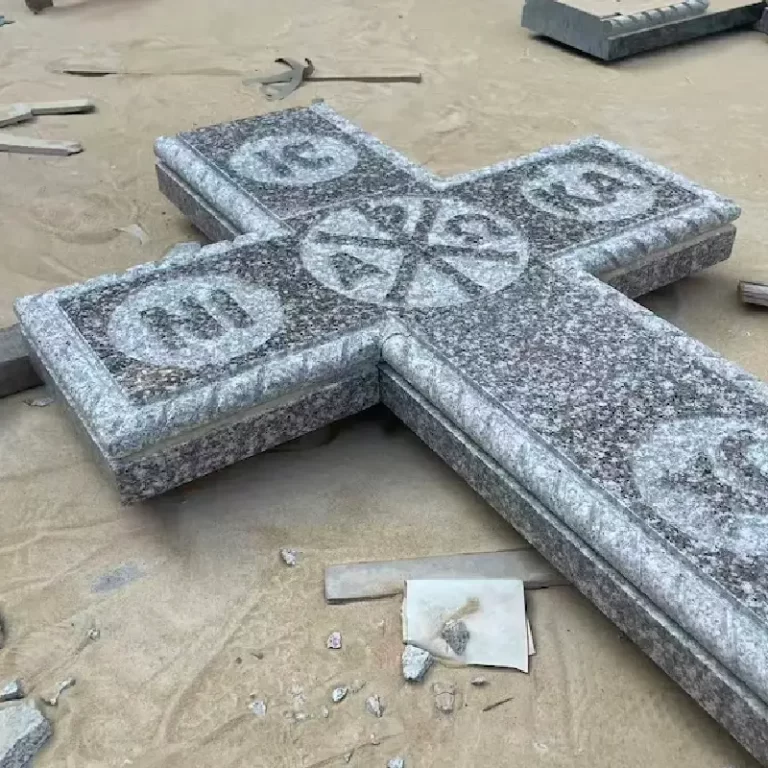
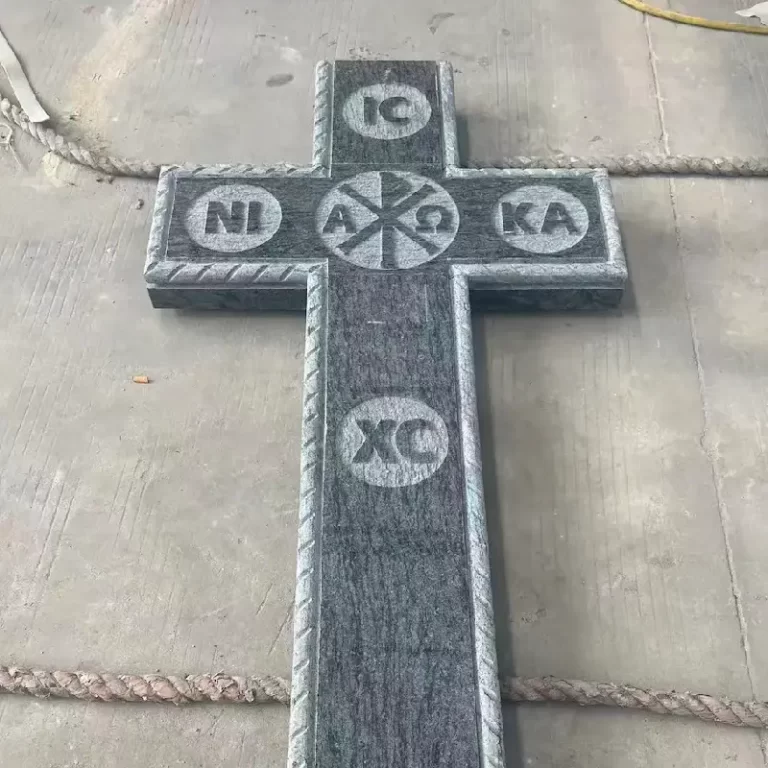
| Cross Tombstone | Cross-shaped or cross-carved memorial. | Christian and religious cemeteries. | Religious symbolism and custom carving. |
Each type can be customized with different granite materials, finishes, engraving styles and decorative details.
How to Choose the Right Tombstone Type
To choose the right tombstone type, buyers should start with the cemetery requirement and the intended use. The structure should match the plot size, installation rules, customer preference and budget.
| Buyer Question | What to Check |
|---|---|
| What does the cemetery allow? | Confirm height, width, base size and allowed structure. |
| Is the memorial for one person or two? | Choose single, double or family memorial layout. |
| How much text is needed? | Confirm inscription area and layout space. |
| Is a religious symbol required? | Consider cross, angel, book, praying hands or other symbols. |
| What is the budget range? | Compare material, size, thickness and carving requirements. |
| What installation method is used? | Confirm base, fixing, foundation and weight support. |
| Will it be shipped internationally? | Confirm packing size, crate structure and loading plan. |
| Is it a repeat order? | Keep material, drawing and engraving records. |
A good tombstone type should satisfy both visual expectations and practical installation requirements.
Cemetery Rules and Plot Size
Cemetery regulations are one of the most important factors when selecting a memorial type. Some cemeteries allow upright tombstones, while others only allow flat markers. European-style cemetery plots may require full kerb sets or specific dimensions.
| Cemetery Requirement | Impact on Tombstone Type |
|---|---|
| Height limit | May restrict upright tombstone size. |
| Width limit | Affects double tombstone or family memorial design. |
| Plot size | Determines whether full kerb or cover slab is possible. |
| Lawn cemetery rules | May require flat or low-profile markers. |
| Religious section | May allow or require cross-shaped memorials. |
| Installation rules | Affects base thickness and fixing method. |
| Material rules | Some cemeteries may limit stone type or color. |
Before production, buyers should confirm cemetery requirements and provide approved dimensions whenever possible.
Engraving Space and Layout
Different tombstone types provide different engraving space. A flat tombstone may have limited space for long text, while an upright or double tombstone can support more detailed inscriptions and symbols.
| Tombstone Type | Engraving Space |
|---|---|
| Flat tombstone | Suitable for names, dates, short epitaphs and small symbols. |
| Upright tombstone | Suitable for names, dates, longer text, photos and decorative carving. |
| Double tombstone | Suitable for two inscription areas and shared family information. |
| Cross tombstone | Requires careful layout around the cross shape. |
| Full kerb tombstone | May include engraving on headstone, base or cover slab. |
For double tombstones, buyers should confirm whether both sides need equal text space, separate portraits or shared symbols.
Material Selection for Different Tombstone Types
Granite is suitable for flat, upright and double tombstones because it is durable, weather-resistant and available in many colors. However, different structures may require different material considerations.
| Tombstone Type | Material Consideration |
|---|---|
| Flat tombstone | Should have a stable surface for engraving and outdoor exposure. |
| Upright tombstone | Needs suitable thickness and strong base support. |
| Double tombstone | Requires good color consistency across a wider stone surface. |
| Full kerb tombstone | Needs matching material for multiple components. |
| Cross tombstone | Should support stable shaping and carving. |
Common granite options include G603 grey granite, G654 dark grey granite, G664 pink granite, Indian Black granite, Shanxi Black granite, Blue Pearl granite and other materials according to project requirements.
Surface Finish Options
Surface finish affects both appearance and maintenance. Different tombstone types may use different finishes depending on design style and cemetery market.
| Finish Type | Common Use |
|---|---|
| Polished finish | Inscription panels, black granite tombstones and premium memorials. |
| Honed finish | Modern simple tombstones and matte memorial designs. |
| Sandblasted finish | Lettering background, symbols and decorative contrast. |
| Flamed finish | Bases, kerbs and outdoor stone surfaces. |
| Rock-pitched edge | Traditional upright tombstones and European memorials. |
| Mixed finish | Custom memorials with different textures on different parts. |
For flat tombstones, the top surface should remain readable and easy to maintain. For upright and double tombstones, the front panel usually needs a clean finish for engraving.
Installation and Base Stability
Installation should be considered before the tombstone is produced. A visually beautiful tombstone still needs a stable structure for long-term cemetery use.
| Structure Detail | Why It Matters |
|---|---|
| Headstone thickness | Affects strength and stability. |
| Base size | Supports upright or double headstones. |
| Base thickness | Helps maintain balance and weight support. |
| Joint alignment | Important for multi-piece memorials. |
| Fixing holes | Needed for some installation methods. |
| Foundation requirement | Depends on cemetery rules and soil condition. |
| Weight distribution | Important for wide or tall memorials. |
Double tombstones and upright tombstones usually require stronger base planning than flat markers.
How Tombstone Type Affects Cost
Different tombstone types have different cost levels because they use different amounts of stone, labor, finishing and packing.
| Tombstone Type | Cost Consideration |
|---|---|
| Flat tombstone | Usually more cost-controlled because of simple structure. |
| Upright tombstone | Medium cost depending on size, base and carving. |
| Double tombstone | Higher cost due to larger size and wider base. |
| Cross tombstone | Cost depends on shape, carving and structure stability. |
| Full kerb tombstone | Higher cost due to multiple components and packing. |
| Custom shaped tombstone | Cost depends on cutting, carving and finish complexity. |
Buyers should compare prices based on the same material, size, thickness, finish, engraving and packing standard. For more cost details, buyers can also review the tombstone cost guide.
Packing and Shipping Considerations
Tombstone structure also affects export packing. A flat marker may be easier to pack than a tall upright memorial or a multi-piece full kerb set.
| Packing Point | Why It Matters |
|---|---|
| Reinforced wooden crates | Protect heavy stone during export shipment. |
| Face protection | Protect polished and engraved surfaces. |
| Corner protection | Reduce chips and edge damage. |
| Soft separation | Prevent stone pieces from scratching each other. |
| Component marking | Helps identify headstone, base, kerbs and slabs. |
| Loading photos | Allows buyers to confirm packing and shipment condition. |
For upright and double tombstones, the headstone and base should be packed carefully to avoid pressure damage during transport.
Common Mistakes When Choosing Tombstone Types
Many problems happen because buyers choose a memorial type before confirming cemetery rules or installation details.
| Common Mistake | How to Avoid It |
|---|---|
| Choosing by appearance only | Confirm cemetery rules, plot size and installation method. |
| Ignoring base support | Match base size with headstone size and weight. |
| Not checking engraving space | Confirm text, symbols and photo layout before production. |
| Choosing wrong material thickness | Match thickness with structure and safety requirements. |
| Forgetting shipping weight | Consider packing size, crate weight and freight planning. |
| No approved drawing | Use CAD drawing or clear dimensions before production. |
| Overcrowded double tombstone layout | Balance two inscription areas and shared design elements. |
| Ignoring repeat order records | Keep material, drawing and finish details for future orders. |
A suitable tombstone type should balance appearance, function, cost and cemetery requirements.
How Songjia Helps Buyers Choose Tombstone Types
Songjia supports custom granite tombstones for cemetery distributors, monument dealers, wholesalers, funeral product importers and memorial project buyers. We help buyers review the structure, material, size, finish, engraving and packing before production.
| Songjia Support | Buyer Benefit |
|---|---|
| Tombstone type suggestion | Helps match flat, upright, double or full kerb designs with project needs. |
| Drawing confirmation | Reduces size, structure and installation mistakes. |
| Material selection | Supports different market styles and budget levels. |
| Engraving layout review | Helps balance text, symbols and photo placement. |
| Base structure support | Improves stability for upright and double memorials. |
| QC before shipment | Confirms size, finish, engraving and structure. |
| Reinforced export packing | Protects heavy and polished memorial products. |
| Repeat order records | Supports long-term dealer and cemetery project supply. |
Buyers can also review more memorial options through Songjia’s tombstones and monuments category or custom tombstones collection.
FAQ About Flat, Upright and Double Tombstones
What is the difference between a flat tombstone and an upright tombstone?
A flat tombstone is a low-profile memorial placed close to the ground, while an upright tombstone has a vertical headstone with a base. Flat tombstones are often used in lawn cemeteries, while upright tombstones are common in traditional cemetery areas.
What is an upright tombstone?
An upright tombstone is a vertical memorial stone usually installed on a base. It provides a clear inscription area and can be customized with different shapes, materials, finishes, carvings and symbols.
What is a double tombstone?
A double tombstone is a wider memorial designed for two people, couples or family members. It usually has more inscription space and requires a larger base structure.
Which tombstone type is more cost-effective?
A flat tombstone is usually more cost-controlled because it has a simple structure. Upright and double tombstones may cost more because they require more stone, larger bases, more engraving space and stronger packing.
Can all tombstone types be customized?
Yes. Flat, upright and double tombstones can be customized by material, size, thickness, shape, finish, engraving, carving and base structure according to cemetery requirements and buyer drawings.
Which tombstone type is best for a couple memorial?
A double tombstone is commonly used for couples or shared memorials because it provides wider space for two names, dates, epitaphs and family symbols.
What should buyers confirm before choosing a tombstone type?
Buyers should confirm cemetery rules, plot size, material, size, thickness, engraving layout, base support, installation method, quantity and export packing requirements.
Are upright tombstones difficult to ship?
Upright tombstones can be safely shipped when properly packed. Reinforced wooden crates, face protection, soft separation and corner protection are important for long-distance sea shipment.
Final Thoughts
Choosing between a flat tombstone, upright tombstone and double tombstone depends on cemetery rules, plot size, memorial purpose, engraving space, material, installation method, budget and shipment requirements.
For cemetery dealers, monument wholesalers and memorial project buyers, the best memorial type is not always the most complex one. It should match the local cemetery market, customer expectations and practical production requirements.
Songjia can support custom granite tombstone projects with material selection, drawing confirmation, engraving layout, base structure review, quality inspection and reinforced export packing. Buyers can send cemetery rules, drawings, sizes, material preferences and quantity details to receive a suitable custom memorial solution.