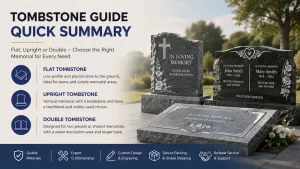
Quick Summary
Headstone usually refers to an upright memorial stone placed at the head of a grave. It commonly includes names, dates, epitaphs, symbols and decorative carving.
Tombstone is a broad term often used for a memorial stone placed at a grave. In modern usage, it can refer to upright headstones, flat markers, double tombstones, full kerb memorials and custom cemetery monuments.
Grave marker usually refers to a lower or simpler memorial marker, often flat or slightly raised, used to identify a grave. In B2B memorial sourcing, buyers should focus not only on the name but also on the material, size, structure, engraving, cemetery rules, installation method and export packing.
Why These Terms Are Often Confusing
The words headstone, tombstone, gravestone and grave marker have been used for many years, and their meanings have changed over time. In modern cemetery product communication, different countries, cemeteries, suppliers and buyers may use different terms for similar products.
| Term | Common Modern Meaning |
|---|---|
| Headstone | Usually an upright memorial placed at the head of a grave. |
| Tombstone | Broad term for a cemetery memorial stone. |
| Grave marker | Usually a flat or low-profile marker for a grave. |
| Gravestone | General term similar to headstone or tombstone. |
| Memorial stone | Broad term for a stone used to commemorate a person. |
| Monument | Larger or more formal cemetery memorial structure. |
For product pages and quotations, it is better to confirm the structure instead of relying only on the term. For example, one buyer may say “tombstone” but actually need a flat marker, while another may say “headstone” but need a full kerb memorial.
What Is a Headstone?
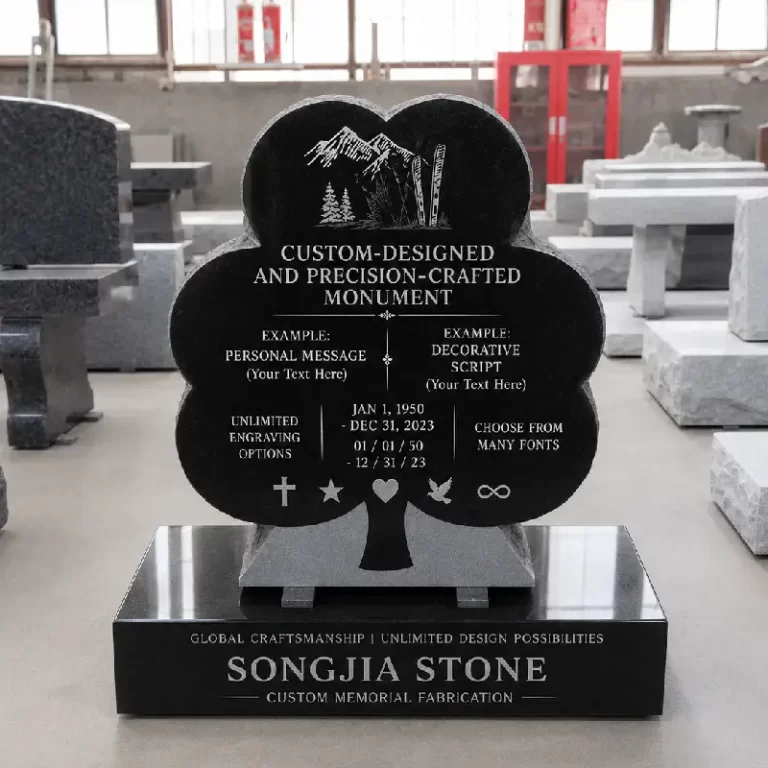
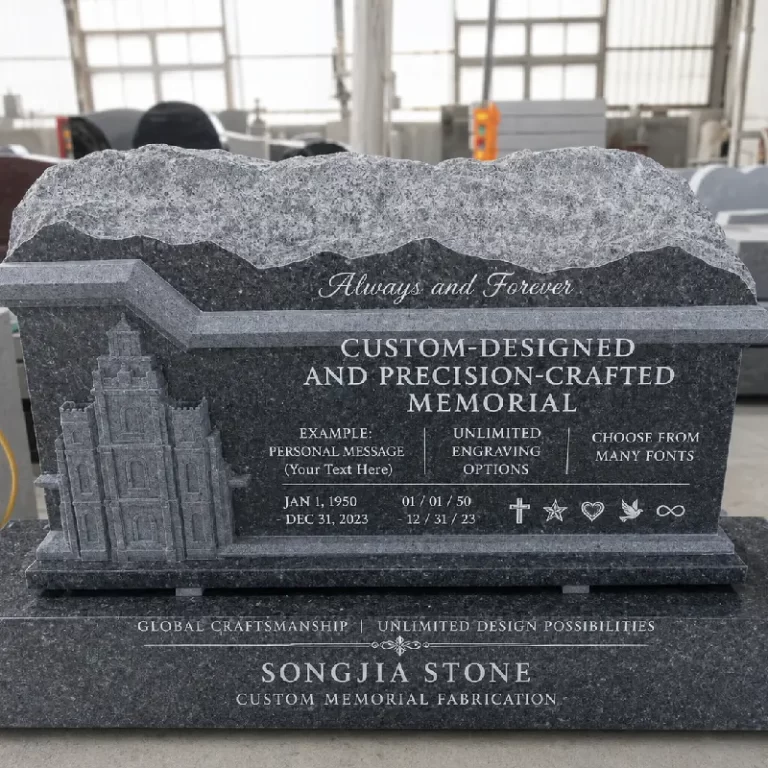
A headstone is generally a memorial stone placed at the head of a grave. It is often vertical and installed with a base. Headstones usually display the name, dates, epitaph and sometimes religious symbols, portraits, flowers, borders or custom carvings.
| Headstone Feature | Description |
|---|---|
| Common structure | Upright stone with base. |
| Main position | Placed at the head of the grave. |
| Common material | Granite, marble or other natural stone. |
| Common details | Names, dates, epitaphs, symbols and portraits. |
| Design options | Flat top, arched top, heart shape, cross shape, book shape or custom shape. |
| Best for | Traditional cemetery memorials and custom family memorials. |
What Is a Tombstone?
A tombstone is a broad term used for a stone memorial placed at a grave. In modern usage, it can refer to many types of cemetery memorials, including upright headstones, flat markers, double tombstones, cross tombstones, full kerb sets and custom monuments.
| Tombstone Type | Description |
|---|---|
| Upright tombstone | Vertical memorial with base. |
| Flat tombstone | Low-profile grave marker. |
| Double tombstone | Wider memorial for two people or family use. |
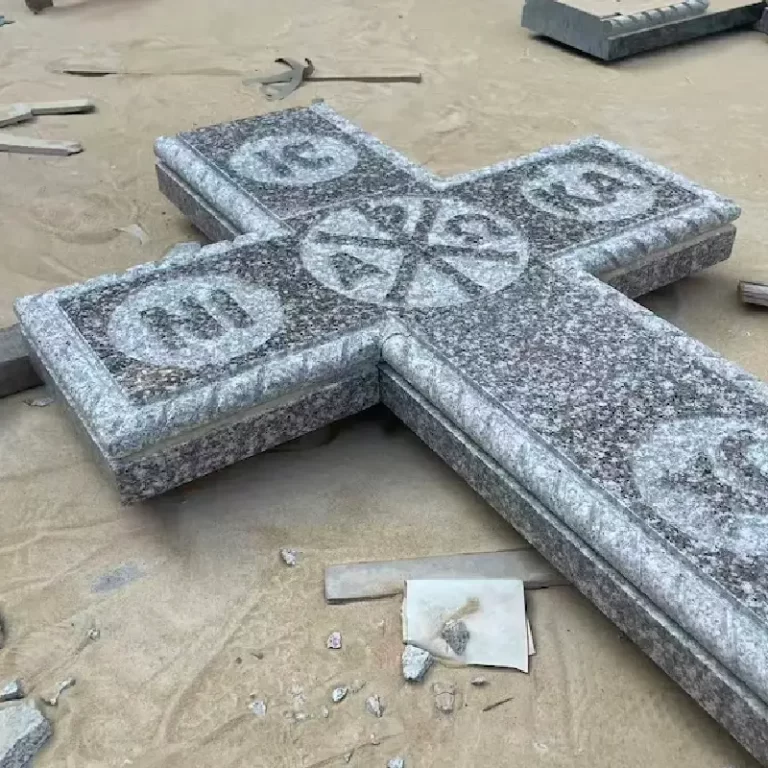
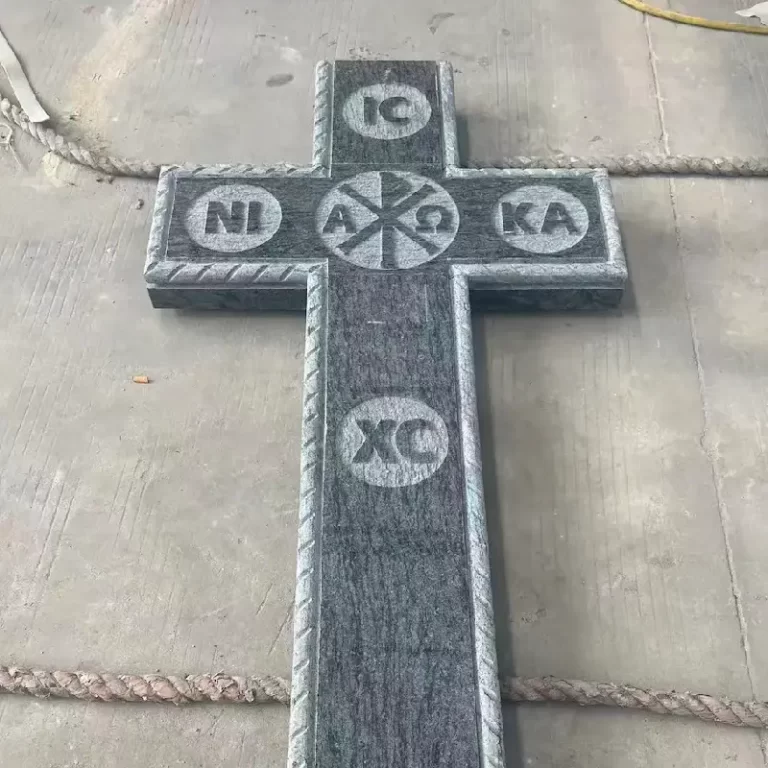
| Cross tombstone | Memorial with cross shape or religious cross carving. |
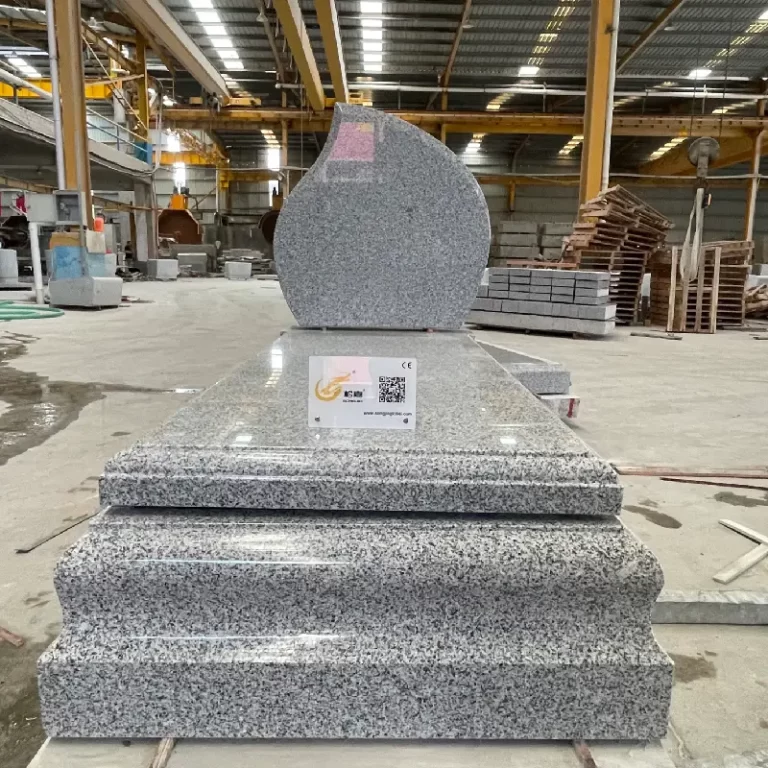
| Full kerb tombstone | Memorial with headstone, base, kerbs and cover slab. |
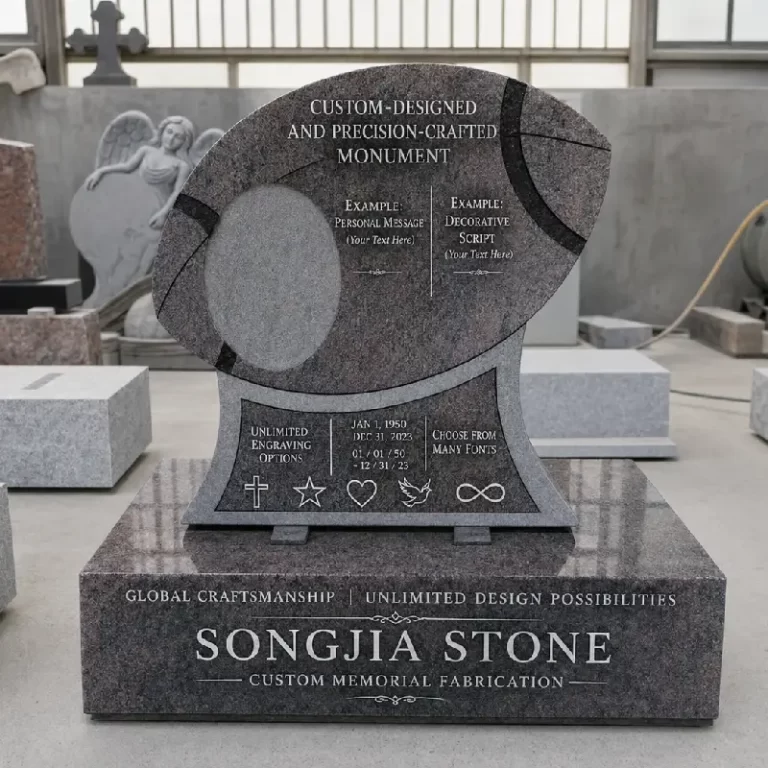
| Custom tombstone | Made according to drawing, material, size and engraving requirements. |
For B2B sourcing, “tombstone” is often useful as a category term because it covers many memorial product types. Buyers can review more styles through Songjia’s tombstones and monuments category or the custom tombstones collection.
What Is a Grave Marker?
A grave marker usually refers to a simple marker used to identify a grave. It is often flat, low-profile or slightly raised from the ground. Grave markers are common in lawn cemeteries and cemetery areas that require uniform memorial height.
| Grave Marker Feature | Description |
|---|---|
| Common structure | Flat or low-profile stone. |
| Main purpose | Identify the grave. |
| Common material | Granite, bronze, marble or stone. |
| Engraving | Names, dates, short epitaphs and small symbols. |
| Installation | Usually placed close to the ground. |
| Best for | Lawn cemeteries, simple memorials and regulated cemetery areas. |
Compared with upright headstones, grave markers usually have less vertical presence but can be easier to maintain and more suitable for certain cemetery rules.
What Is a Gravestone?
A gravestone is another general term used for a stone placed at a grave. In many cases, people use gravestone, headstone and tombstone to mean almost the same thing. The exact meaning depends on the region, cemetery and buyer habit.
| Term | Typical Use |
|---|---|
| Gravestone | General memorial stone at a grave. |
| Headstone | Often upright and placed at the head of the grave. |
| Tombstone | Broad product term for grave memorials. |
| Grave marker | Usually flat or low-profile marker. |
| Monument | Larger or more formal memorial structure. |
Headstone vs Tombstone vs Grave Marker: Key Differences
The main differences are usually structure, placement, height and usage. In modern product sourcing, these terms often overlap, so buyers should confirm the exact design and structure before quotation.
| Comparison Point | Headstone | Tombstone | Grave Marker |
|---|---|---|---|
| Common meaning | Upright memorial at the head of a grave. | Broad term for cemetery memorial stone. | Flat or low-profile grave identifier. |
| Structure | Usually vertical with base. | Can be upright, flat, double, kerb or custom. | Usually flat or slightly raised. |
| Visual presence | Strong. | Depends on design. | Low-profile. |
| Engraving space | Medium to large. | Depends on tombstone type. | Usually limited. |
| Common use | Traditional cemetery memorials. | General memorial product category. | Lawn cemeteries and simple grave identification. |
| Custom options | Shape, base, carving, engraving. | Very flexible. | Size, material, engraving and simple symbols. |
Which Term Should Buyers Use When Requesting a Quote?
When requesting a quotation, buyers can use any common term, but they should also provide clear product details. The supplier needs to know whether the buyer wants an upright headstone, flat marker, double memorial, full kerb set or another custom structure.
| Buyer Says | Supplier Should Confirm |
|---|---|
| I need a headstone | Is it upright? What size, base and material? |
| I need a tombstone | Which structure: upright, flat, double, cross or kerb set? |
| I need a grave marker | Is it flat, bevel, slant or raised? |
| I need a monument | Is it a larger custom memorial or cemetery project item? |
| I need a custom memorial | What drawing, material, size and engraving are required? |
A good inquiry should include the product type, material, size, thickness, engraving, quantity and destination port.
Common Memorial Types Buyers May Need
Instead of focusing only on the wording, buyers should identify the actual memorial type. For international B2B orders, these structure terms are often more important than the difference between headstone and tombstone.
| Memorial Type | Best For | Key Features |
|---|---|---|
| Upright Headstone | Traditional cemeteries. | Vertical headstone with base and large inscription area. |
| Flat Grave Marker | Lawn cemeteries. | Low-profile, simple and easy to maintain. |
| Double Tombstone | Couple or family memorials. | Wider structure and two-person layout. |
| Cross Tombstone | Christian and European cemeteries. | Cross shape or religious cross carving. |
| Full Kerb Memorial | European cemetery plots. | Headstone, base, kerbs and cover slab. |
| Custom Monument | Project and special memorial orders. | Customized by drawing, structure, material and carving. |
Materials Used for Headstones and Tombstones
Granite is one of the most widely used materials for headstones, tombstones and grave markers because it is durable, weather-resistant and suitable for polishing and engraving.
| Material | Features | Common Use |
|---|---|---|
| Granite | Durable, weather-resistant, available in many colors. | Headstones, tombstones, grave markers, kerb memorials. |
| Marble | Elegant and traditional, softer than granite. | Special memorials and carved designs. |
| Limestone | Soft natural appearance. | Traditional or historical-style memorials. |
| Bronze | Often used with stone bases. | Grave markers and plaques. |
| Sandstone | Natural texture. | Certain traditional memorial styles. |
For cemetery dealers and importers, granite is often preferred for long-term outdoor use, repeat orders and custom memorial production.
Granite Headstone and Tombstone Options
Granite memorials can be customized by color, shape, finish, engraving and structure. Different materials create different appearances and cost levels.
| Granite Option | Common Use |
|---|---|
| G603 Grey Granite | Standard memorials and cost-controlled cemetery projects. |
| G654 Dark Grey Granite | Traditional and European-style tombstones. |
| G664 Pink Granite | Country-specific and carved memorial designs. |
| Indian Black Granite | Premium polished headstones and clear engraving. |
| Shanxi Black Granite | High-end black granite memorials. |
| Blue Pearl Granite | Premium custom memorials. |
| Bahama Blue Granite | Decorative and high-value cemetery monuments. |
Material selection should match the cemetery style, customer preference, engraving requirement and budget.
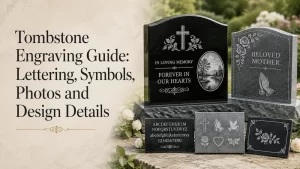
Engraving Differences Between Headstones and Grave Markers
Engraving space can be very different depending on the memorial type. Upright headstones usually provide more space for text and decoration, while flat grave markers may need a simpler layout.
| Memorial Type | Engraving Consideration |
|---|---|
| Upright headstone | Suitable for names, dates, epitaphs, symbols, portraits and borders. |
| Flat grave marker | Suitable for names, dates, short text and small symbols. |
| Double tombstone | Needs balanced layout for two people. |
| Cross tombstone | Text layout should fit around the cross shape. |
| Full kerb memorial | Engraving may appear on headstone, base or cover slab. |
| Custom monument | Engraving depends on drawing and design structure. |
Before engraving, buyers should confirm spelling, dates, font, spacing, symbol position and final layout proof.
Cemetery Rules Matter More Than the Term
Whether a buyer chooses a headstone, tombstone or grave marker, cemetery regulations must be confirmed before production. Many cemeteries have specific rules for size, height, material, base, installation and permitted designs.
| Cemetery Rule | Why It Matters |
|---|---|
| Height limit | Affects upright headstone design. |
| Width limit | Affects double tombstone and family memorials. |
| Lawn cemetery rules | May require flat grave markers. |
| Plot size | Determines kerb and cover slab dimensions. |
| Material restrictions | May limit stone color or material type. |
| Religious section rules | May affect symbols and cross designs. |
| Installation method | Affects base thickness and fixing details. |
A memorial that looks good in a photo may still be unsuitable if it does not meet local cemetery requirements.
How to Choose the Right Memorial Type
To choose between a headstone, tombstone and grave marker, buyers should consider the cemetery rules, memorial purpose, visual style, engraving needs, budget and installation method.
| Buyer Question | What to Check |
|---|---|
| What does the cemetery allow? | Confirm height, width, material and installation rules. |
| Is the memorial for one person or two? | Choose single, double or family layout. |
| Is a low-profile design required? | Consider flat grave marker. |
| Is strong visual presence needed? | Consider upright headstone or monument. |
| Is a religious design required? | Consider cross tombstone or symbol engraving. |
| How much text is needed? | Confirm engraving area and layout. |
| What material is preferred? | Choose granite color and finish. |
| Is it a wholesale or project order? | Confirm quantity, drawings and repeat order records. |
The best memorial type should match both emotional expectations and practical cemetery requirements.
How These Terms Affect SEO and Product Pages
For independent websites and B2B memorial suppliers, it is useful to understand how buyers search. Some buyers search “headstone,” others search “tombstone,” “gravestone,” “grave marker” or “memorial stone.”
| Search Term | Suggested Page Use |
|---|---|
| Headstone | Upright memorial product pages and blog content. |
| Tombstone | Broad category pages and custom tombstone content. |
| Grave marker | Flat marker and lawn cemetery product content. |
| Gravestone | General SEO blog and informational content. |
| Memorial stone | Broader memorial product category content. |
| Monument | Larger memorials, cemetery projects and custom monuments. |
A good website should use these terms naturally, but product pages should still describe the exact structure, size, material and customization options.
Common Mistakes When Comparing Memorial Terms
Many buyers make mistakes when using these terms without confirming the actual product structure.
| Common Mistake | Better Practice |
|---|---|
| Assuming headstone and tombstone always mean different products | Confirm structure, size and installation. |
| Asking for a tombstone without design details | Provide drawing or reference photo. |
| Using grave marker for all memorial types | Confirm whether the marker is flat, bevel or upright. |
| Ignoring cemetery rules | Check local regulations before production. |
| Comparing prices without specifications | Match material, size, thickness, finish and engraving. |
| Not confirming engraving space | Review layout before production. |
| Forgetting export packing | Confirm crate protection and loading plan. |
How Songjia Helps Buyers Choose the Right Memorial
Songjia supplies custom granite headstones, tombstones, grave markers and cemetery memorials for dealers, wholesalers, funeral product importers and project buyers. We help buyers clarify the product structure before production to reduce mistakes in design, quotation and installation.
| Songjia Support | Buyer Benefit |
|---|---|
| Product type clarification | Helps identify headstone, tombstone, marker or monument structure. |
| Material selection | Matches cemetery style, budget and engraving requirements. |
| Drawing confirmation | Reduces size, thickness and structure mistakes. |
| Engraving layout support | Helps arrange names, dates, symbols and photos clearly. |
| Custom processing | Supports flat, upright, double, cross and full kerb memorials. |
| QC before shipment | Checks size, finish, engraving and structure. |
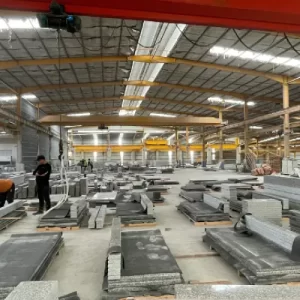
| Reinforced export packing | Protects stone memorials during long-distance shipment. |
| Repeat order records | Supports long-term B2B supply and project consistency. |
FAQ About Headstones, Tombstones and Grave Markers
What is the difference between a headstone and a tombstone?
In modern use, headstone and tombstone are often used interchangeably. A headstone usually refers to an upright memorial placed at the head of a grave, while tombstone is often used as a broader term for cemetery memorial stones.
What is a grave marker?
A grave marker is usually a flat or low-profile memorial used to identify a grave. It often includes names, dates and short inscriptions.
Is a gravestone the same as a headstone?
In many modern contexts, gravestone and headstone are used to describe similar cemetery memorial stones. The exact meaning depends on local usage and cemetery product type.
Which term should I use when ordering?
Buyers can use headstone, tombstone, grave marker or memorial stone, but they should also provide the exact structure, size, material, engraving details, quantity and cemetery requirements.
Are all tombstones upright?
No. Tombstones can be upright, flat, double, cross-shaped, full kerb or custom-designed. The structure should be confirmed before quotation.
What material is best for headstones and tombstones?
Granite is commonly used because it is durable, weather-resistant, polishable and suitable for engraving. Black, grey, pink, red and blue granite are common options.
Can grave markers be customized?
Yes. Grave markers can be customized by material, size, shape, finish, engraving, symbols and layout according to cemetery rules and buyer requirements.
Why do cemetery rules matter?
Cemetery rules may limit the size, height, material, base, installation method and design style. Buyers should confirm these requirements before production.
Final Thoughts
The difference between headstone vs tombstone vs grave marker is important, but in modern memorial sourcing, these terms often overlap. A headstone is usually an upright memorial, a tombstone is often a broader cemetery memorial term, and a grave marker is usually a flat or low-profile grave identifier.
For cemetery dealers, monument wholesalers and memorial project buyers, the most important step is to confirm the actual product structure, material, size, finish, engraving, cemetery rules and packing requirements. Songjia can support custom granite headstones, tombstones, grave markers and memorial monuments with material selection, drawing confirmation, engraving layout, quality inspection and reinforced export packing.