Quick Summary
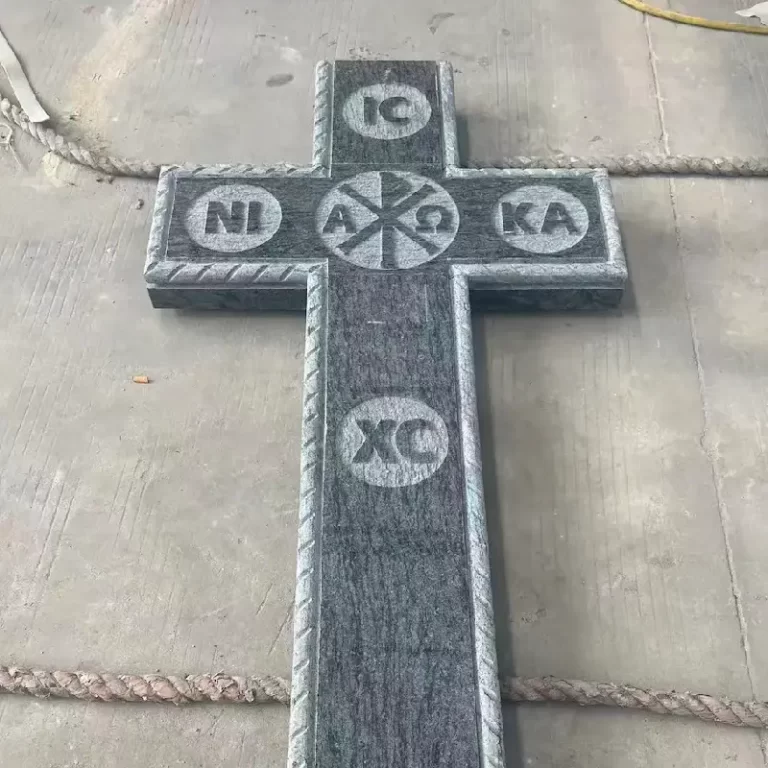
A custom tombstone is made according to specific project requirements, including material, size, shape, finish, engraving, carving and structure.
The standard custom tombstone process includes drawing confirmation, granite selection, cutting, shaping, polishing, engraving, carving, quality inspection, reinforced export packing and shipment arrangement. Before production, buyers should confirm the drawing, dimensions, material, thickness, inscription layout, surface finish, cemetery requirements, quantity and destination port.
What Is a Custom Tombstone?
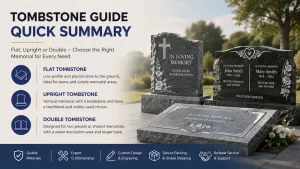
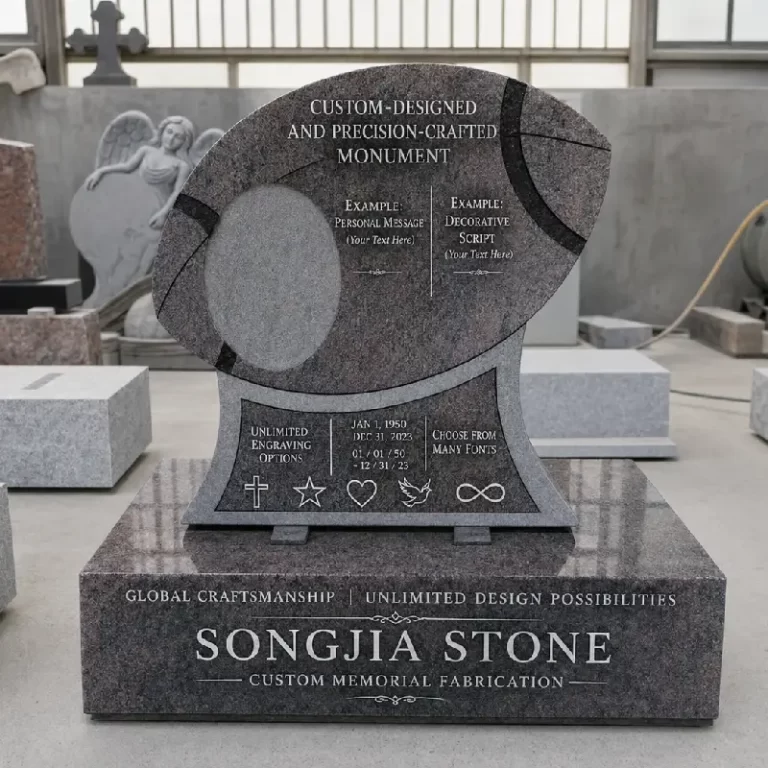
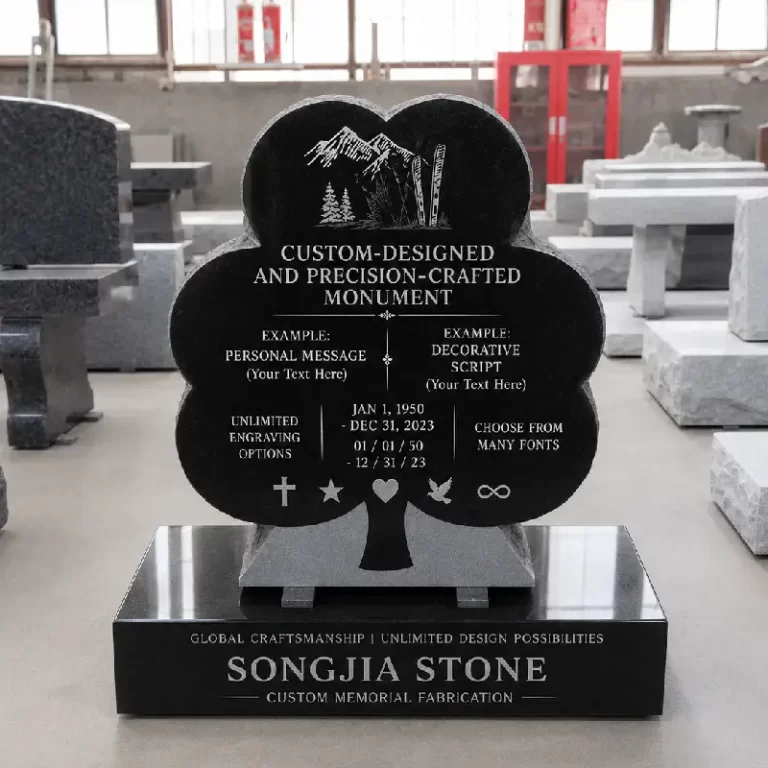
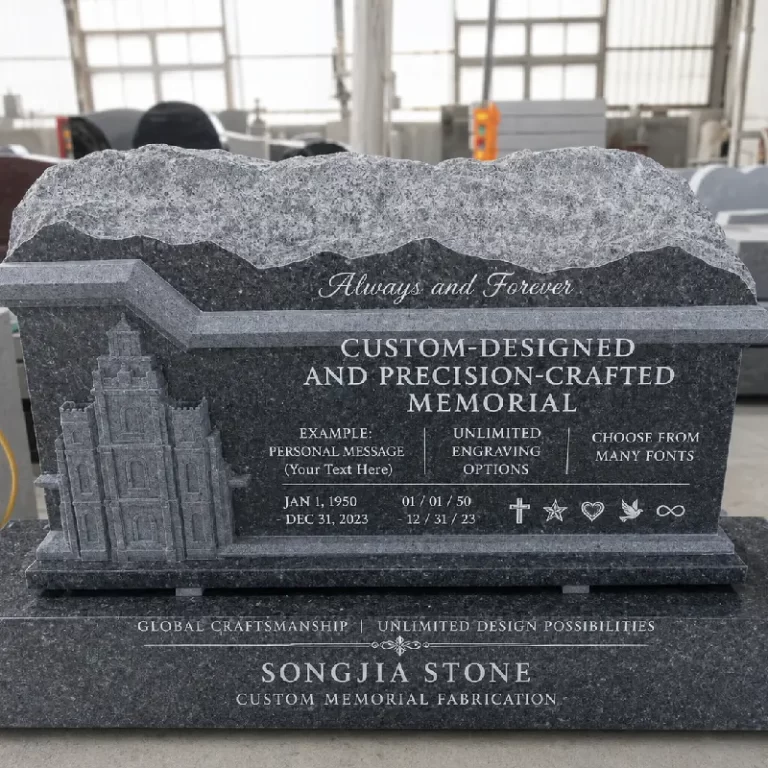
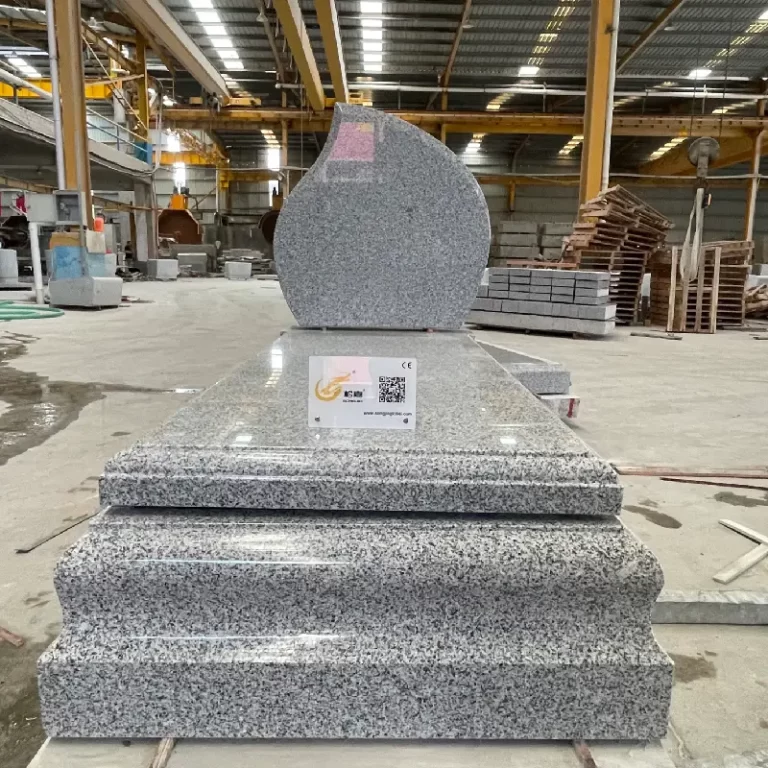
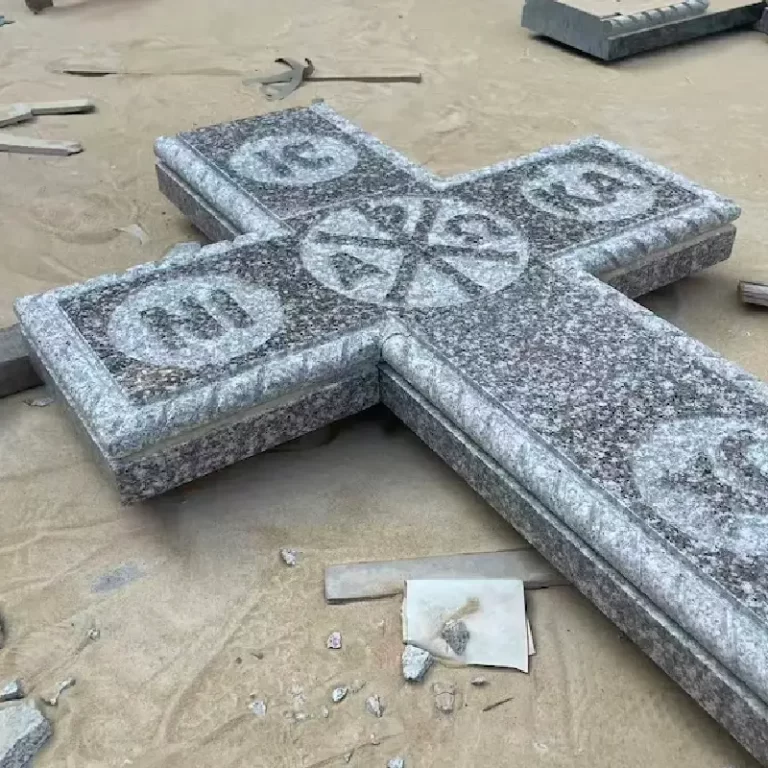
A custom tombstone is a memorial stone designed and manufactured according to specific buyer requirements instead of a fixed standard model. It can be customized by shape, size, granite color, surface finish, engraving, carving, religious symbol, base structure, kerb set layout and installation requirements.
Custom tombstones are commonly used for cemetery projects, monument dealer orders, wholesale memorial supply, country-specific cemetery styles and personalized memorial designs.
| Custom Item | Common Options |
|---|---|
| Material | Grey granite, black granite, pink granite, red granite, blue granite and other natural stone options. |
| Shape | Upright, flat, double, cross, heart, book, full kerb or custom monument. |
| Size | Customized according to cemetery rules and buyer drawings. |
| Finish | Polished, honed, flamed, sandblasted, rock-pitched or mixed finish. |
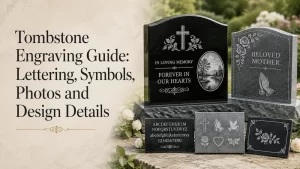
| Engraving | Names, dates, epitaphs, symbols, borders, portraits and decorative details. |
| Structure | Headstone, base, kerbs, cover slab, vase, plinth or multi-piece memorial. |
For B2B buyers, a custom tombstone should always be confirmed by drawing and specification before production.
Why the Custom Tombstone Process Matters
A tombstone is heavy, durable and often installed outdoors for long-term memorial use. Once the stone is cut, polished or engraved, mistakes can be difficult and expensive to correct. That is why the process before production is as important as the production itself.
| Process Step | Why It Matters |
|---|---|
| Drawing confirmation | Avoids wrong size, shape or structure. |
| Material confirmation | Reduces color difference and wrong stone selection. |
| Engraving proof | Prevents spelling, date, font and layout mistakes. |
| Finish confirmation | Ensures the final appearance matches the order. |
| QC inspection | Checks size, polish, carving, edge treatment and structure. |
| Export packing | Protects heavy and polished stone during long-distance shipment. |
A clear custom tombstone process helps buyers control quality, reduce disputes and improve repeat order consistency.
Step 1: Confirm the Tombstone Design Requirement
The first step is to confirm what type of custom tombstone the buyer needs. This includes the country market, cemetery style, product structure, material preference and whether the design must follow local cemetery rules.
| Buyer Requirement | Details to Confirm |
|---|---|
| Cemetery market | European, American, Irish, French, German, Polish, Romanian, Australian or other market. |
| Tombstone type | Upright headstone, flat marker, double tombstone, cross memorial, full kerb set or custom design. |
| Application | Individual grave, couple memorial, family plot, cemetery project or wholesale supply. |
| Style preference | Traditional, modern, religious, simple, carved, full cover or country-specific style. |
| Cemetery rules | Height, width, plot size, base structure, installation method and allowed design details. |
Before moving to production, buyers should provide reference photos, drawings or design notes as clearly as possible.
Step 2: Confirm the Drawing and Dimensions
Drawing confirmation is one of the most important steps in the custom tombstone process. A clear drawing helps the factory understand the exact size, thickness, structure, shape, carving position and installation relationship between each part.
| Drawing Detail | Why It Is Important |
|---|---|
| Overall size | Confirms the final product scale. |
| Headstone thickness | Affects stability, weight and cost. |
| Base size | Supports the headstone and installation. |
| Kerb dimensions | Important for full kerb memorials and cemetery plots. |
| Cover slab size | Affects joint alignment and packing. |
| Hole or fixing details | Important for vases, accessories or installation. |
| Edge profile | Confirms bevel, chamfer, round edge or rock-pitched edge. |
For custom tombstone projects, CAD drawings are preferred. If buyers only have a photo or sketch, the supplier should help convert the design into a clear production drawing before manufacturing.
Step 3: Select the Granite Material
Material selection affects appearance, cost, engraving contrast, polishing result and long-term consistency. Different granite materials may have different tones, grain patterns, availability and price levels.
| Granite Material Type | Common Use |
|---|---|
| G603 Grey Granite | Standard cemetery memorials and cost-controlled wholesale orders. |
| G654 Dark Grey Granite | European-style tombstones, full kerb memorials and traditional designs. |
| G664 Pink Granite | European and country-specific memorial designs. |
| Indian Black Granite | Premium polished tombstones and clear engraving. |
| Shanxi Black Granite | High-end black memorials and fine lettering. |
| Blue Pearl Granite | Premium custom tombstones and special memorial projects. |
| Bahama Blue Granite | Decorative and high-value cemetery monuments. |
For repeat orders, material tone should be confirmed carefully. Natural granite may have color variation between blocks or batches, so buyers should confirm the acceptable tone range before production.
Step 4: Confirm the Surface Finish
Surface finish affects the visual effect, engraving clarity, cost and maintenance of a custom tombstone. A single tombstone may combine several finishes on different parts.
| Finish Type | Common Application |
|---|---|
| Polished finish | Front panels, inscription areas and black granite memorials. |
| Honed finish | Matte surfaces and modern memorial designs. |
| Flamed finish | Bases, kerbs and outdoor stone surfaces. |
| Sandblasted finish | Lettering backgrounds, symbols and decorative areas. |
| Rock-pitched edge | Traditional monuments and European-style memorials. |
| Mixed finish | Custom projects that require different textures on different parts. |
Before production, buyers should confirm which areas are polished, honed, rough, sandblasted or rock-pitched. This prevents misunderstandings during processing.
Step 5: Confirm Engraving and Carving Details
Engraving is one of the most sensitive parts of a custom tombstone order. Names, dates, epitaphs, symbols and layout details must be checked carefully before carving begins.
| Engraving Detail | What to Confirm |
|---|---|
| Text content | Names, dates, epitaphs and language. |
| Font style | Serif, sans serif, script, traditional or custom font. |
| Letter size | Must be readable and balanced on the stone. |
| Letter depth | Affects visibility and durability. |
| Letter color | Natural, painted, silver, gold or other finish. |
| Religious symbols | Cross, angel, rose, candle, book, praying hands or other designs. |
| Portrait or photo | Ceramic photo, laser engraving or carved portrait depending on requirement. |
| Layout proof | Final design proof should be approved before production. |
For international orders, buyers should check spelling, punctuation, dates and language details carefully. Once engraving is completed, correction may be difficult.
Step 6: Cut and Shape the Stone
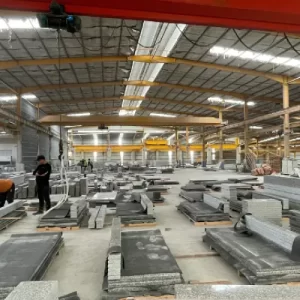
After the drawing, material and details are confirmed, the stone is cut according to the approved dimensions. Cutting and shaping are the foundation of the whole custom tombstone.
| Processing Step | Purpose |
|---|---|
| Block or slab selection | Select suitable stone according to size and quality. |
| Cutting | Cut the stone into required parts. |
| Shaping | Create the required outline, curve, arch, cross, heart or custom shape. |
| Thickness control | Ensure each part matches the approved drawing. |
| Edge preparation | Prepare edges for polishing, beveling or rock-pitching. |
| Component matching | Match headstone, base, kerbs and cover slabs. |
For full kerb memorials and multi-piece tombstones, each part must be checked together to ensure correct joint alignment.
Step 7: Polishing and Surface Processing
Polishing and surface processing determine the final appearance of the tombstone. For black granite tombstones, polish quality is especially important because surface reflection and clarity are more visible.
| Processing Item | Quality Focus |
|---|---|
| Front polish | Clean reflection and smooth surface. |
| Edge polish | Neat edge finish without chips. |
| Base finish | Consistent finish and correct surface treatment. |
| Sandblasted area | Even background and clear contrast. |
| Rock-pitched edge | Natural texture with controlled edge line. |
| Mixed finish | Clear separation between different finish areas. |
Surface finish should match the confirmed design. Buyers can request production photos or inspection photos before packing.
Step 8: Engraving, Carving and Detail Work
After surface processing, engraving and carving details are completed according to the approved layout. This may include text engraving, religious symbols, floral carving, borders, portraits and custom decorative elements.
| Detail Work | Production Focus |
|---|---|
| Letter engraving | Correct spelling, spacing, depth and alignment. |
| Symbol carving | Clear shape and balanced position. |
| Flower carving | Controlled depth and natural detail. |
| Border decoration | Consistent line and symmetrical layout. |
| Portrait engraving | Clear image effect and approved proof. |
| Painted or gilded lettering | Clean filling and neat edges. |
Before this step, the final engraving proof should already be approved by the buyer. This is the best way to avoid mistakes.
Step 9: Quality Inspection Before Packing
Quality inspection is a key part of the custom tombstone process. Since custom tombstones are made according to specific drawings, every part should be checked before packing.
| QC Item | Inspection Focus |
|---|---|
| Material color | Check tone consistency and visible defects. |
| Size | Compare with approved drawing. |
| Thickness | Confirm structural requirement. |
| Surface finish | Check polish, smoothness and texture. |
| Engraving | Check spelling, spacing, depth and layout. |
| Carving | Check detail clarity and shape accuracy. |
| Edges | Check chips, cracks, sharp edges and finishing. |
| Joint alignment | Important for full kerb sets and multi-piece structures. |
| Packing readiness | Confirm clean surface and safe packing preparation. |
Songjia can support QC photo confirmation before shipment, helping buyers review the product condition before final packing and loading.
Step 10: Reinforced Export Packing
Custom tombstones are heavy, polished and often contain engraved or carved surfaces. Safe export packing is necessary to reduce damage risk during handling, loading and sea shipment.
| Packing Detail | Purpose |
|---|---|
| Reinforced wooden crates | Protect heavy stone products during export. |
| Soft separation | Prevent scratches between polished surfaces. |
| Face protection | Protect engraved and polished panels. |
| Corner protection | Reduce chipping and edge damage. |
| Component separation | Keep headstone, base, kerbs and cover slabs safe. |
| Dry crate condition | Reduce moisture-related packing problems. |
| Loading photos | Help buyers confirm shipment before departure. |
For B2B buyers, packing should not be treated as a small detail. Poor packing can cause breakage, claims, customer complaints and delays.
Step 11: Shipment and Delivery Preparation
After packing, the custom tombstone order is prepared for shipment. Shipping arrangement depends on order quantity, packing volume, weight, destination port and container loading method.
| Shipment Detail | What to Confirm |
|---|---|
| Quantity | One piece, mixed order, batch order or container order. |
| Packing list | Confirm crate number, product details and weight. |
| Loading method | Ensure stable loading and safe container arrangement. |
| Destination port | Needed for freight planning. |
| Shipping photos | Help buyers confirm loading condition. |
| Documents | Commercial invoice, packing list and other required documents. |
For repeat or container orders, early planning helps improve production schedule and shipment arrangement.
What Buyers Should Prepare Before Ordering
A clear inquiry helps suppliers provide a more accurate quotation and production plan. Before ordering a custom tombstone, buyers should prepare the following information.
| Information Needed | Example |
|---|---|
| Product type | Upright tombstone, flat marker, full kerb set, cross tombstone. |
| Material | G603, G654, G664, Indian Black, Shanxi Black, Blue Pearl. |
| Size | Headstone, base, kerbs, cover slab and thickness. |
| Drawing | CAD drawing, reference photo or hand sketch. |
| Finish | Polished, honed, flamed, sandblasted, rock-pitched. |
| Engraving | Text, dates, font, language, symbol, portrait or border. |
| Quantity | One piece, batch order, mixed order or container order. |
| Cemetery rules | Size limits, design requirements and installation notes. |
| Destination | Destination port or delivery requirement. |
The more complete the information, the more accurate the quotation and production plan will be.
Common Mistakes in Custom Tombstone Orders
Many custom tombstone problems happen because details are not confirmed early enough. Buyers can avoid these issues by reviewing the design, material, engraving and packing before production.
| Common Mistake | How to Avoid It |
|---|---|
| Sending only a photo without dimensions | Provide size, thickness and structure details. |
| Choosing material by image only | Confirm granite name and acceptable tone range. |
| Ignoring cemetery rules | Check local cemetery requirements before drawing approval. |
| Approving unclear engraving | Review text, font, spacing and dates carefully. |
| Not confirming finish areas | Mark polished, honed, sandblasted and rough areas clearly. |
| Overlooking base stability | Match base size with headstone weight and installation. |
| No QC confirmation | Request inspection photos before packing. |
| Weak packing requirement | Use reinforced wooden crates and proper surface protection. |
A clear custom process reduces unnecessary changes, delays and disputes.
How Songjia Supports Custom Tombstone Projects
Songjia works with cemetery distributors, monument dealers, wholesalers, funeral product importers and memorial project buyers for custom tombstone supply. Our support focuses on practical production control and export order requirements.
| Songjia Support | Buyer Benefit |
|---|---|
| Drawing review | Helps confirm size, structure and production feasibility. |
| Material selection | Matches stone color, design style and budget. |
| Custom processing | Supports different tombstone types and country-specific styles. |
| Engraving proof support | Reduces spelling, layout and font mistakes. |
| Surface finish control | Helps maintain consistent product appearance. |
| QC before shipment | Allows buyers to check quality before loading. |
| Reinforced export packing | Reduces shipping damage risk. |
| Repeat order records | Supports long-term dealer and project supply. |
Buyers can also review more memorial styles through Songjia’s tombstones and monuments category or explore custom options from the tombstones collection.
FAQ About Custom Tombstone Process
What is a custom tombstone?
A custom tombstone is a cemetery memorial made according to specific buyer requirements, including size, material, shape, finish, engraving, carving, base structure and cemetery rules.
What information is needed to order a custom tombstone?
Buyers should provide the material, size, thickness, drawing, surface finish, engraving details, quantity, cemetery requirements and destination port.
Can a tombstone be made from a photo?
Yes, a tombstone can often be customized from a reference photo, but the size, thickness, material, finish and engraving details still need to be confirmed before production.
Why is drawing confirmation important?
Drawing confirmation helps avoid wrong dimensions, unclear structure, poor installation fit and production mistakes. It is especially important for full kerb memorials and multi-piece tombstones.
Can custom tombstones include engraving and religious symbols?
Yes. Custom tombstones can include names, dates, epitaphs, crosses, angels, roses, books, candles, praying hands, portraits and other decorative or religious elements.
How long does custom tombstone production take?
Production time depends on material availability, order quantity, design complexity, carving details and packing requirements. The schedule should be confirmed according to the specific project.
What should buyers check before shipment?
Buyers should check material color, size, thickness, finish, engraving accuracy, carving details, edge treatment, joint alignment, packing condition and loading photos.
How are custom tombstones packed for export?
Custom tombstones are usually packed in reinforced wooden crates with soft separation, face protection, corner protection and stable crate structure to reduce damage during sea shipment.
Final Thoughts
A successful custom tombstone order depends on more than stone processing. Buyers need to confirm the drawing, material, size, finish, engraving, carving, structure, QC inspection and export packing before shipment.
For cemetery dealers, monument wholesalers and memorial project buyers, a clear custom tombstone process helps reduce mistakes, improve product consistency and protect long-term customer relationships. Songjia can support custom tombstone projects from drawing confirmation and material selection to engraving, quality inspection, reinforced export packing and shipment preparation.