Opening Dialogue
Homeowner (Lena): “We’re renovating our kitchen and entry wall. Everyone says marble slabs look incredible—but are they practical?”
Architect (Noah): “Practical and strategic. Slabs give you seamless expanses, dramatic veining, and real resale value—especially in hero zones like islands and reception walls.”
Contractor (Mia): “Installation matters. Slabs need accurate templating and handling, but maintenance is straightforward with modern sealers.”
Lena: “So the decision is about where slabs make the biggest impact and how to care for them?”
Noah: “Exactly. Let’s look at colors, finishes, and styles leading 2025—and where slabs outperform alternatives on value, durability, and design.”
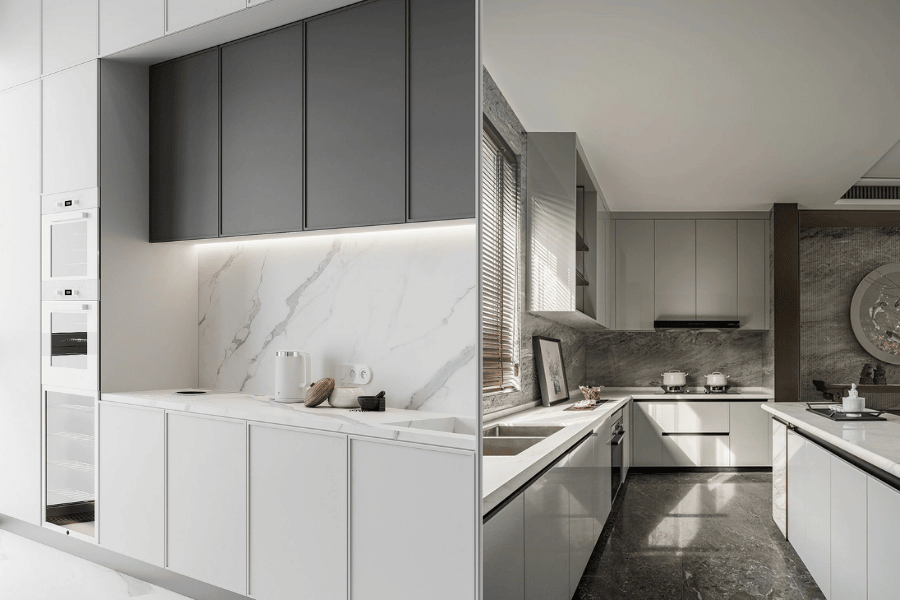
Why Marble Slabs Are Central to 2025 Design
Increases Home Value: Natural stone consistently strengthens listing appeal and perceived quality.
Durability: With 70–120 MPa compressive strength (variety-dependent) and proper sealing, slabs withstand decades of daily use.
Sustainability: Long lifecycle, reclaimed supply, and reuse potential reduce embodied carbon over time.
Design Impact: Seamless surfaces, book-matching, and large formats photograph exceptionally and anchor brand identity.
The Color Story: What Specifiers Are Choosing
Colors Defining the Global Palette
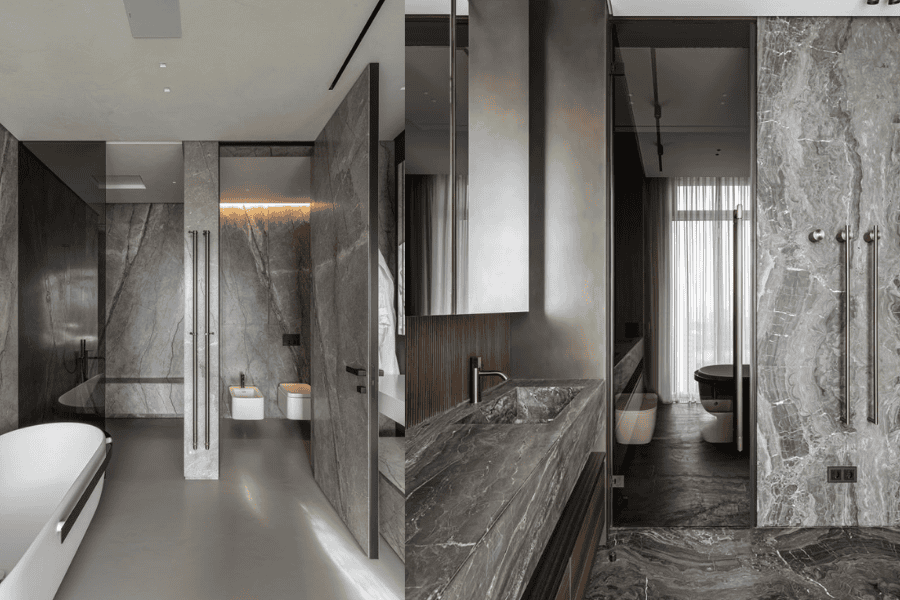
Soft Greys (Carrara-family, Titanium Grey): Minimalist, calming; pair with warm woods and matte metals.
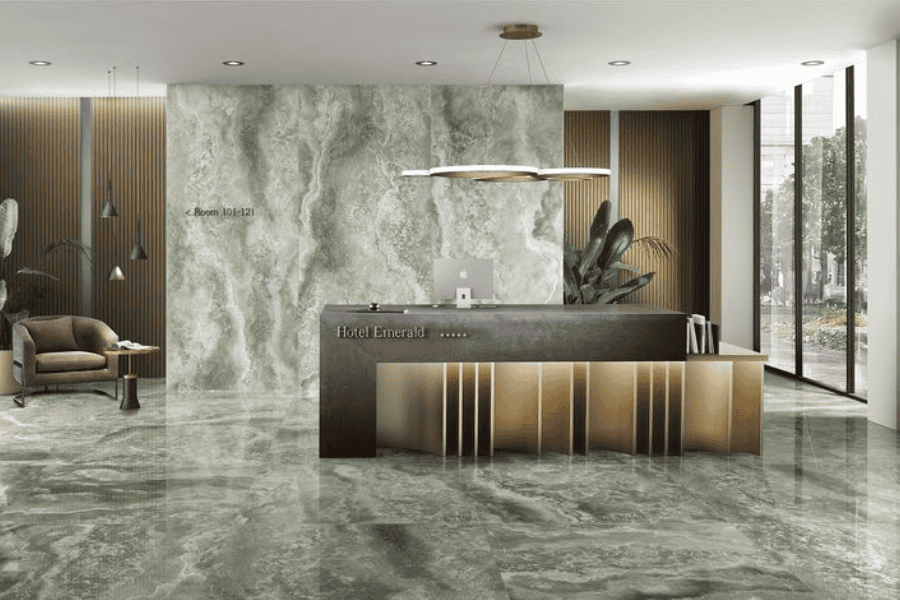
Modern Greens (Verde-family, Storm/Titanium Green): Biophilic, statement-ready; ideal for hospitality and wellness.
Classic Whites (Calacatta/Carrara Whites): Bright, timeless; high contrast veining for feature islands and splash walls.
Dramatic Monochromes (Nero/Graphite tones): Contemporary luxe; stunning for book-matched lobby walls.
-
Reclaimed & Patinated Whites/Greys: Sustainability + history; subtle variation for character-rich spaces.
Color-Use Tips
Open kitchens: light grey or white slabs to reflect natural light.
Low-glare homes/hotels: green or warm grey in honed finish.
Corporate identity: deep grey/green for presence and professionalism.
Finish Focus: From Polished to Tactile
Finishes and Where They Shine
-
Honed: Low sheen, hides micro-wear; top pick for kitchens/baths/hotels.
-
Leathered: Subtle texture with depth; excellent grip and visual warmth.
-
Polished: Maximum reflectivity and contrast; best for feature walls and controlled-light areas.
-
Micro-Textured (for tiles in wet zones): Improves traction in showers/spas while matching adjacent slab tones.
Finish Selection Checklist
-
Traffic level: honed/leathered for daily use; polished for showpiece zones.
-
Lighting plan: reduce glare where there’s direct sunlight or strong downlights.
-
Photography needs: polished or high-contrast honed for PR/marketing imagery.
Style Moves
-
Large-Format Counters/Islands: Fewer seams; premium look; easier daily wipe-downs.
-
Waterfall Edges & Miters: Visual continuity from horizontal to vertical planes.
-
Integrated Backsplashes: Align veining up the wall for cohesive stories.
-
Mixed-Finish Stories: Honed island + polished splash = depth without glare.
Side-by-Side Comparison: Marble Slabs vs Marble Tiles
| Criteria | Marble Slabs | Marble Tiles |
|---|---|---|
| Aesthetic Value | Seamless expanses; dramatic continuous veining | Modular patterns; flexible layouts |
| Durability | Fewer joints; reinforced cut-outs sustain daily use | Easy spot-replacement; excellent for traffic zones |
| Installation | Pro handling/templating; fewer joints | Faster deployment; more grout lines |
| Applications | Islands, long countertops, reception/feature walls | Bathrooms, backsplashes, corridors, large floors |
| Market Appeal | Strong luxury signal; hero-zone impact | Broad coverage with premium look |
Our Marble Slabs: Selection, Processing, and Why They Outperform
Strict Grading & Mapping: Backlit inspection for micro-fissures.
Eco-Sourcing & Reclaimed Lines: Re-sawn/reclaimed slabs for lower embodied carbon and shorter lead times in certain colors.
Better Than Ordinary: Predictable visual continuity, consistent thickness/calibration, and batch documentation to simplify approvals.
Production Process & Quality Control (How We Protect Your Spec)
-
Diamond Wire Saw Cutting minimizes internal stress and warping.
-
Vacuum Resin Stabilization (where appropriate) secures micro-fissures before finishing.
-
CNC Profiling & Edge Reinforcement for sinks/hobs; eased or micro-bevel edges reduce chipping.
-
Factory Pre-Seal + Water-Drop Test to validate absorption resistance.
-
Dry-Lay & Vein Alignment Review prior to crating to ensure design intent.
Why Our Slabs Perform in the Field
-
Reinforced cut-outs reduce spall at stress points.
-
Vein-alignment protocols deliver photo-ready installs.
-
Handover kit: care guide + reseal calendar for end-users.
Expert Insights
Materials Scientist (Dr. Emily Rogers, 2025):
“Marble slabs remain essential because they combine structural reliability with aesthetics. Honed surfaces, in particular, manage wear visibility in public and residential applications.”
Hospitality Designer (Paris 5-Star Case):
Replacing engineered surfaces with book-matched green/grey slabs turned the lobby into a brand statement. Guest satisfaction mentions of the lobby rose, and the property secured a regional design award within a year.
Architectural Trendline (2024–2025):
Surveys show >70% of luxury residential architects specified marble slabs for kitchens/bathrooms, with grey and green leading, and reclaimed supply rising due to sustainability narratives and schedule advantages.
Scientific Data (Spec-Grade Ranges)
Compressive Strength (marble): typically 70–120 MPa (variety/test-method dependent).
Flexural Strength: commonly 6–20 MPa; reinforce spans/overhangs and cut-outs.
Water Absorption after Sealing: ≤0.4–0.5% with quality penetrating sealers.
Maintenance Cycle: reseal typically 9–12 months, usage dependent; verify via water-drop test.
Thermal Properties: ~2–3 W/m·K conductivity → cool touch; beneficial for pastry prep and warm climates.
Sustainability Impact: reclaimed slabs can reduce embodied carbon by ~30–40% vs newly quarried equivalents over project lifecycle.
Real-World Applications & User Feedback
Hotels & Hospitality
Reception Desks / Feature Walls (Slabs): Book-matched grey/green or high-contrast whites create a signature photo moment and simplify nightly cleaning (fewer seams).
Guest Baths (Tiles coordinated with Slabs): Honed/micro-textured tiles in wet zones maintain traction while matching adjacent slab tones.
Feedback: “The slab reception became our brand’s visual anchor. Bathrooms installed quickly with coordinated tiles and see fewer maintenance tickets.”
Residential
Kitchen Islands & Long Runs (Slabs): Seamless surfaces photograph beautifully, boosting listing performance.
Backsplashes & Secondary Baths (Tiles): Modular formats manage budgets while keeping the same stone story.
Feedback: “Our honed slab island reduced glare and still looks new after annual sealing.”
Corporate & Retail
Lobby Walls / Counters (Slabs): Titanium/Storm greys or quiet whites project credibility and calm.
High-traffic Zones (Tiles): Replace individual pieces without disrupting operations.
Feedback: “Marble raised our perceived quality with minimal downtime for maintenance.”
Practical “How-To” (Hands-On Spec & Install)
-
Decide Slab vs Tile by Zone
-
Hero or long span? → slab.
-
Wet area, pattern, fast install? → tile.
-
Unified story? → slab for focal points + tiles for coverage.
-
-
Finish Selection
-
Honed/leathered for daily use & low glare.
-
Polished for statement walls under controlled light.
-
-
Detailing for Durability
-
Reinforce sink/hob cut-outs, specify eased edges, and support long overhangs.
-
Dry-lay and align veining before final fix.
-
-
Sealing & Cleaning
-
Pre-seal at factory/installation; reseal 9–12 months (water-drop test to confirm timing).
-
Use pH-neutral cleaners; avoid acids/abrasives.
-
-
Sustainability Levers
-
Request reclaimed or re-sawn stock when schedule and palette allow.
-
Reuse offcuts for shelves, thresholds, or small furniture tops.
-
FAQ
Are marble slabs still trending in 2025?
Yes. Grey, green, and reclaimed slabs lead global specs across homes and hospitality.
How durable are marble slabs for kitchens?
With correct detailing and sealing, slabs deliver decades of service in daily use.
Which finishes are most popular now?
Honed and leathered dominate for low glare; polished remains a classic for features.
Do marble slabs increase property value?
Listings featuring natural marble typically see stronger buyer interest and premium positioning.
How often should slabs be resealed?
Usually every 9–12 months, validated by a quick water-drop absorption test.
References
-
Harvard Joint Center for Housing Studies — Improving America’s Housing Report 2025 — Harvard JCHS
-
National Association of Realtors — Remodeling Impact Report 2025 — NAR Research
-
Natural Stone Institute — Dimension Stone Design Manual — NSI
-
Rogers, E. — Material Performance of Natural Marble in Interior Applications — Journal of Building Materials
-
Park, E. — Flexural & Compressive Strength Testing for Marble Countertops — Materials & Structures
-
ArchDaily Editors — Kitchen Surface Trends 2025 — ArchDaily
-
Dezeen Interiors Team — Stone Surface Directions 2025 — Dezeen
-
Stone World Magazine — Case Studies: Marble in Global Hotels & Offices — Stone World
-
European Journal of Architecture — ROI of Natural Stone in Contemporary Housing — EJA
-
World Architecture Community — Natural Stone in Global Architecture — WAC
From an expert perspective, marble slabs are no longer just decorative—they are strategic assets in modern architecture. Researchers confirm compressive strength between 70–120 MPa and water absorption rates below 0.5% with proper sealing, supporting decades of service life.Case studies from Paris hotels and Singapore offices demonstrate how marble slabs elevate branding, increase guest satisfaction, and reduce maintenance cycles. Experts emphasize that honed and reclaimed finishes align with sustainability targets, allowing projects to combine environmental responsibility with timeless luxury.
In short, marble slabs deliver measurable ROI, durability, and global design credibility—making them the clear choice for 2025.