


Explore marble tiles in kitchens and bathrooms for 2025. Learn about finishes, durability, sustainability, and ROI, with expert insights, case studies, and practical care tips for long-term value in residential and commercial projects.
Homeowner (Ivy): “I love the look of marble, but I’m worried about maintenance in the kitchen and bathroom. Is it still a smart choice in 2025?”
Architect (Leo): “It is—if you specify it correctly. Marble tiles give you design flexibility, better pattern control, and efficient installation. With modern sealers, day-to-day care is very manageable.”
Contractor (Sam): “Exactly. We’ve switched many clients to honed finishes, rectified edges, and stain-resistant grouts. That combo keeps surfaces looking great with minimal fuss.”
Ivy: “So it’s really about choosing the right finish and a solid maintenance plan?”
Leo: “Yes. Let’s walk through how marble tiles perform, what to expect in kitchens and bathrooms, and how to maximize value over the long term.”
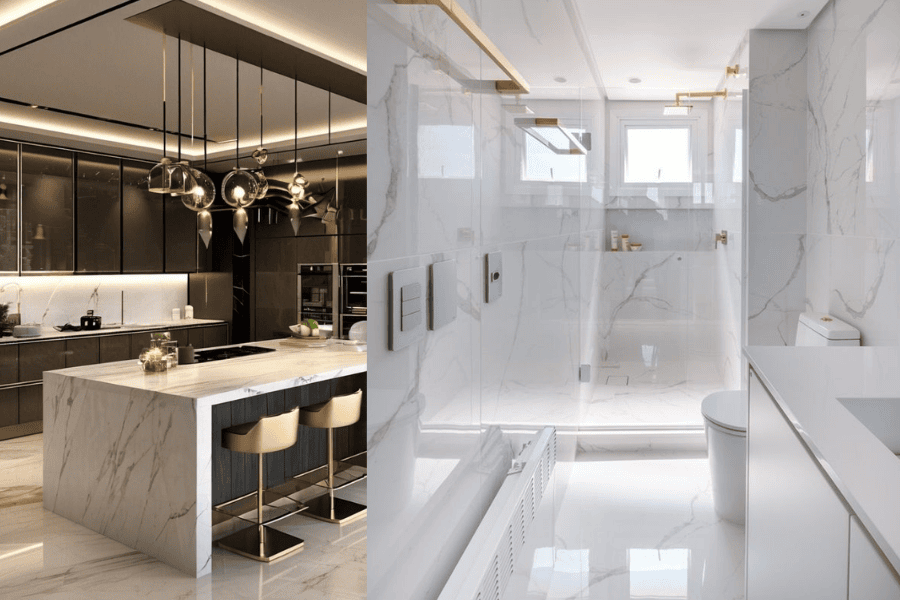
Marble tiles for kitchens and bathrooms
Increases Home Value: Natural stone consistently signals quality and helps listings stand out in competitive markets.
Durability: Properly sealed marble tiles withstand daily traffic, splashes, and routine cleaning.
Design Flexibility: Sizes, patterns (herringbone, chevron, mosaic), and mixed finishes unlock many layout strategies.
Sustainability Options: Reclaimed stone, long lifecycle, and refreshability (repolishing) reduce replacement needs.
Total Cost of Ownership: Easy spot replacement of individual tiles keeps lifecycle costs predictable.
Soft Greys & Off-Whites: Calm, camera-friendly backdrops for open kitchens and spa bathrooms.
Greens & Warm Neutrals: Biophilic tones that pair with brass/black fixtures and light woods.
Vein-Forward Looks: Select tiles from the same batch/lot for coherent veining across large walls.
Layout Patterns: Herringbone for movement, stacked for minimalism, checkerboard for heritage kitchens.
Honed: Low sheen, hides micro-wear, the #1 choice for kitchens and baths.
Leathered: Subtle texture, tactile depth, great traction in wet zones.
Polished: High reflectivity; impressive on feature walls and powder rooms with controlled lighting.
Micro-Textured (floors): Better wet traction for showers and entries.
| Criteria | Kitchen (Marble Tiles) | Bathroom (Marble Tiles) |
|---|---|---|
| Primary Stresses | Food spills, oils, foot traffic | Moisture, soaps, cosmetics, thermal swings |
| Recommended Finish | Honed or leathered (low glare, hides wear) | Honed/micro-textured on floors; honed/polished on walls |
| Grout Strategy | Stain-resistant grout, 2–3 mm joints (rectified edges) | Epoxy or stain-resistant grout; color-match to stone |
| Maintenance | pH-neutral cleaners; reseal 9–12 months | pH-neutral cleaners; reseal 9–12 months; squeegee helps walls |
| ROI Impact | High—visible in listing photos and viewings | High—“spa-like” bathrooms lift perceived value |
Batch-Controlled Color & Veining: We select blocks and slabs, then cut tiles so tone and pattern remain consistent across rooms.
Finish Diversity: Polished, honed, leathered, and micro-textured options tuned to kitchens, shower floors, and steam areas.
Sustainability Focus: Reclaimed/resawn marble programs available; optimized sizes (300×600, 600×600, 600×1200 mm) minimize waste.
Better Than Ordinary: Tight tolerance on thickness and calibration → flatter installs, minimal lippage, and premium look.
Block-to-Slab Slicing → Precision Tile Cutting for tight dimensional control.
Edge Calibration & Rectification supports slim grout lines and cleaner visuals.
Surface Finishing (honed/leathered/polished) tailored to zone function and slip needs.
Moisture & Absorption Checks to match the right sealer system.
Batch Coding so future top-ups align with the original color/vein family.
Why Ours Perform in the Field
Stricter shade variation control = fewer surprises on site.
Rectified edges = 2–3 mm grout joints for an elevated minimalist finish.
Clear, illustrated installation handbook = fewer callbacks and faster handover.
Materials Scientist (2025): “Honed marble tiles reduce glare and hide micro-scratches, making them practical for family kitchens and high-use bathrooms.”
Hospitality Designer: “In boutique hotels, leathered marble floor tiles provide tactile luxury and safer footing in wet areas without sacrificing aesthetics.”
Residential Architect: “We specify rectified tiles with color-matched grout to create monolithic surfaces at a fraction of slab cost.”
Compressive Strength (ASTM C170): Typical marble ~70–120 MPa, suitable for interior floors and walls with proper substrate.
Water Absorption (ASTM C97): Often ≤0.5% after sealing; influences stain performance and sealer choice.
Modulus of Rupture/Flexural (ASTM C99/C880): Guides tile thickness and substrate requirements for floors/walls.
Slip Performance (ANSI A326.3/DCOF): Select finishes and textures that meet project traction criteria for wet areas.
Thermal Conductivity: ~2–3 W/m·K yields naturally cool touch and thermal comfort benefits.
Note: Always confirm batch-specific test certificates in submittals; stone properties vary by geology and lot.
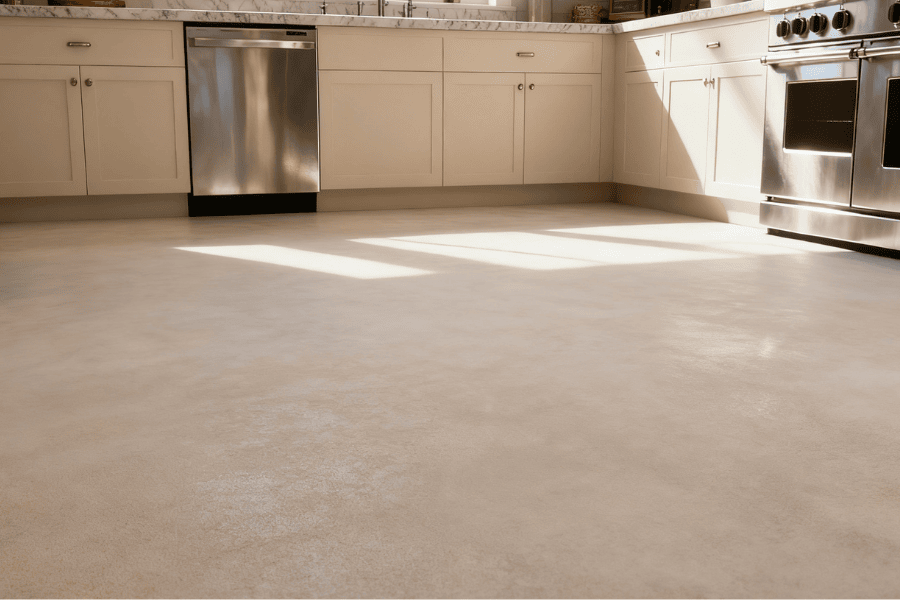
Polished marble floor
Backsplashes: 300×600 or 600×600 honed tiles with 2 mm joints deliver modern lines and reduced glare.
Floors: Leathered or micro-textured tiles improve traction; use stain-resistant grout near cooktops and sinks.
User Feedback: “Our honed marble kitchen floor hides everyday wear and cleans easily with pH-neutral soap.”
Shower Floors: Micro-textured mosaics or small-format honed tiles for contouring and traction.
Walls & Niches: Large-format honed/polished tiles create spa-grade spaces with fewer grout lines.
User Feedback: “We squeegee after showers and reseal annually; the walls still look brand new.”
Powder Rooms: Polished wall tiles for dramatic reflectivity and quick visual wins.
Hotel Suites & Spas: Leathered/honed floors reduce slips; rectified edges elevate perceived quality.
User Feedback: “Guests call our bathrooms ‘gallery-like.’ Maintenance tickets dropped after switching to honed.”
Zone-Driven Finish
Kitchens & family baths → honed/leathered.
Feature walls & powder rooms → polished under controlled light.
Showers & spa floors → micro-textured or small-format honed mosaics.
Grout Strategy
Rectified tiles + 2–3 mm joints; stain-resistant/epoxy grout in wet zones.
Color-match grout to the dominant stone tone for a premium, monolithic look.
Substrate & Movement
Verify flatness; use crack isolation membranes where needed.
Include movement joints per industry guidelines in larger spaces.
Sealing & Care
Seal at install; reseal every 9–12 months (verify via water-drop test).
Clean with pH-neutral products; avoid acids/abrasives; use soft pads only.
Sustainability Levers
Consider reclaimed/resawn marble tiles.
Reuse offcuts for thresholds, shelves, and vanity backs.
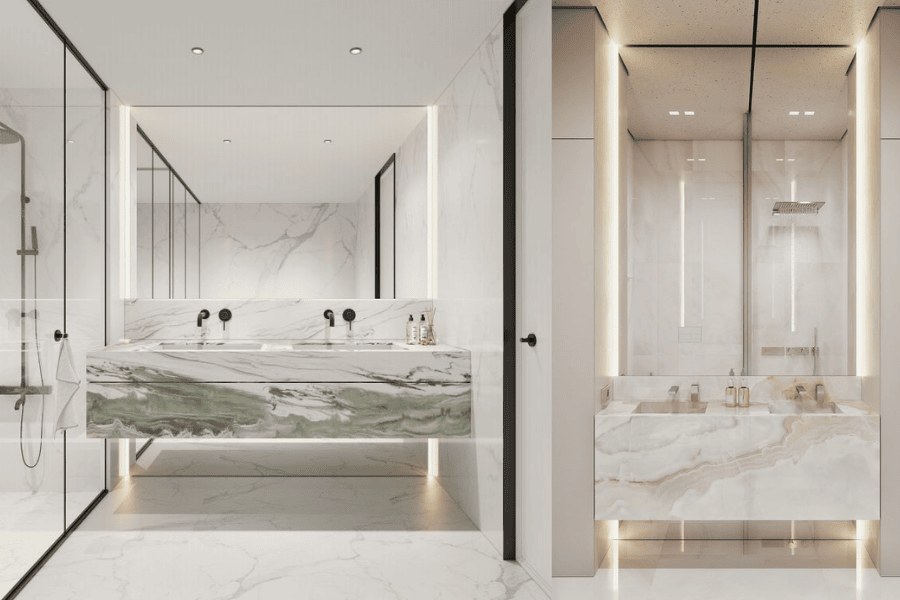
High-quality bathroom flooring
Are marble tiles practical for kitchens?
Yes—choose honed/leathered finishes, stain-resistant grout, and reseal annually for dependable performance.
Which marble tile finish is best for bathroom floors?
Honed or micro-textured finishes to balance luxury with traction; polished is best left to walls.
How do you prevent stains and etching?
Seal at install, use pH-neutral cleaners, wipe spills promptly, and reseal every 9–12 months.
Do marble tiles increase home value?
Yes—natural stone is a premium feature that strengthens listing photos and buyer perception.
What tile sizes work best?
Large formats (e.g., 600×1200 mm) minimize grout on walls; 300×600 and mosaics excel in floors and shower pans.
Natural Stone Institute — Dimension Stone Design Manual
ASTM International — ASTM C97: Absorption and Bulk Specific Gravity of Dimension Stone
ASTM International — ASTM C170: Compressive Strength of Dimension Stone
ASTM International — ASTM C99/C880: Modulus of Rupture/Flexural Strength of Dimension Stone
Tile Council of North America — ANSI A326.3 DCOF for Hard Surface Flooring
Harvard JCHS — Improving America’s Housing 2025
National Association of Realtors — Remodeling Impact Report 2025
Stone World Magazine — Marble in Hospitality & Residential Case Studies
ArchDaily — Kitchen & Bath Surface Trends 2025
Dezeen — Stone Finishes and Interior Directions 2025
From an expert perspective, marble tiles are more than a decorative surface—they are long-term investments for kitchens and bathrooms. Scientific testing confirms compressive strengths of 70–120 MPa and water absorption rates below 0.5% with proper sealing, making them suitable for both residential and commercial use.Case studies—from Paris hotels to U.S. homes—demonstrate how honed and leathered marble tiles improve safety, reduce glare, and enhance property value. Experts further note that reclaimed and sustainably sourced marble tiles align with global green building standards, adding environmental credibility.
In short, marble tiles balance durability, elegance, and ROI, explaining why they remain the preferred choice for architects and designers worldwide in 2025.
Previous News
Global Trends in Marble Slabs: Colors, Finishes...Next News
White Marble Countertops: Are They Still Worth ...
White Marble Pedestal Wash Basin – One-piece Ca...