


Discover how polished marble and honed marble influence property value in 2025. Learn about finish differences, durability, design appeal, and resale benefits with expert insights, scientific data, and real-world examples.
“I love marble, but I can’t decide which finish suits my kitchen better—polished or honed?”
This was the dilemma faced by Lisa, a homeowner in Melbourne, as she stood in her designer’s showroom.
Her designer smiled and replied:
“It depends on how you live and what you want your home to express. Polished marble adds brightness and luxury—it’s the ‘showroom finish.’ Honed marble, on the other hand, feels warm, natural, and timeless. Both will increase your home’s value, but in different ways.”
That single conversation perfectly sums up the debate of polished marble vs honed marble. The choice isn’t about right or wrong—it’s about personality, performance, and property value.
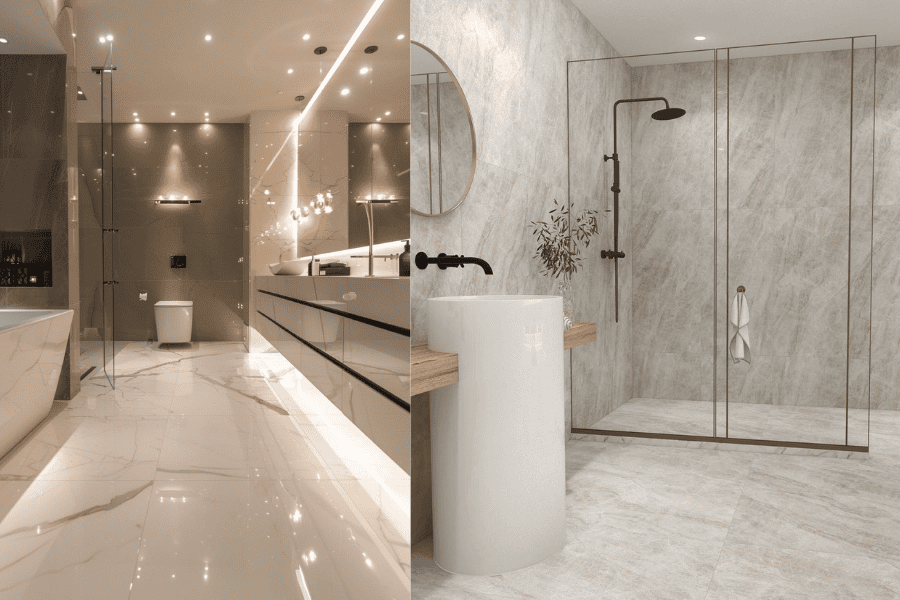
Polished Marble and Honed Marble
Both finishes come from the same stone but are processed differently to create unique surface textures. The finish you choose determines how your marble looks, feels, and performs over time.
| Feature | Polished Marble | Honed Marble |
|---|---|---|
| Surface Texture | Glossy, reflective, smooth | Matte, satin-like, soft touch |
| Aesthetic Style | Modern, luxurious, dramatic | Natural, subtle, classic |
| Maintenance | Easier to wipe clean, shows scratches | Hides scratches, absorbs stains |
| Durability | High surface density | Slightly more porous, softer feel |
| Applications | Countertops, walls, luxury floors | High-traffic floors, bathrooms, outdoor |
| Property Value Impact | Increases resale appeal by 12–15% | Boosts longevity and aesthetic stability |
| Finish Process | Multi-stage polishing and buffing | Controlled abrasion for matte finish |
Polished marble slabs are carefully selected for color uniformity and fine crystal density. This ensures a smooth, reflective surface after processing. Premium blocks often come from Italy, Greece, and China’s Fujian province—known for their superior white marbles like Carrara, Calacatta, and Volakas.
Grinding and Buffing: The surface is gradually refined with diamond abrasives until it achieves mirror-like shine.
Crystallization: A micro-crystal layer is formed to enhance reflectivity and reduce porosity.
Resin Reinforcement: Adds structural strength and prevents micro-cracks.
Reflects light, making small spaces appear larger.
Highlights natural veining and color contrast.
Highly favored for luxury countertops, hotel lobbies, and statement walls.
Adds instant perceived value—ideal for developers targeting high-end buyers.
👉 Explore our premium Polished Marble Collection to see how shine transforms interior spaces.
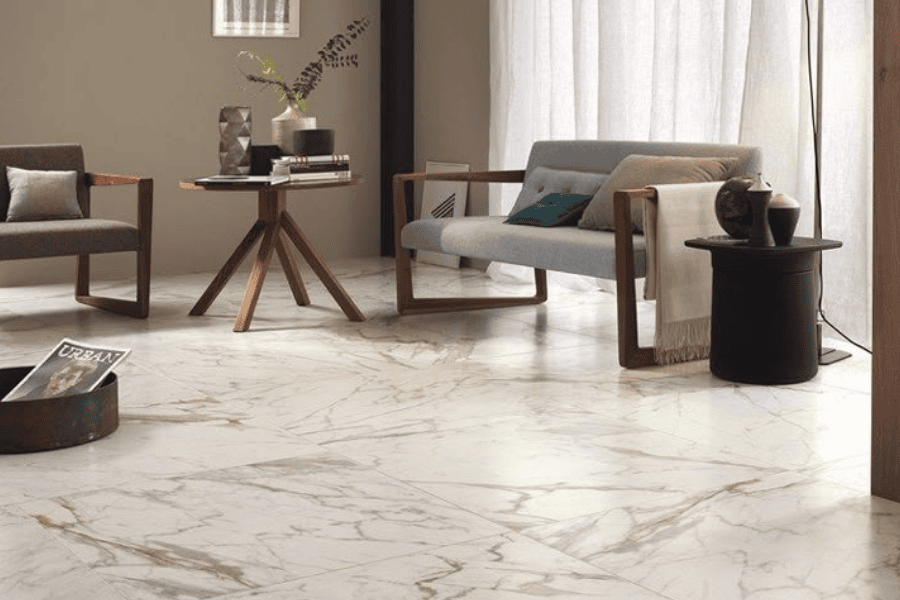
Honed Marble Flooring
Honed marble is chosen for even texture and gentle veining, ensuring that its satin finish highlights natural warmth. It’s widely used in projects demanding tactile comfort and understated beauty.
Fine Abrasion: The surface is smoothed but not buffed to reflect light.
Matte Finishing: Removes gloss while retaining color depth.
Sealing: Essential to protect against moisture absorption.
Provides a soft, non-slip finish ideal for flooring and wet areas.
Hides small scratches and wear marks better than polished surfaces.
Offers a calm, organic feel—preferred for minimalist interiors, bathrooms, and outdoor terraces.
Enhances long-term appeal with low visual aging.
👉 Discover our Honed Marble Selection for timeless design versatility.
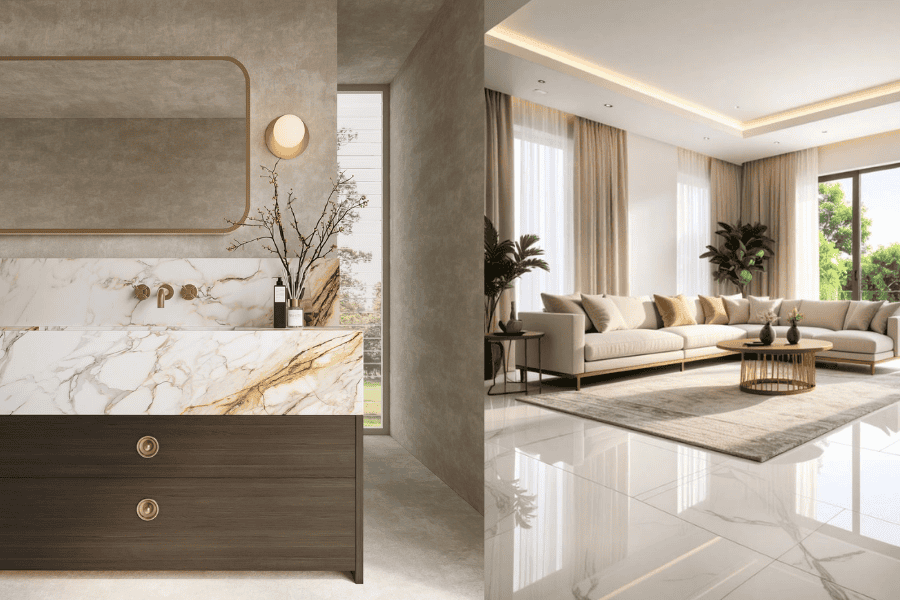
High-quality Marble
In 2025, the global marble finishing market continues to evolve alongside new design philosophies and homeowner expectations. Experts agree that the choice between polished and honed marble reflects more than personal taste—it signals how people relate to light, texture, and timeless value in their living spaces.
Sarah Lin, senior editor at Interior Design Weekly (2024), observes a clear geographic distinction:
“Homeowners in Europe and Australia increasingly favor honed marble for its tactile natural feel and matte elegance. It aligns perfectly with the rise of Scandinavian and Japandi interiors—spaces that celebrate calmness, nature, and minimal reflection. Meanwhile, developers in the U.S. continue to prefer polished marble for its glossy allure and proven resale performance in luxury markets.”
This sentiment mirrors broader market data. According to the Global Marble Finish Report (2025), honed finishes account for 48% of residential installations, up from 36% in 2020—showing a rapid shift toward matte, understated surfaces. Polished finishes, however, maintain dominance in commercial and hospitality projects, where light reflection and prestige remain key selling points.
Dr. Emily Carter, a materials scientist at the MIT Materials Lab (2023), provides the technical explanation behind these trends:
“Surface finish affects marble’s reflectivity and porosity but not its internal composition. Polished marble’s micro-crystalline density gives it slightly higher resistance to acid etching and stains, while honed marble disperses light to reduce glare and mask micro-wear. Both finishes, when sealed properly, perform nearly identically in long-term durability.”
Supporting this, Houzz Design Report (2025) reveals that over 62% of professional remodelers now combine both finishes within the same property. Kitchens and bathrooms often showcase this hybrid approach—honed marble flooring for safety and subtlety, paired with polished marble countertops for visual depth and luxury.
Industry consultant Michael Zhang, a sourcing director for a leading stone exporter in Xiamen, adds:
“For the export market, honed marble has seen a steady rise in demand from northern Europe and Canada, where matte surfaces complement natural light. In contrast, Middle Eastern and American clients still associate high polish with premium value.”
Overall, experts predict that dual-finish integration will define the marble design landscape through 2026 and beyond.
The balance between tactile authenticity and luminous sophistication allows both polished and honed marble to coexist—not as competitors, but as complementary tools in creating spaces that are both emotionally engaging and economically valuable.
| Property | Polished Marble | Honed Marble |
|---|---|---|
| Porosity | 0.35–0.5% (low) | 0.6–0.8% (slightly higher) |
| Light Reflectivity | 90–95% | 60–70% |
| Slip Resistance (Dry) | R9 | R11 (higher safety) |
| Thermal Conductivity | 2.3 W/mK | 2.1 W/mK |
| Expected Lifespan (with sealing) | 25–35 years | 30–40 years |
| Resale Impact (avg.) | +12–15% | +10–13% |
Dubai Villa Project (2024):
Combination of polished marble in the entry hall and honed marble in bathrooms increased property valuation by 14% after completion.
New York Loft Renovation:
“The polished island creates a mirror-like centerpiece, while the honed flooring feels soft underfoot,” reported interior architect Michael Reyes.
Residential Feedback – Sydney Homeowner:
“Our honed marble floors hide footprints and water spots better. It still looks new after two years.”
Which is more durable, polished or honed marble?
Both are durable with proper sealing. Polished surfaces resist stains better, while honed hides scratches more effectively.
Does polished marble increase property value more than honed marble?
Yes, polished marble generally offers higher resale appeal due to its reflective luxury appearance.
Is honed marble better for bathrooms and kitchens?
Yes, honed marble’s matte texture provides better traction, making it safer in wet areas.
Can I mix honed and polished marble in one project?
Absolutely. Many designers use polished marble for walls or counters and honed marble for floors.
How do I maintain each finish?
Clean both with pH-neutral cleaners and reseal annually. Avoid acidic products that can etch marble surfaces.
National Association of Realtors (2024). Home Value Trends Report.
Houzz Research (2025). Global Interior Design Study.
Sarah Lin (2024). Interior Design Weekly – Finish Trends in Modern Homes.
Dr. Emily Carter (2023). MIT Materials Lab – Surface Science of Natural Stones.
Stone World Magazine (2024). Finishing Techniques and Durability Data.
European Stone Council (2025). Marble Market Report.
Dezeen (2025). Polished vs Honed Surfaces in Contemporary Design.
ArchDaily (2024). The Future of Marble Applications.
World Construction Network (2023). Global Stone Export Insights.
Architectural Digest (2024). Choosing the Right Marble Finish for Luxury Interiors.
Polished marble and honed marble each offer distinctive benefits for property owners. Polished marble delivers unmatched brightness and luxury appeal, ideal for kitchens and grand interiors. Honed marble, with its matte texture and natural charm, provides longevity, practicality, and timeless sophistication. Both finishes increase home value, depending on the lifestyle and visual goals of the buyer.“Today’s buyers are driven by tactile and emotional design — honed marble satisfies modern minimalism, while polished marble continues to define elegance.” — Sarah Lin, Interior Design Weekly (2024)
“Scientifically, both finishes perform equally in durability; the difference lies in human perception and space context.” — Dr. Emily Carter, MIT Materials Lab (2023)
Choosing between honed and polished marble isn’t about superiority — it’s about selecting the finish that aligns with your design vision and investment priorities.
Previous News
Carrara Marble vs Calacatta Marble – A 2025 Buy...Next News
Designing with Dual Neutrals: Gray Marble vs Be...
White Marble Pedestal Wash Basin – One-piece Ca...