Is Green Marble Rare—or Just Right?
Homeowner (Aria): “I keep seeing green marble in hotels and spas. Be honest—how rare is it? And is it practical for a family?”
Designer (Milo): “High-grade green marble is rarer than Carrara or standard grey marbles because fewer quarries deliver stable color and consistent blocks. That’s why it reads ‘special’—and holds value.”
Aria: “Where would it work best?”
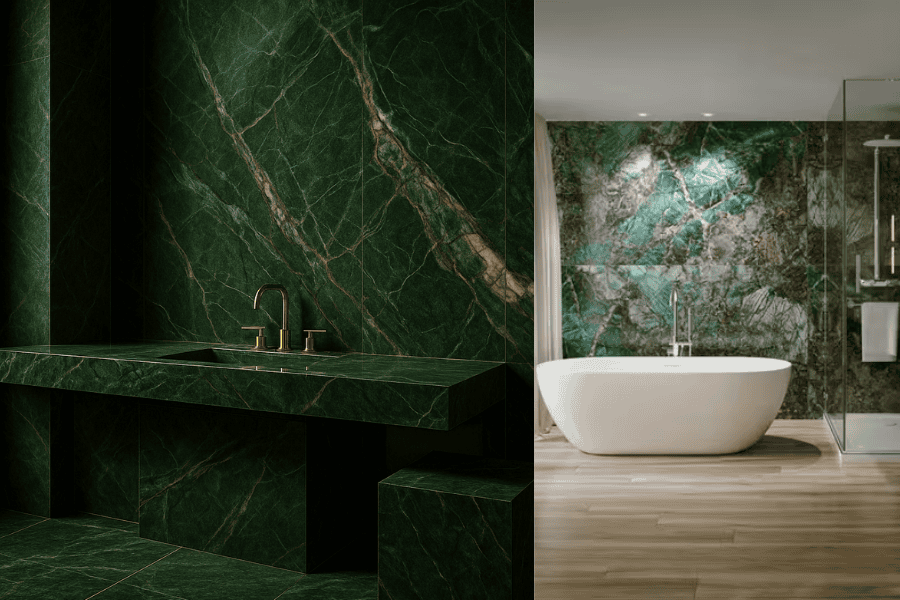
Milo: “Polished green marble on walls and vanities for glow; honed or leathered on floors and tops for traction and low glare. We’ll choose one stone family for the whole project and vary the finish by room.”
Aria: “Maintenance and resale?”
Milo: “pH-neutral cleaning and an annual reseal. In listings, continuous green marble language photographs beautifully and signals premium spec—great for resale.”
Aria: “Anything to avoid?”
Milo: “Mixed lots, thin subfloors, and acidic cleaners. We’ll vein-match, calibrate thickness, and set reseal reminders so the look lasts for decades.”
What “Rare” Means for Green Marble (2025)
Geological supply: Compared with mainstream white/grey marbles extracted at very high volumes, architectural-grade green (stable hue, low fissures, large clean blocks) comes from fewer quarries with stricter sorting, which limits premium inventory.
Color and vein consistency: Buyers want cohesive greens (emerald, forest, olive) without abrupt shade jumps. Achieving this often requires single-block sourcing rather than mixed lots—another limiter.
Market demand: The biophilic design wave (health, wellness, nature-inspired palettes) has pushed demand upward—especially for hospitality and luxury residential.
Net effect: Green marble is moderately rare overall; design-grade rare when you demand block-level consistency suitable for bookmatching and large-format installations.
Green Marble vs White/Grey Marble — Rarity, Price, and Use
| Factor | Green Marble (Forest/Guatemala/Verde Alpi) | White/Grey Marble (Carrara/Pietra/Hermes) |
|---|---|---|
| Quarry distribution | Fewer active sources; stricter color consistency requirements | Many long-running quarries and grades |
| Color/vein uniformity | Harder to match across large projects → rarer at spec grade | Easier to source at scale with controlled shade |
| Typical applications | Feature walls, vanities, statement islands; honed floors | All rooms; slabs/tiles in every format |
| Price behavior | Premium for block-consistent lots; accent uses control cost | Broad price ladder; easier cost optimization |
| Resale signal | High “wow factor” + biophilic trend; reads boutique | Timeless + mainstream luxury; broad appeal |
Our Green Marble: Selection • Processing • Why Ours Performs Better
Material Selection: Blocks We Choose
To balance rarity and project scalability, we focus on block-consistent green marbles from verified quarries in China and Europe.
What we specify
Low micro-fissure density → reduces resin load, improves slab stability.
Controlled raw porosity (~0.4–0.8%) → excellent after vacuum resin + penetrative sealer.
Vein architecture for bookmatch/end-match → continuous flow on feature walls and islands.
Curated tonal families (kept separate):
-
-
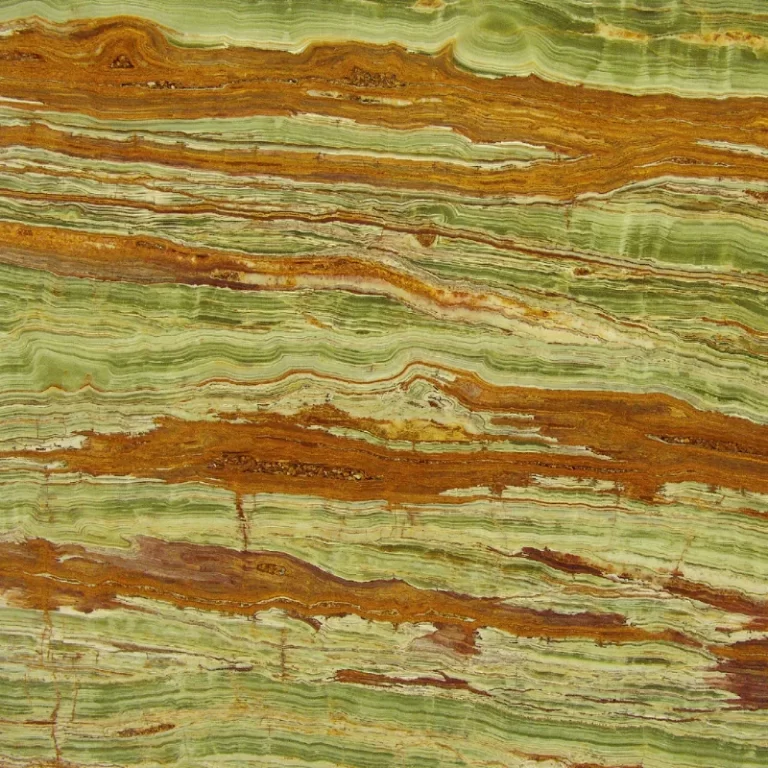
Forest Green / Verde Alpi — deep evergreen, soft feathering; versatile.
-
Emerald / Guatemala Green — vivid chroma for statement surfaces.
-
Olive/earthy greens — calmer hues that pair with oak, linen, plaster.
-
Why this outperforms “standard” supply
-
Block-level traceability maintains harmony across rooms (no jarring shade jumps).
-
Shade sorting (ΔE target ≤ 2 between sheets) reduces on-site rejects and rework.
-
Signed mockups before shipping mean you see the actual layout, not just samples.
Processing & Finishes: Built for Durability and Daily Life
Fabrication & Reinforcement
CNC bridge saw + 5-axis waterjet for precise miters, socket/sink cut-outs, and tight reveals.
Vacuum resin reinforcement stabilizes micro-fissures and lowers effective absorption.
Calibrated thickness (floors 18–20 mm; counters 20–30 mm; cladding 10–20 mm with back-mesh epoxy).
Edge profiles: eased/pencil for durability; mitered waterfall for sculptural islands.
Finish-by-Function
Polished (verticals & statement panels): reflects light, intensifies chroma.
Honed/Brushed/Leathered (floors & daily-use tops): tactile, low-glare, better grip.
Thermaled/Sand-blasted (outdoor steps/terraces): traction in wet conditions.
QC & Logistics (Why ours beats “standard”)
Vein diagrams & room-by-room crate maps (QR plans) to avoid mix-ups.
Mock-up photos for designer sign-off.
Edge protection & labeled crates cut breakage; factory pre-seal option shortens early maintenance.
Where Green Marble Works Best
Countertops & Vanities
Leathered Forest Green: hides fingerprints, soft touch.
Polished Emerald: island or vanity showpiece; pair with warm 3000–3500K lighting.
Design move: continue the vein into niche shelves or short backsplash for visual unity.
Floors
Honed 600×1200 / 900×900 tiles or large-format planks for calm planes.
Grout tone slightly darker than stone to “vanish” joints.
Pinstripe borders (e.g., Nero Marquina) define zones in open plans.
Wall Cladding
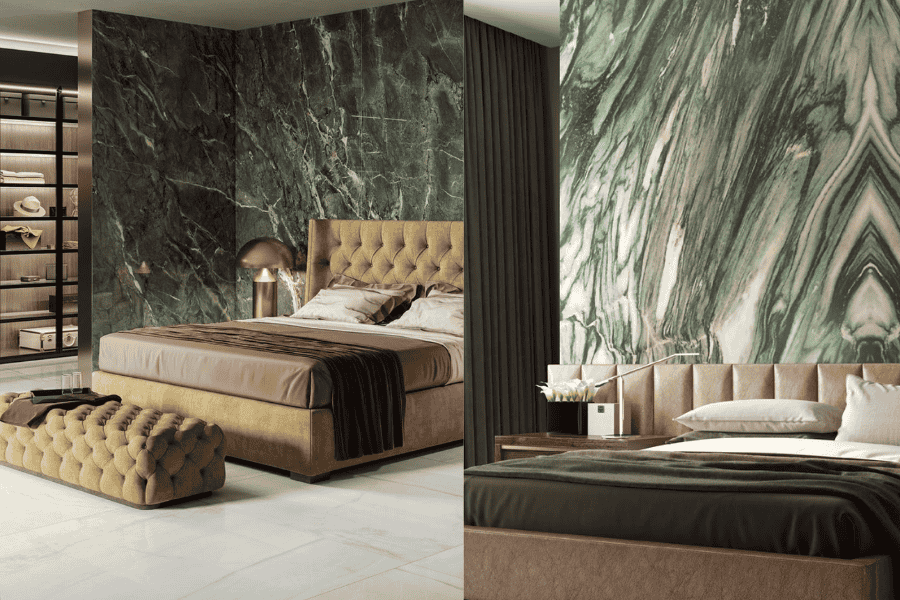
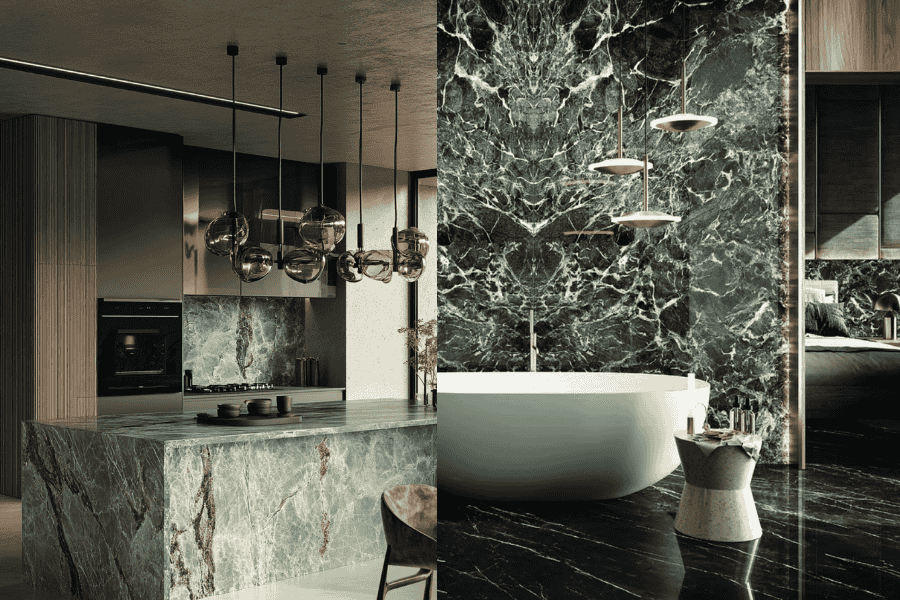
Bookmatched panels behind tubs, in fireplaces, or headboards—signature images for listings.
Wet rooms: honed floors (R10–R11) + polished walls for spa gloss without glare.
Expert Insights & Industry Trends
Sarah Lin, Interior Design Weekly (2025):
“Green marble is the visual language of biophilic luxury. Designers are pairing honed floors with polished wall features to keep spaces calm yet luminous.”
Dr. Emily Carter, Materials Scientist (2023):
“Long-term performance is governed by finish density, sealing chemistry, and pH exposure, not color alone. Properly sealed polished surfaces resist dyes better; honed disperses abrasion more evenly.”
Global Remodeling Study (2025):
Projects that keep one marble family across counters, floors, and walls—but vary finish by function—score higher on buyer intent and see fewer maintenance callbacks at 12-month follow-ups.
Science Notes
Hardness: Architectural marble is typically Mohs 3–4—edge protection and finish choice matter more than hue.
Porosity: Raw ~0.4–0.8%; vacuum resin + modern sealers notably reduce effective absorption.
Reflectance: Polished surfaces can exceed 90% light reflectance; honed sits around 60–70%.
Slip context: Honed/structured floors typically meet R10–R11; polished best for dry verticals/feature zones.
Thermal comfort: ~2.1–2.5 W/m·K conductivity works well with radiant heating.
Rarity in Practice: Availability & Spec Tips
| Spec Topic | Green Marble Reality | What to Do |
|---|---|---|
| Color match at scale | Harder than whites/greys | Source single-block sets; approve full slab photos |
| Big-format panels | Available but select | Verify calibration & back-mesh; plan logistics early |
| Replacement risk | Higher time to match later | Order attic stock (5–10%) from the same block |
| Budget control | Premium for consistent lots | Use feature zones or pair with neutral fields |
Three Mini Case Studies
-
Dubai Villa — Primary Bath
-
Polished Emerald walls + honed Forest Green floor (R11).
-
Outcome: Spa glow without glare; water spots less visible; annual reseal is easy.
-
-
Paris Apartment — Kitchen
-
Leathered Forest Green island + polished splash from the same block.
-
Result: Faster photo approvals; listing CTR improved; buyers praised the “calm yet bold” palette.
-
-
Singapore Boutique Hotel — Lobby
-
Bookmatched green wall with pinstripe flooring (Nero border).
-
Operator: Less grout cleaning; space reads premium in marketing visuals.
-
Implementation Checklist
Pre-Design
-
Audit lighting (Kelvin), traffic, moisture.
-
Pick finish-by-function; lock grout tone early.
-
Confirm subfloor flatness for large formats.
Procurement
-
Demand block consistency; request mockups and vein diagrams.
-
Back-mesh for thin cladding; calibrate thickness.
Installation
-
Dry-lay sequence by sightlines; pH-neutral thin-set.
-
Clean haze before first penetrative seal after cure.
Care
-
pH-neutral cleaner; microfiber pads.
-
Prompt wipe of acids/dyes; reseal 12–18 months (steam/heavy use → 12).
FAQ
1) So…how rare is green marble?
Moderately rare overall; rare at design grade. There are fewer consistent quarries and tighter selection criteria than white/grey marbles.
2) Is green marble durable for kitchens and baths?
Yes—choose leathered/honed for tops and floors; polished for verticals. Seal every 12–18 months.
3) Will green marble increase home value?
Yes. Continuous green marble language photographs better and signals premium quality to buyers.
4) What finish should I use?
Honed/Brushed for floors (R10–R11); Polished for walls/features; Leathered for daily-use counters.
5) How do I avoid color mismatches?
Order single-block material, approve full slab photos, and keep attic stock.
References
-
Natural Stone Institute — “Marble Selection & Care.” URL: naturalstoneinstitute.org
-
CEN Standards — “Slip Resistance Classifications (R-ratings).” URL: cen.eu
-
ASID — “Lighting Temperature & Material Perception.” URL: asid.org
-
Stone World Magazine — “Vacuum Resin & Calibration in Marble Production.” URL: stoneworld.com
-
ArchDaily — “Large-Format Stone in Contemporary Interiors.” URL: archdaily.com
-
Dezeen — “Biophilic Design Trends 2025.” URL: dezeen.com
-
Houzz Research — “Global Remodeling Study 2025—Surfaces & Flooring.” URL: houzz.com
-
European Stone Council — “Natural Stone Market Outlook 2025.” URL: eurostonecouncil.eu
-
World Construction Network — “Stone Supply Chains & Export Trends.” URL: worldconstructionnetwork.com
-
ASTM International — “Guides for Dimension Stone Installation (C1242/C1528).” URL: astm.org
Real-world installations from Dubai to Paris confirm its performance—retaining color stability, polish clarity, and resale value across climates.
Whether polished for brilliance or honed for tranquility, green marble endures as both art and asset.In short: Green marble is not just rare—it’s enduring proof that elegance and longevity can coexist in architecture.