Design Moments That Define a Home’s Character
Homeowner (Mia): “I love mosaic marble but I’m afraid bold colors will date fast. How do I pick shades that age well?”
Designer (Cole): “Start with light and mood. Warm LEDs make beiges glow; cool daylight loves greys and greens. We’ll test samples under your real lighting.”
Mia: “Where does mosaic work best?”
Cole: “Backsplashes, shower walls, foyer ‘rugs,’ and niche panels. Floors? Choose honed or brushed finishes for traction.”
Mia: “What about maintenance and resale?”
Cole: “Keep grout close to the stone tone, seal annually, and avoid harsh acids. Neutrals with a restrained accent color age the best—and mosaic marble consistently signals high spec in listings.”
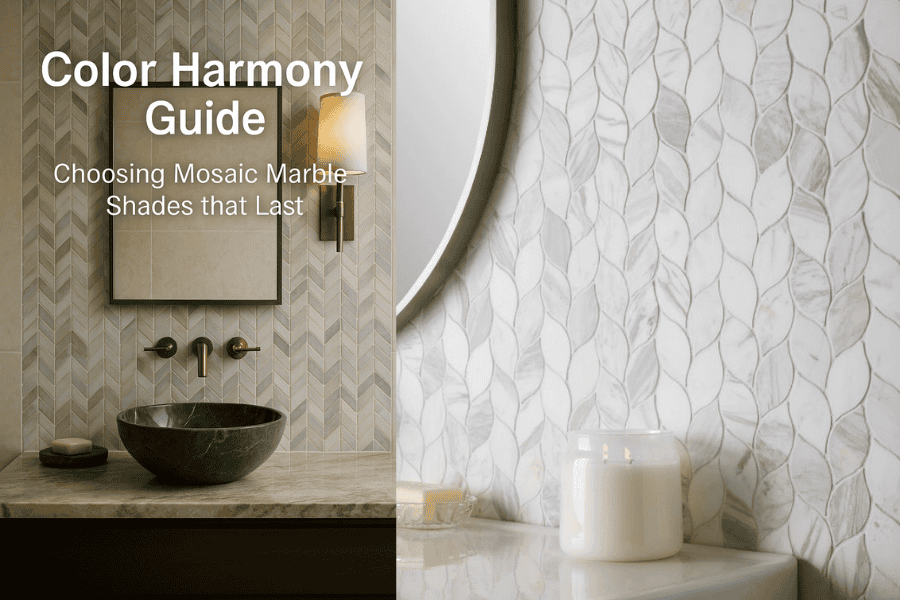
Why Color Harmony Matters for Longevity & Resale
Photographs better: Harmonized palettes reduce visual noise, improving listing CTR and buyer intent.
Easier upkeep: Mid-tone greys/beiges and matte textures hide micro-wear and water spots.
Lighting synergy: Match shade to CCT: 2700–3500K warms beige/cream; 4000K+ sharpens grey/green.
Regional tastes: EU/US urban buyers favor grey/white; Mediterranean and Middle-East markets skew warm beige and green.
Future-proof: Dual-neutral strategies (grey + beige or white + grey) remain in style and pair with new fixtures over time.
Top Mosaic Marble Shade Families (2025)
| Shade Family | Typical LRV* | Best Rooms | Finish & Grout Tips | Pairing Suggestions | Maintenance Risk** |
|---|---|---|---|---|---|
| Carrara/Volakas White | 70–85 | Baths, backsplashes | Honed/Polished; grout 1–2 tones warmer | Brushed nickel, light oak | ◕◕○ |
| Pietra/Hermes Grey | 35–55 | Kitchens, halls | Honed/Brushed; grout near-match | Black steel, walnut | ◕◕◕ |
| Crema Marfil/Beige | 50–65 | Living, spa baths | Honed; warm grout to hide joints | Brass, rift-oak, linen | ◕◕◕ |
| Guatemala/Forest Green | 20–45 | Feature walls, vanities | Polished walls; honed floors | Brass, smoked oak | ◕◕○ |
| Nero Marquina Black | 5–15 | Borders, “rug” inlays | Polished accents; dark grout | Chrome, white walls | ◕○○ |
| Calacatta Gold Mix | 60–75 | Backsplashes, niches | Polished; cream grout | Brass, travertine | ◕◕○ |
| Warm Grey Taupe | 40–55 | Open-plan floors | Brushed; taupe grout | Bronze, tan leather | ◕◕◕ |
| Blue/Grey Sodalite Accents | 10–30 | Niches, artwork | Polished micro-panels | Matte black, white oak | ◕○○ |
* LRV = Light Reflectance Value. Higher = brighter.
** Risk scale (high→low): ◕◕◕ / ◕◕○ / ◕○○ — assumes proper sealing and pH-neutral care.
Countertops vs Floors vs Walls — Color & Finish Adjustments
Countertops: Choose leathered/honed mid-tones for low glare and fingerprint control, or polished for showpiece islands. Keep grout minimal (thin shadow joints) or integrate slab edges with micro-mosaic frames.
Floors: Favor honed/structured mosaics (R10–R11 traction). Mid-greys/beiges hide wear; green/black as borders for definition.
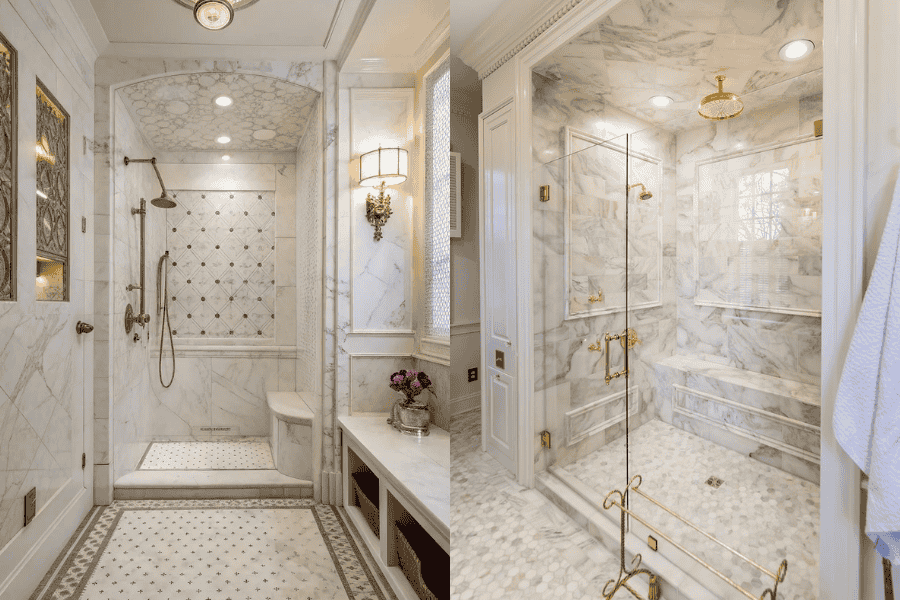
Walls/Backsplashes: Polished or honed based on glare. Whites and greens deliver spa or biophilic moods; ensure grout tone supports continuity.
Our Mosaic Marble — Selection • Processing • Why Ours Lasts Longer
Material Selection (what we choose & what we avoid)
Block-level consistency: We source by single quarry block to stabilize hue/vein rhythm across sheets.
Chip quality: Tight tolerance on tessera size (±0.3–0.5 mm), straight edges, minimal chipping.
Porosity control: Prefer raw porosity ~0.4–0.8%, which performs exceptionally after resin + sealer.
Mesh & adhesive: Alkali-resistant fiberglass mesh; water-resistant adhesive compatible with cementitious or epoxy grout.
Shade sorting: Delta-E target ≤2 sheet-to-sheet for seamless fields.
Finish by function: Pre-spec honed/brushed for floors; polished for vertical sparkle.
Why this beats “standard” mosaics: color drift is minimized, sheet joints “disappear,” and floors resist telegraphing tile edges over time.
Processing & Craftsmanship (how we build performance)
Fabrication Workflow
CNC/Waterjet calibration for patterns (herringbone, chevron, arabesque, hex).
Vacuum resin reinforcement on delicate marbles before cutting.
Sheet layout maps (QR) for installers; room-by-room crates to reduce mix-ups.
Factory pre-seal option to shrink early maintenance and staining risk.
Installation & Grout Guidance
Substrate flatness ≤2 mm over 2 m (floors); back-butter sheets.
Use pH-neutral thin-sets; choose epoxy grout for dye-risk zones (kitchen splash) or fine cementitious grout with penetrating sealer elsewhere.
Grout color within 1–1.5 tones of the dominant stone shade; test a small area before full grouting.
Why ours outperforms “standard”
We deliver a layout, not just boxes: pre-approved mockups, vein/sheet diagrams, crate labels, and a care kit. That cuts waste, rework, and callbacks—protecting budgets and timelines.
Design Playbook: Color Harmony Rules That Age Well
-
60–30–10 Rule: 60% field neutral (grey/beige), 30% secondary neutral (white/cream), 10% accent (green/black).
-
Keep grout quiet: near-match tones so pattern—not joints—takes the spotlight.
-
Finish matters: honed for floors; polished for verticals; leathered for daily-use countertops.
-
Light first: evaluate samples under your real Kelvin and daylight.
-
Two neutrals + one accent: avoid triple-accent schemes that fight future fixture changes.
-
Metal synergy: brass warms beiges/golds; black steel sharpens greys/greens.
-
Zone definition: use black/green borders as “rugs” to anchor dining or foyer zones.
Expert Insights & Industry Trends
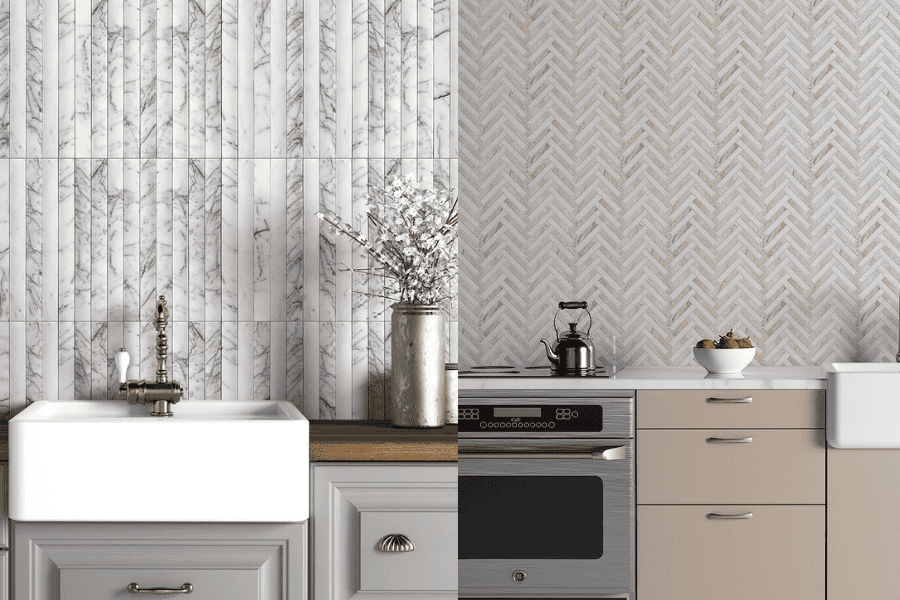
Sarah Lin, Interior Design Weekly (2025): “Mosaic marble has shifted from ornate to quiet luxury. Designers favor dual-neutral palettes with a single, confident accent.”
Dr. Emily Carter, Materials Scientist (2023): “Surface finish and sealer chemistry govern real-world durability, not color alone. Sealed honed floors show more even abrasion, while polished verticals resist dyes better.”
Global Remodeling Study (2025): Projects that keep one stone family (e.g., Carrara + Nero accents) across rooms—but vary finish by function—score higher on buyer intent and reduce maintenance complaints.
Science Notes
Hardness: Marble ≈ Mohs 3–4; edge protection and finish choice outweigh raw hardness.
Slip context: Mosaics naturally add traction via grout joints; honed/structured fields typically meet R10–R11.
Reflectance: Polished marble can exceed 90% light reflectance; honed ~60–70% → choose per glare tolerance.
Thermal behavior: Conductivity ~2.1–2.5 W/m·K suits radiant heat floors.
Color fastness: Natural pigments remain stable indoors; protect from prolonged acidic cleaners that can etch gloss.
Real Projects & User Feedback
-
Dubai Spa Bath
-
White-grey hex mosaic floor (honed) + polished green niche.
-
Result: Safe traction; spa glow. Owner: “Cleaner lines, calmer mornings.”
-
-
Paris Kitchen Splash
-
Calacatta-gold micro-mosaic with epoxy grout.
-
Feedback: Wipes clean after tomato/coffee tests; warm metals feel richer.
-
-
Singapore Foyer Rug
-
Beige field with Nero pinstripe border.
-
Manager: “Less visible dirt at entry; better listing photos.”
-
Implementation Checklist
Pre-Design
-
Audit lighting (Kelvin), traffic, moisture, cleaners.
-
Decide color family + accent; lock grout tone early.
Procurement
-
Order single-block, shade-controlled sheets; request mockup photos.
-
Confirm finish (honed/ brushed/polished) by room.
Install
-
Dry-lay per QR layout map; align borders with sightlines.
-
pH-neutral thin-set; clean haze; first penetrative seal after cure.
Care
-
pH-neutral cleaners; prompt wipe of acids/dyes.
-
Reseal 12–18 months (steam/heavy use → 12).
FAQ
1) Which mosaic marble colors stay timeless?
Dual neutrals (grey + beige or white + grey) with a single accent (green/black) age best and match future fixtures.
2) Is mosaic marble slippery?
Honed/structured mosaics with grout joints typically meet R10–R11 traction—ideal for baths and kitchens.
3) How do I prevent staining or etching?
Use pH-neutral cleaners, seal every 12–18 months, and wipe acids/dyes promptly (wine, citrus, makeup).
4) What grout color should I choose?
Near-match to the dominant stone tone (±1–1.5 shades) to let the pattern read as one field.
5) Does mosaic marble add resale value?
Yes. Harmonized palettes photograph better and signal premium finishes—buyers consistently read mosaics as high-spec detail.
References
-
Natural Stone Institute. “Marble Care & Maintenance.”
-
CEN Standards. “Slip Resistance Classifications (R-ratings).”
-
ASID. “Lighting Temperature & Material Perception.”
-
Stone World Magazine. “Waterjet & CNC in Mosaic Fabrication.”
-
ArchDaily. “Mosaic in Contemporary Interiors.”
-
Dezeen. “Quiet Luxury and Material Restraint.”
-
Houzz Research. “2025 Global Remodeling Study—Surfaces.”
-
ASTM. “Dimension Stone Installation Guides (C1242/C1528).”
-
European Stone Council. “Natural Stone Market Outlook 2025.”
-
World Construction Network. “Stone Supply Chains & Quality Control.”
As material science meets interior design, mosaic marble stands as both an art form and a technical achievement. According to Dr. Emily Carter, a senior materials researcher at the Institute of Architectural Surfaces, “Color stability in marble is primarily governed by mineral purity, resin reinforcement, and sealer compatibility.” This means that careful shade selection and proper finishing extend beauty for decades.Design experts emphasize that dual-neutral palettes—such as grey-beige or white-green—maintain both emotional calm and resale appeal. Whether for flooring, walls, or decorative mosaics, the right color harmony ensures every space feels intentional, timeless, and refined. True luxury, after all, lies not in bold trends, but in balance and longevity.