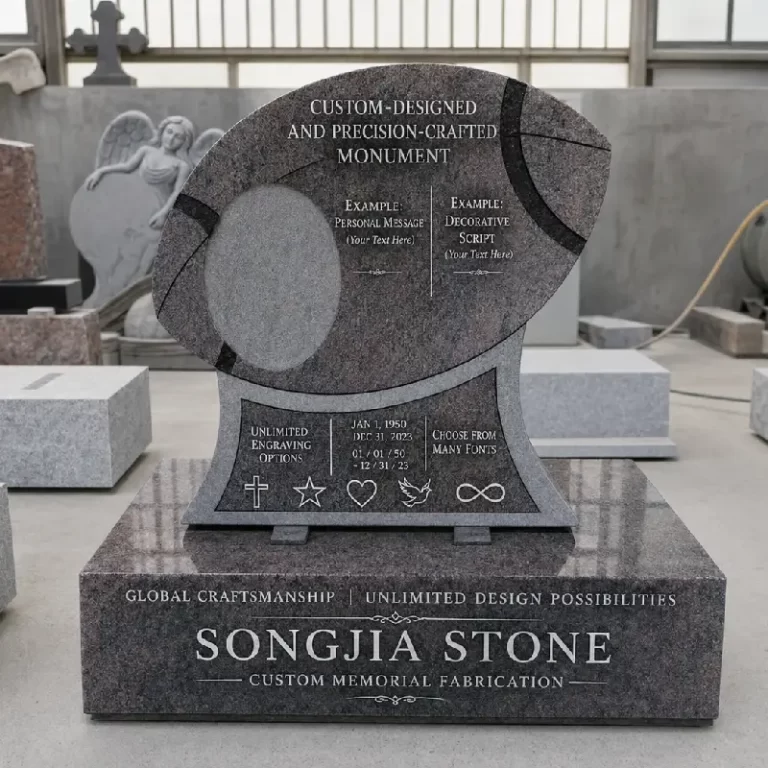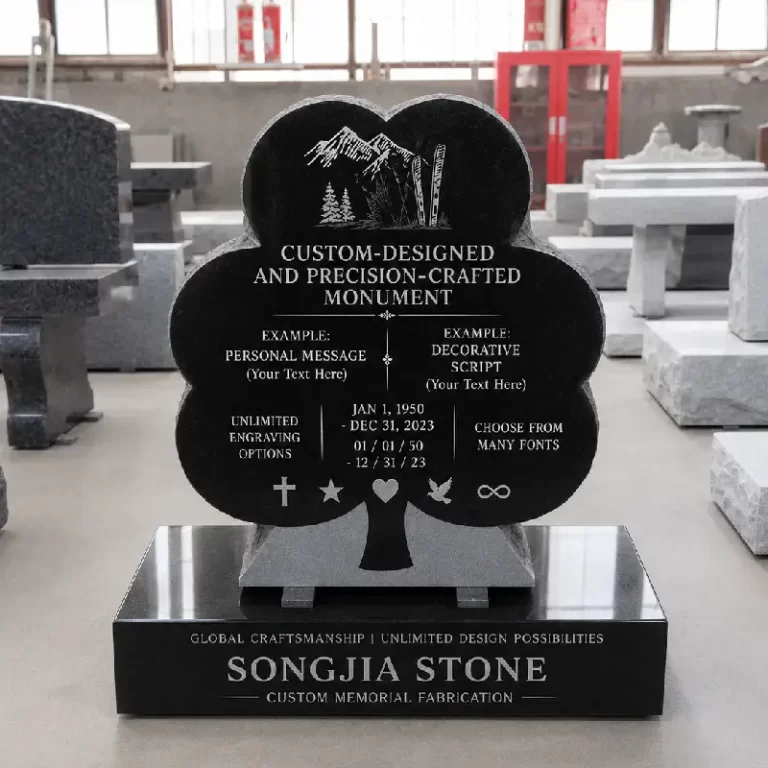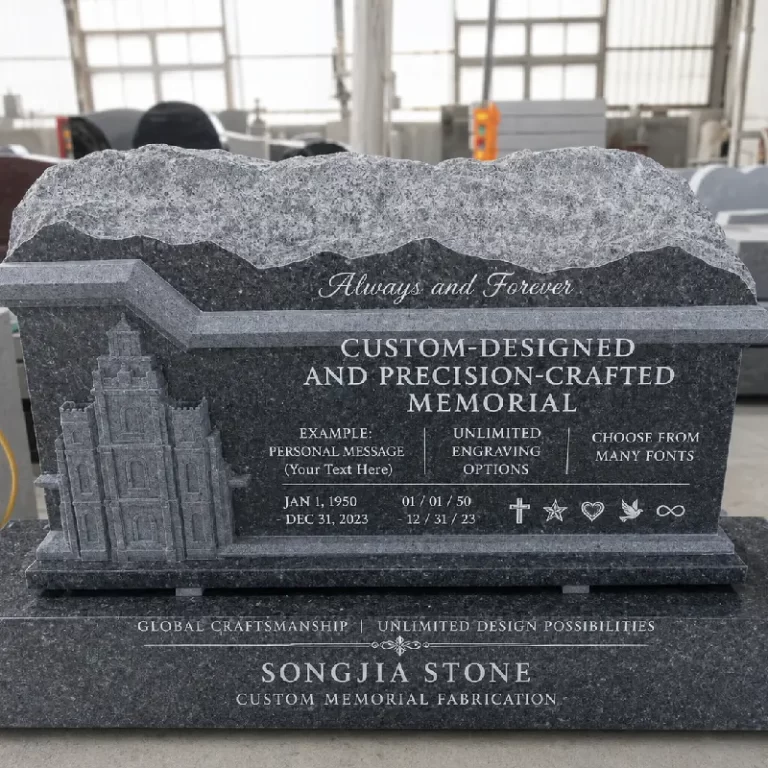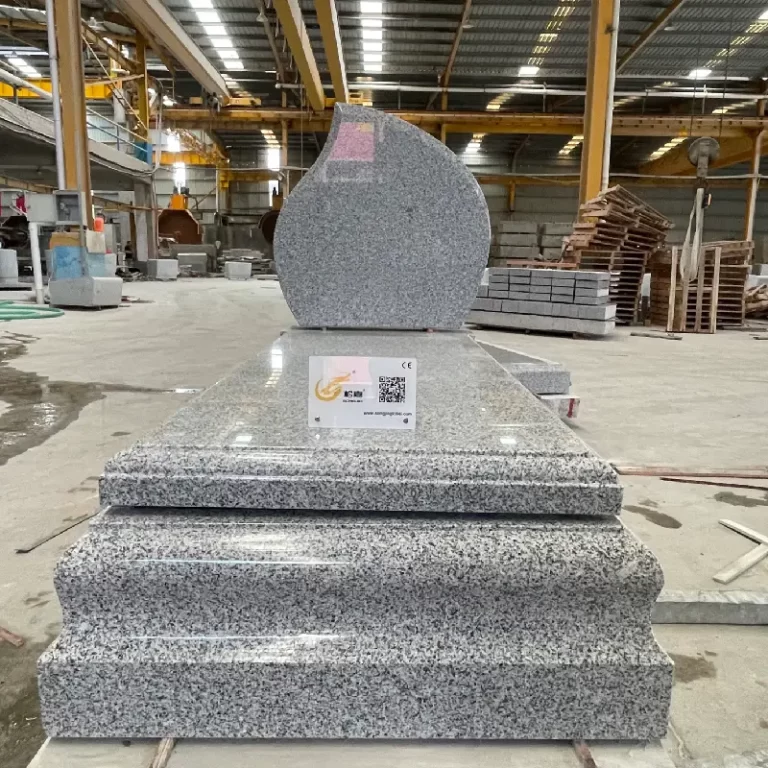
Quick Summary:
Flat Headstone is an American tombstone style designed as a low-profile, ground-level marker used in lawn and memorial park sections. Produced in durable granite options with an approved finish standard (commonly polished inscription areas), it supports clean readability, efficient installation, and repeatable cemetery program sizing. Supplied with batch consistency control and export-grade packing to reduce damage risk and help cemeteries, funeral homes, and monument distributors manage high-volume memorial programs reliably.
Flat Headstone
Flat Headstone – The Most Efficient American Tombstone Format for Lawn Sections
The flat headstone (often called a lawn marker or flat grave marker) is one of the most widely used American tombstone formats because it is simple, neat, and highly scalable for cemetery programs. Unlike upright monuments that create vertical presence, a flat headstone sits close to ground level and supports a uniform visual layout across a lawn section. Many cemeteries prefer this style for modern memorial parks because it makes mowing and maintenance easier, supports consistent row planning, and reduces safety concerns related to tall structures.
For cemeteries, funeral homes, and monument distributors, flat headstones are typically a high-volume product. That means the priority shifts from “unique design” to program reliability: repeatable sizes, stable thickness, consistent finish quality, and predictable installation outcomes. A well-managed flat headstone program is built on standardized dimensions and engraving rules, with controlled options for material color and finish type. This approach keeps procurement efficient and helps avoid disputes caused by inconsistent appearance between batches.
Even though flat markers look simple, performance details still matter. The finish level must support long-term readability, edges must be properly finished to reduce chipping risk, and the surface should drain well to avoid water pooling and staining. When a supplier controls these fundamentals—and packs the pieces properly for export—the flat headstone becomes one of the lowest-claim, highest-efficiency categories in an American tombstone product line.
View more designs in our
American Tombstone Series
Material & Finish Standards: Readability, Slip Resistance, and Batch Consistency
Flat headstones are commonly produced in granite because granite offers reliable outdoor durability and stable long-term performance. Since flat markers are viewed from above and are exposed to foot traffic, finish selection is a practical decision. Many programs specify a polished inscription panel (or a polished face) for better contrast and clearer lettering, while using honed or flamed textures on surrounding areas to improve slip resistance. The correct combination depends on local cemetery requirements and maintenance practices.
For repeat programs, batch consistency is essential. Even within the same granite type, tone and grain can vary. Professional buyers therefore lock an approved sample, define acceptable tone range, and request photo confirmation for each production batch. This is especially important when new markers are installed adjacent to existing ones, where visual mismatch can create complaints. In addition, engraving depth and finishing should be standardized, because shallow lettering may become harder to read after years of weathering and cleaning.
Edge treatment also matters for flat headstones. Properly finished edges reduce chipping risk during handling and installation. For cemetery programs, specifying a consistent edge profile helps maintain a uniform look across the lawn section and improves the perceived quality of the installation.
Usages & Project Applications
The flat headstone is widely used in lawn cemetery sections, memorial parks, and any area where cemeteries require ground-level markers for uniform appearance and simplified maintenance. It is a common choice for large-scale program installations because it allows cemeteries to standardize rows and spacing, supports easier mowing, and minimizes the risk of monuments shifting or leaning over time. Many modern cemeteries adopt flat markers to maintain a clean landscape aesthetic and reduce long-term upkeep costs.
For funeral homes and monument distributors, flat headstones are often offered as the entry-level option within an American tombstone product lineup. This does not mean the product must be basic. Premium upgrades can still be offered through better material choices, refined engraving, decorative carving, or multi-finish designs. The key is to keep the core sizing and installation logic standardized so orders remain repeatable and easy to manage at scale.
Because flat headstones are shipped in higher volumes, export packing and palletization are critical to cost control. Proper separation, stable stacking, corner protection, and clear labeling reduce breakage and improve receiving speed. For high-volume programs, these logistics details often matter as much as the stone itself, because they directly impact claims, labor cost, and installation schedules.
Flat Headstone – Product Specification Table
Use this table to standardize RFQs, compare supplier offers fairly, and document project requirements clearly.
Related services:
Monument Carving /
Inscription & Lettering /
Cemetery Program Supply
Buying Considerations: Program Sizes, Surface Safety, and Long-Term Readability
Flat headstones are easiest to manage when the program locks key standards early. Confirm the target size range, thickness, and installation method (on concrete base, on prepared ground, or within a memorial park system). Then define finish acceptance criteria and engraving rules to ensure readability over time. If a program uses mixed finishes, confirm them by sample to avoid misunderstandings about texture and appearance.
For repeat orders, batch planning and photo confirmation reduce tone mismatch risk, especially when new markers are placed next to older installations. Finally, because flat headstones are shipped in volume, packing standards must be consistent: stable stacking, separation, corner protection, and clear labeling reduce breakage and speed up receiving and installation.
Frequently Asked Questions
What is a flat headstone in American tombstone programs?
A flat headstone is a ground-level memorial marker commonly used in lawn sections, designed for uniform appearance, easier maintenance, and scalable cemetery program installation.
What finishes are common for flat headstones?
Many programs use a polished inscription area for readability, combined with honed or flamed textures to improve slip resistance depending on cemetery requirements.
Can you supply standard sizes for cemetery programs?
Yes. We can supply common program sizes or produce custom dimensions based on cemetery regulations and approved drawings.
How do you ensure engraving stays readable over time?
We standardize engraving depth and finishing, confirm layout by approval, and maintain consistent surface quality so lettering remains clear after outdoor exposure and cleaning.
How do you pack flat headstones for export shipping?
Flat headstones are packed with stable stacking, surface separation, and corner protection in export-grade crates or pallets, with clear labeling to reduce damage risk and improve receiving efficiency.