Quick Summary
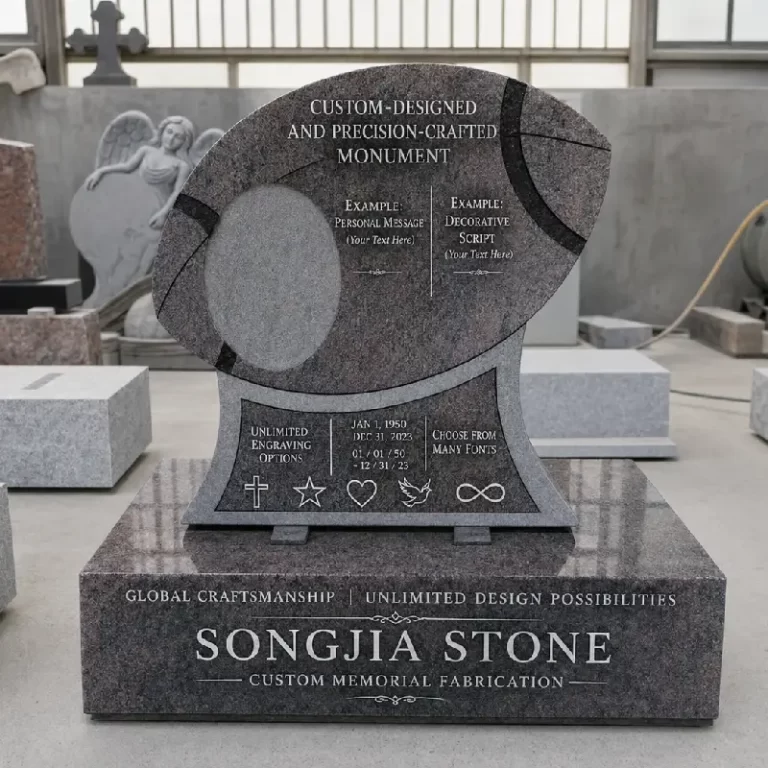
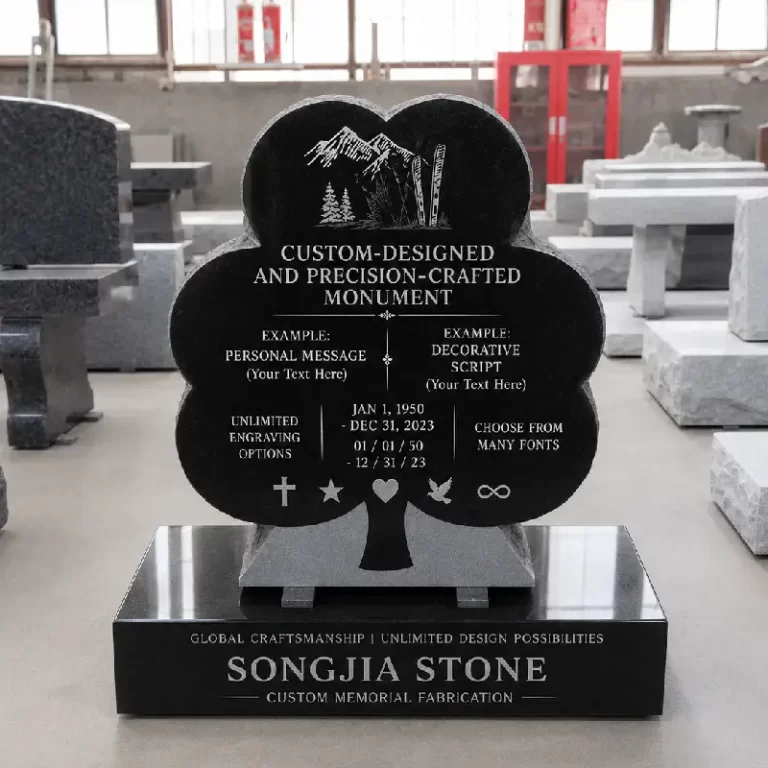
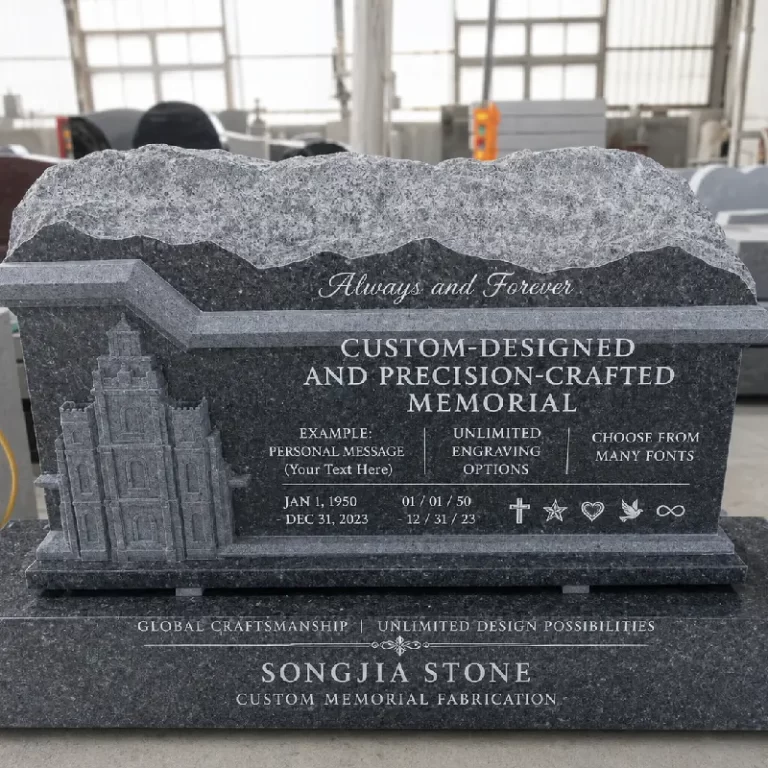
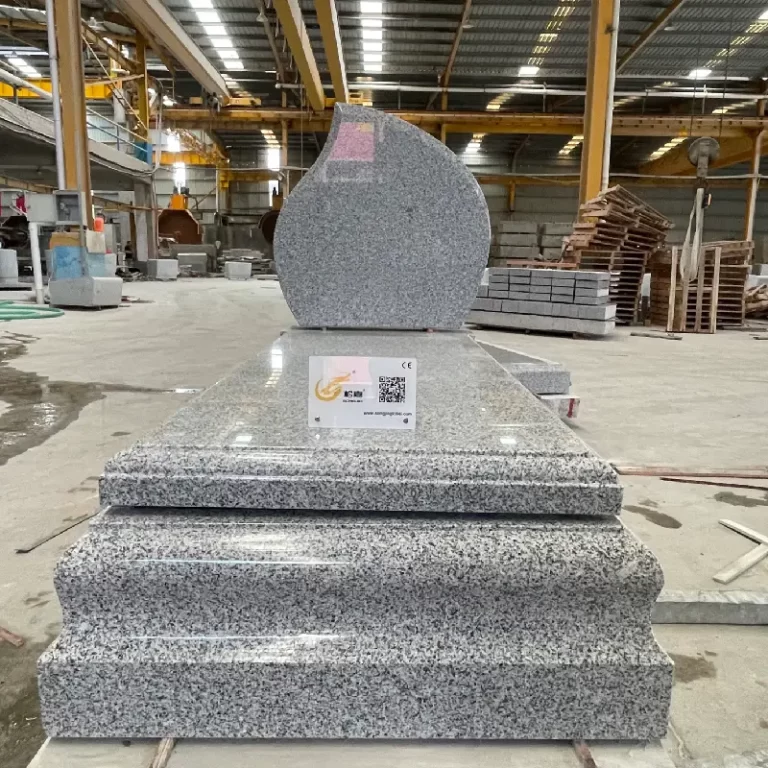
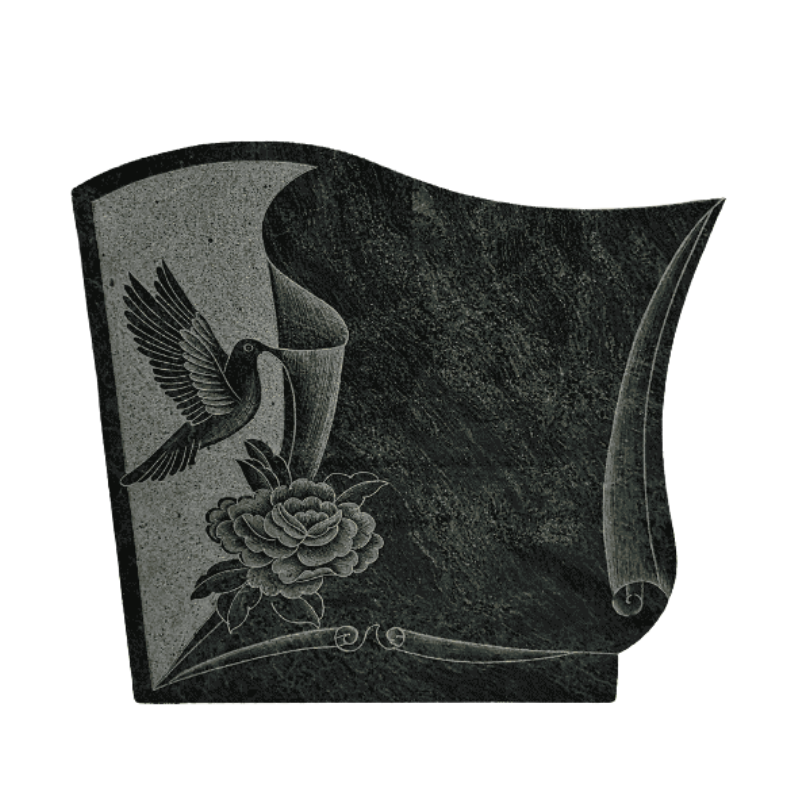
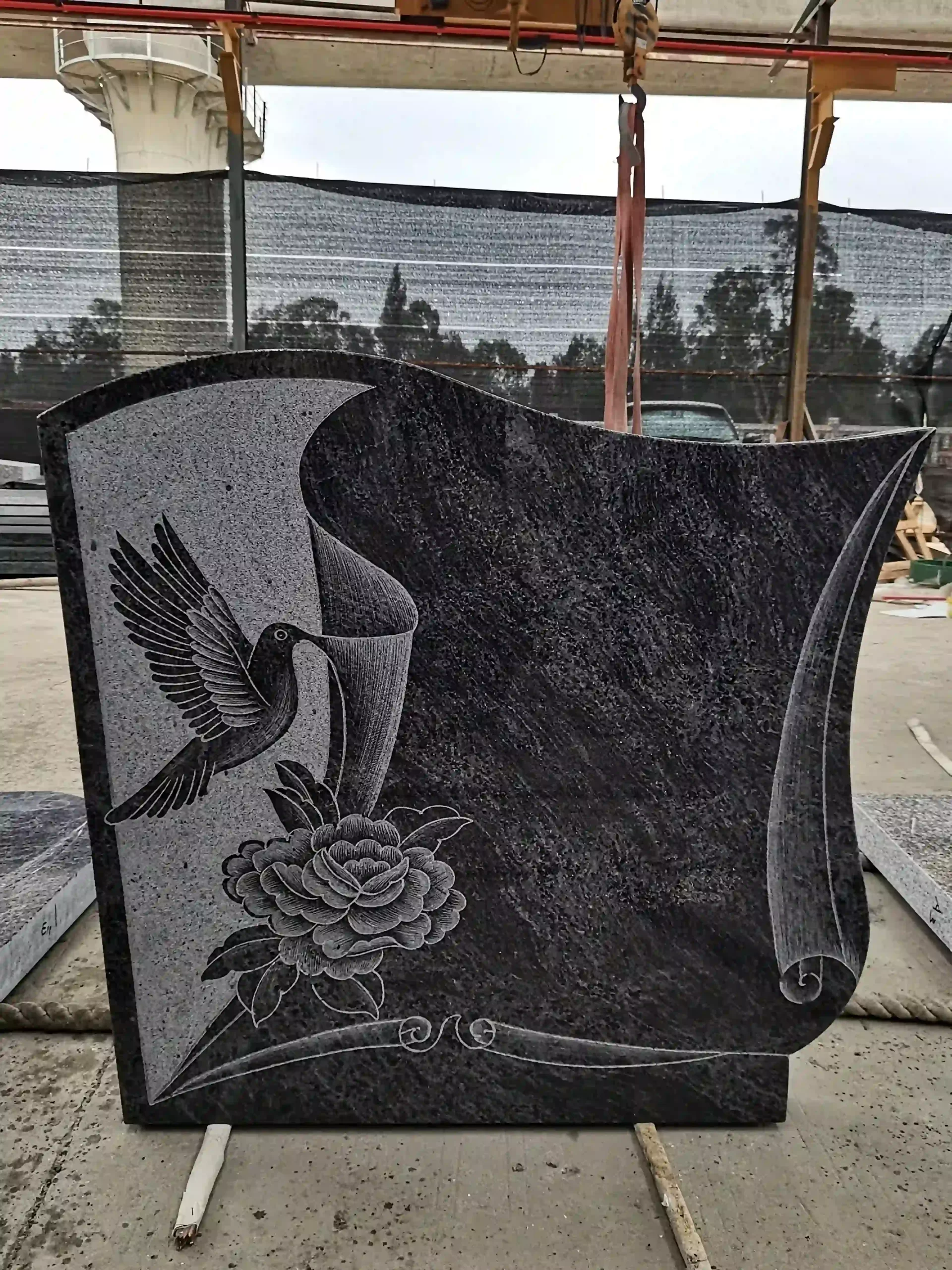
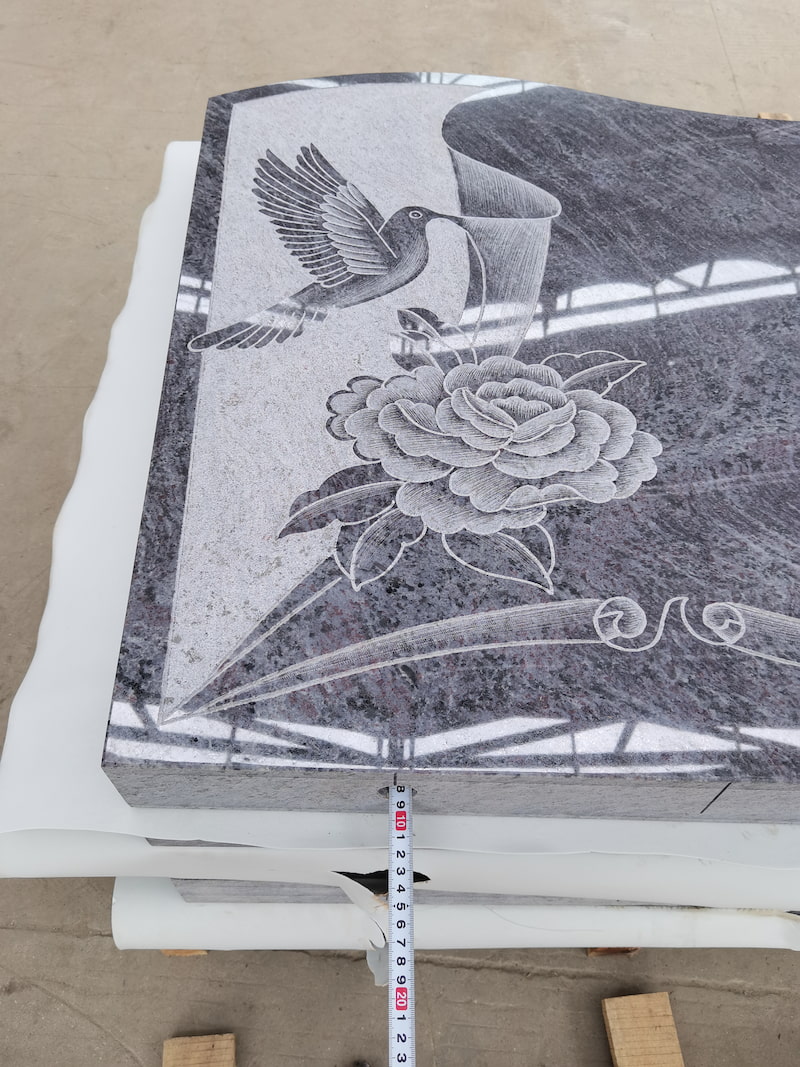
Bahama Blue Granite Laser Carving Headstone for Ireland Cemeteries is an Irish-style upright memorial made from selected Bahama Blue granite, designed for laser etched portraits, symbols, landscapes, and fine artwork. Supplied as a freestanding headstone and base set, it combines premium blue granite appearance with high-definition laser carving, clear inscription planning, controlled joint tolerance, stable geometry, and export-grade packing. This model is suitable for cemetery distributors, monument dealers, wholesalers, funeral product importers, and project buyers who require accurate artwork proofing, consistent surface finish, and reliable shipment for Ireland cemetery programs.
Bahama Blue Granite Laser Carving Headstone for Ireland Cemeteries
|
|
|
Product Overview
The Bahama Blue Granite Laser Carving Headstone is developed for memorial buyers who need a premium upright monument with personalized visual detail. Laser carving, also called laser etching, allows portraits, religious symbols, landscapes, floral artwork, and fine decorative patterns to be reproduced with clearer line definition than many traditional carving methods. When used on a carefully selected Bahama Blue granite face, the result is a dignified memorial with both emotional value and strong catalog appeal.
This headstone is suitable for Ireland cemetery programs and international B2B monument supply. It is commonly supplied as a freestanding upright headstone with a matching base. The layout can include a laser etched portrait or artwork zone, a polished inscription area for names and dates, and optional decorative borders or symbols. For dealers and distributors, this product works well as a premium upgrade model because it combines material value, personalization, and practical installation reliability.
For successful production, the key is not only the laser machine itself. Buyers should also pay attention to stone face selection, artwork resolution, proof confirmation, inscription spacing, surface finish, base stability, edge treatment, export packing, and QC photos before shipment. These details help reduce problems such as unclear portraits, mismatched stone tone, unreadable lettering, scratched laser areas, shipping damage, or installation rejection.
Internal Link Placeholder: View more related designs in our
tombstone
Product Specification Table
Design Features
High-Definition Laser Carving for Portraits and Artwork
Laser carving is ideal for memorial designs that require fine lines, soft gradients, facial detail, or detailed symbolic artwork. It can be used for portraits, crosses, angels, flowers, landscapes, family symbols, or other meaningful imagery. Before production, a preview proof should be confirmed so the buyer can check image placement, size, contrast, and overall composition.
Premium Bahama Blue Granite Appearance
Bahama Blue granite gives the headstone a distinctive premium blue tone. Its natural movement creates a refined stone character, but it also requires careful face selection for laser work. A calmer, more even-toned face area is preferred for portrait and artwork zones because strong stone movement may reduce visual clarity.
Clear Inscription Planning
A laser etched portrait or artwork should not compete with the inscription. The layout should reserve enough space for names, dates, epitaphs, and family wording. Font selection, line spacing, engraving depth, and optional paint filling should be confirmed before production to avoid unclear lettering.
Stable Upright Headstone and Base Set
The freestanding structure includes an upright headstone and a matching base. Flat contact surfaces, controlled joint tolerance, consistent edge easing, and alignment checks help reduce installation issues such as rocking, visible gaps, uneven joints, or cemetery placement problems.
Material & Finish Standards
For a Bahama Blue granite laser carving headstone, the first quality standard is suitable face selection. The laser carving area should be placed on a stone section with stable color and limited visual movement. This helps portraits, symbols, and fine artwork remain clear and readable after etching.
The second standard is artwork preparation. High-resolution images should be used whenever possible. Portraits need clear lighting, good contrast, and sharp facial detail. Before laser production, the buyer should approve a visual proof showing cropping, size, placement, brightness, and contrast adjustment. This proofing step helps reduce rework, complaints, and after-sales disputes.
The third standard is surface finish. The laser zone must be flat, clean, and evenly finished. The polished inscription panel should show consistent gloss without haze, swirl marks, sanding shadows, patchy polish, or visible tool lines. Clean surface preparation improves the final visual effect of both laser etching and traditional lettering.
How to Choose the Right Configuration
| Buyer Requirement | Recommended Configuration | Reason |
|---|---|---|
| Portrait memorial | Laser etched portrait on calm Bahama Blue face area | Improves facial clarity and visual contrast |
| Ireland cemetery program | Irish-style upright headstone with base | Traditional structure with practical installation control |
| Readable names and dates | Polished inscription panel with approved lettering proof | Keeps text clean, visible, and cemetery-appropriate |
| Long-distance export shipping | Reinforced wooden crate with face separation and anti-rub protection | Protects laser areas, polished faces, edges, and base corners |
Standard vs Customized Configuration
| Item | Standard Option | Customized Option |
|---|---|---|
| Headstone Shape | Irish-style upright headstone | Custom top shape, thickness, profile, or side detail by drawing |
| Laser Artwork | Portrait or symbolic artwork | Custom portrait, landscape, cross, floral design, angel, border, or family emblem |
| Inscription | Names and dates | Custom font, spacing, engraving depth, paint filling, poem, or religious wording |
| Finish | Polished inscription area | Polished, honed, sandblasted, or mixed finish by sample approval |
Application Scenarios
The Bahama Blue Granite Laser Carving Headstone is suitable for Ireland cemetery programs, premium memorial catalogs, portrait headstone collections, Christian memorial projects, funeral product import programs, and personalized granite monument supply. It is especially useful when families want a memorial that preserves visual memory through portraits or detailed artwork.
For monument dealers, this product can be positioned as a premium personalization option. It offers a stronger emotional value than a standard upright headstone, while still keeping the structure practical for cemetery installation and export distribution. For wholesalers and project buyers, the model can be standardized by template while still allowing personalized laser content for each order.
How to Order & Production Process
| Step | Process | Buyer Checkpoint |
|---|---|---|
| 1 | Confirm cemetery rules and required monument size | Height, thickness, base footprint, image restrictions, installation rules |
| 2 | Approve Bahama Blue granite reference | Color tone, pattern movement, headstone and base matching |
| 3 | Submit high-resolution photo or artwork | Image clarity, lighting, cropping, portrait detail, symbol definition |
| 4 | Approve laser carving proof and inscription proof | Artwork placement, scale, contrast, font, spacing, spelling, depth |
| 5 | Produce, polish, laser etch, engrave, and inspect | Laser definition, finish consistency, edge quality, joint tolerance |
| 6 | Pack and prepare export shipment | Face separation, anti-rub laser protection, reinforced crate, clear labels |
Common Buyer Mistakes
| Mistake | Possible Problem | How to Avoid It |
|---|---|---|
| Using low-resolution photos | Blurred portrait, weak facial detail, poor final effect | Provide sharp, high-resolution images and approve a laser proof |
| Ignoring stone face selection | Busy background movement reduces artwork clarity | Place laser artwork on a calmer Bahama Blue face area |
| No inscription proof approval | Spelling errors, crowded text, unclear lettering | Confirm font, spacing, line breaks, engraving depth, and wording before production |
| Weak export packing | Scratched laser area, chipped edges, damaged base corners | Use reinforced wooden crates, face separation, anti-rub layers, and corner protection |
Buying Checklist
| Confirm cemetery size rules, image restrictions, and installation requirements | Yes / No |
| Approve Bahama Blue granite tone and selected face area | Yes / No |
| Provide high-resolution image or artwork for laser carving | Yes / No |
| Approve laser preview proof, cropping, scale, and contrast | Yes / No |
| Confirm export packing with anti-rub protection for laser etched zones | Yes / No |
Quality Control Before Shipment
Before shipment, each Bahama Blue Granite Laser Carving Headstone should be inspected for material tone consistency, selected face suitability, laser definition, proof-to-production accuracy, polish clarity, inscription accuracy, edge treatment, base flatness, joint tolerance, and complete set alignment.
QC photos should include the full front view, side view, laser artwork close-up, inscription close-up, base contact surface, edge close-up, polished surface check, packing protection, and crate label. These records help B2B buyers confirm the final product before shipment and reduce misunderstandings after arrival.
Export Packing for International Shipment
Laser etched areas must be protected from rubbing, scratching, and direct impact during transport. Each polished or etched face should be separated with protective material. Edges and corners should be reinforced, and the headstone and base should be fixed inside the crate to prevent movement during ocean freight and inland delivery.
Songjia Stone uses export-grade wooden crates, reinforced internal bracing, face separation, anti-rub protection, corner guards, and clear piece labeling. This packing method helps reduce damage risk and supports smoother delivery for Ireland cemetery programs, monument dealers, and importers.
Frequently Asked Questions
What is a Bahama Blue Granite Laser Carving Headstone?
It is an Irish-style upright headstone made from Bahama Blue granite, featuring laser carving or laser etching for portraits, symbols, landscapes, or detailed artwork, with a clear inscription area and matching base.
Is Bahama Blue granite suitable for laser carving?
Yes. Bahama Blue granite can be suitable for laser carving, especially when the laser artwork is placed on a calmer and more even-toned face area. Material reference and face selection should be approved before production.
What kind of photo is best for laser carving?
A high-resolution photo with clear lighting, sharp focus, and good contrast is recommended. Blurry, dark, or low-quality images may reduce the final portrait clarity on stone.
Can laser carving be combined with traditional engraving?
Yes. Many memorials use laser carving for portraits or artwork and traditional engraving for names, dates, and epitaphs. This combination helps keep personal images detailed and inscriptions readable.
Can the headstone size and artwork layout be customized?
Yes. Size, thickness, base footprint, artwork position, image scale, inscription layout, font, spacing, engraving depth, and finish combination can be customized according to drawings and cemetery requirements.
How do you avoid unclear laser etching?
We check image quality, adjust contrast, choose a suitable stone face area, and provide a proof for approval before laser production. This helps improve definition and reduce production disputes.
How is the laser carved headstone packed for export?
The headstone is packed with face separation, anti-rub protection for laser etched zones, reinforced edge and corner guards, stable internal bracing, and export-grade wooden crates.
Final Note / Practical Takeaway
For international B2B buyers, a Bahama Blue Granite Laser Carving Headstone should be evaluated by more than its visual design. The most reliable order depends on approved stone face selection, high-resolution artwork, accurate laser proofing, readable inscription planning, stable base structure, strict QC inspection, and export-grade packing.
- Approve Bahama Blue granite tone and selected face area before production.
- Use high-resolution photos or artwork for laser carving.
- Confirm laser preview proof, image scale, cropping, and contrast.
- Check inscription font, spacing, engraving depth, and readability.
- Require face separation, anti-rub laser protection, reinforced crates, edge guards, and clear labels for export shipment.